
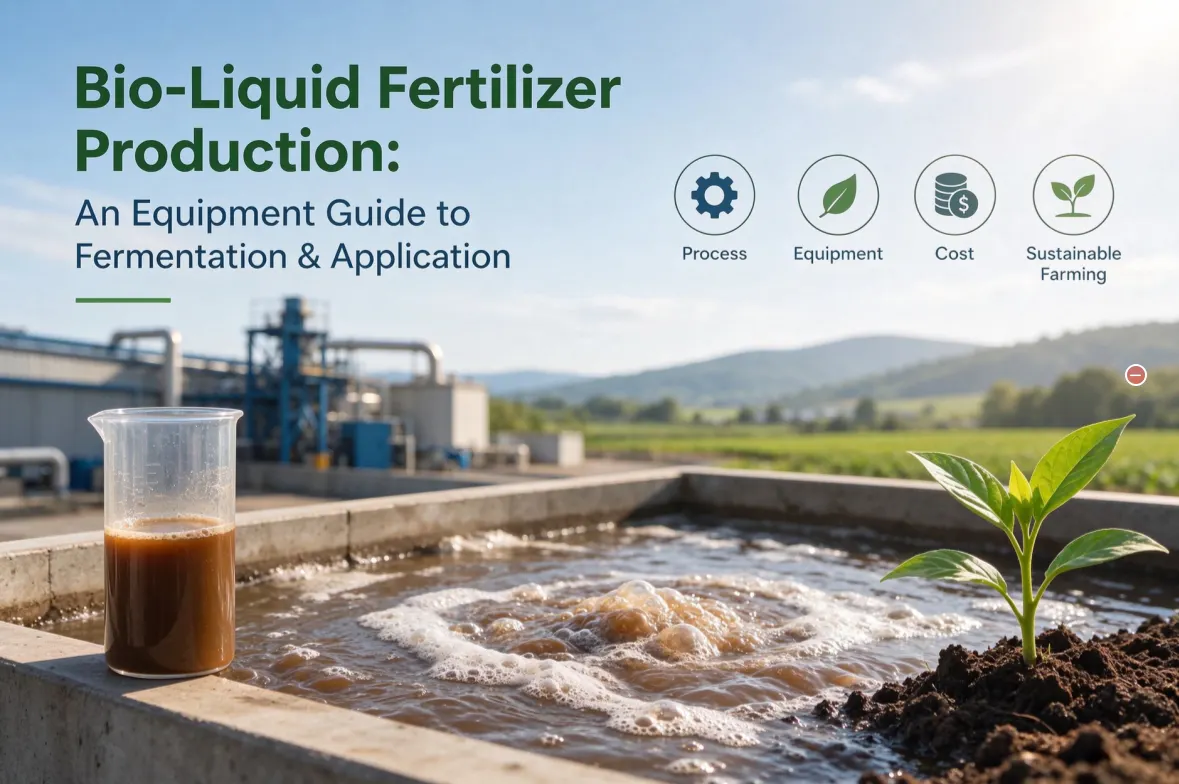
How to make bio-liquid fertilizer is a practical question for fertilizer manufacturers looking to turn organic materials into a marketable liquid product. Depending on the formulation, production may involve fermenting plant residues, manure-based materials, or other organic feedstocks, followed by separation, blending, filtration, and packaging. A well-designed process can produce a consistent fertilizer that is easier to store, transport, and apply through suitable agricultural systems.
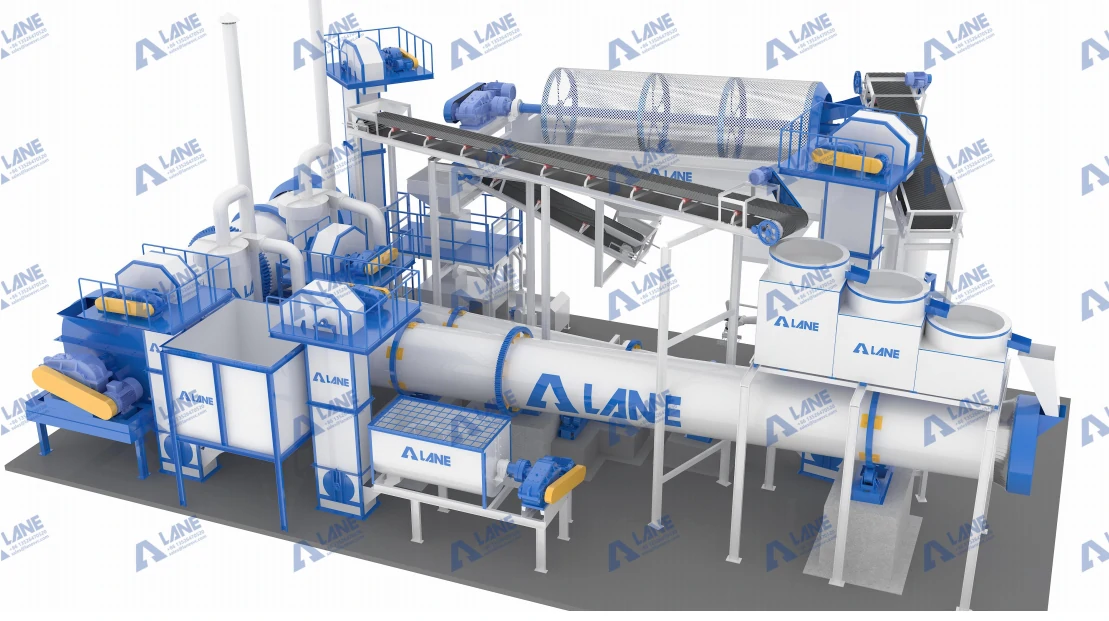
But a fermentation tank alone does not make a commercial production line. Feedstock variation, oxygen supply, temperature control, microbial activity, filtration, and storage stability all affect the finished product. A process that works in a small drum may become unreliable when scaled to several tonnes per day.
For plant owners, production managers, and purchasing teams, the real task is to match the production route to the product being sold. This guide explains how to make bio-liquid fertilizer at a commercial level, what equipment each route requires, and which technical details should be confirmed before ordering a production line.
Bio-liquid fertilizer is a broad market term. It may describe a fermented liquid made from organic materials, a liquid formulation containing beneficial microorganisms, or a product that combines organic nutrients with selected microbial inputs. These products should not be treated as interchangeable because their production and quality-control requirements differ.
Two main routes are worth separating before equipment selection.
Route A: Fermented organic liquid fertilizer
This route uses materials such as plant residues, fruit and vegetable waste, manure-derived liquids, seaweed, or other organic feedstocks. Microorganisms break down or transform part of the organic material during controlled fermentation. The resulting liquid is then separated, adjusted, and packaged.
Route B: Microbial biofertilizer formulation
This route focuses on cultivating selected beneficial microorganisms, such as nitrogen-fixing or phosphate-solubilizing bacteria. The production process requires suitable culture media, inoculum preparation, controlled fermentation, contamination control, and testing of viable cell concentration.

The distinction matters commercially. A tank designed for general organic fermentation may not provide the contamination control or process conditions required for a defined microbial inoculant. Likewise, a microbial culture fermenter is not automatically suitable for handling fibrous manure slurry.
Before deciding how to make bio-liquid fertilizer, define the product label, target application, raw materials, and whether viable microorganisms are a guaranteed product specification.
For fermented organic liquid fertilizer, a practical production route normally includes feedstock preparation, formulation, fermentation, solid-liquid separation, post-treatment, quality testing, storage, and filling.
Common feedstocks include plant leaves, crop residues, fruit and vegetable processing waste, suitable manure-derived materials, seaweed, and other biodegradable organic inputs. Molasses or another suitable carbon source may be added in some formulations to support microbial activity.
Do not select feedstock based on availability alone. Its moisture, fiber content, nutrient composition, contamination risk, and seasonal consistency all affect the process. For example, fibrous plant residues may require shredding before mixing, while manure-based materials may need screening or preliminary separation.
For commercial production, establish a raw-material acceptance standard. At minimum, record the source, moisture, visible contaminants, odor, and batch composition. If the feedstock changes significantly from one delivery to another, the recipe may need adjustment.
Feedstock is weighed and transferred to a mixing or preparation tank. Water and other formulation ingredients are added according to the selected recipe. The goal is a uniform mixture that can be pumped, stirred, and fermented without creating dead zones or excessive settling.
A common mistake is to add too much solid material to increase the nutrient concentration. This can make the mixture difficult to circulate and may overload the agitator, pump, and downstream separator. The correct solids loading should be established through a pilot test rather than copied from an unrelated formula.

Transfer the prepared mixture to a suitable fermentation tank. Depending on the product, fermentation may be aerobic or anaerobic.
Temperature, pH, mixing, oxygen availability, and fermentation time should be monitored according to the selected feedstock and microbial process. There is no universal fermentation temperature or cycle time for every bio-liquid fertilizer.
LANE’s published fermentation-tank guide uses 35–50°C and 7–14 days as reference conditions for certain fermentation applications, while its comparison gives a longer 14–30-day range for anaerobic operation. These are equipment-planning references, not guaranteed recipes. Actual operating conditions must be validated with the customer’s formulation and raw materials.
A 2025 study on liquid fertilizers produced by anaerobic fermentation also demonstrates the importance of evaluating the chemical composition and characteristics of fermented liquid products.
After fermentation, the mixture may contain fibers, undigested organic matter, and suspended particles. A screening or solid-liquid separation stage removes larger solids before finer filtration.
This step is particularly important when the product will be applied through drip irrigation or fine spraying equipment. Excessive suspended solids can settle in storage tanks, block filters, and cause inconsistent filling.
The right separation method depends on the particle size, fiber content, viscosity, and required finished-product appearance. A screw press, screen, settling tank, or other separation device may be suitable in different situations. Buyers should ask for a separation test using representative feedstock.

The separated liquid may require formulation adjustment to meet the target nutrient profile, pH, or concentration. A blending tank helps distribute additives evenly, while a homogenizer may be useful when the product contains components that tend to separate.
Filtration should be selected according to the final application. A product sold as a suspension may retain some fine particles, while a product intended for fertigation generally needs stricter control of suspended solids and particle size.
Before filling, test the finished batch against its product specification. Depending on the product, this may include pH, electrical conductivity, nutrient content, organic matter, suspended solids, viscosity, microbial count, and contaminant screening.
Storage conditions also matter. Some fermented liquids continue to change after processing. Others may settle or lose microbial viability if stored under unsuitable conditions. Select tanks, closures, and filling procedures according to the product’s stability and packaging requirements.
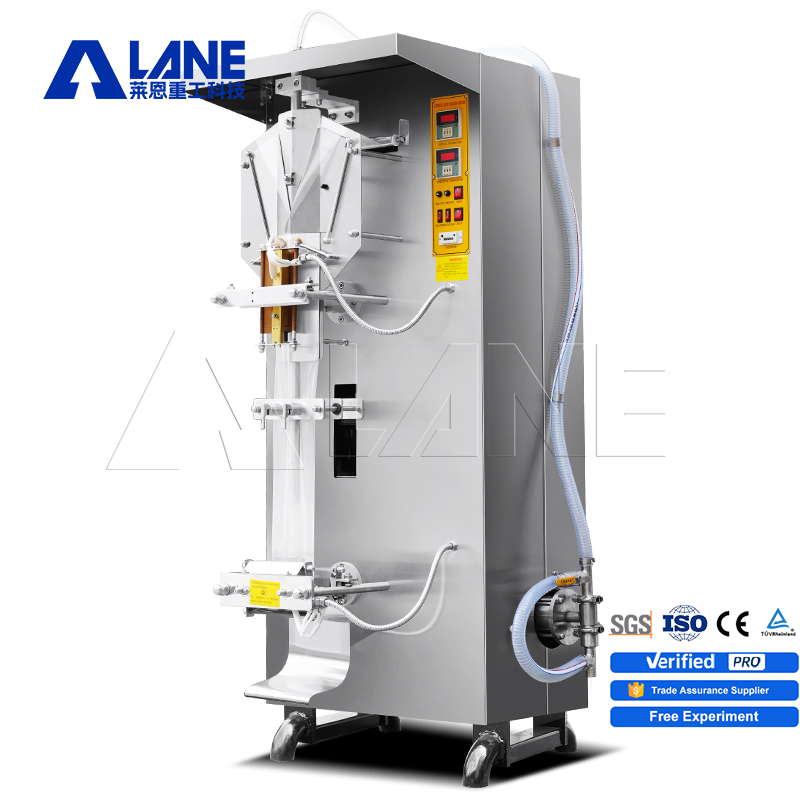
For a broader overview of liquid processing, blending, filtration, and filling, see LANE’s liquid fertilizer manufacturing process.
The equipment list should be built around the feedstock and production route. A plant processing fibrous organic slurry needs different preparation and separation equipment from a plant cultivating a selected microbial strain.
| Production Stage | Typical Equipment | Main Purchasing Consideration |
|---|---|---|
| Feedstock preparation | Crusher, shredder, screen, preparation tank | Particle size, fiber handling, cleaning |
| Mixing and dosing | Mixing tank, weighing system, dosing pump | Working volume, dosing accuracy, agitator design |
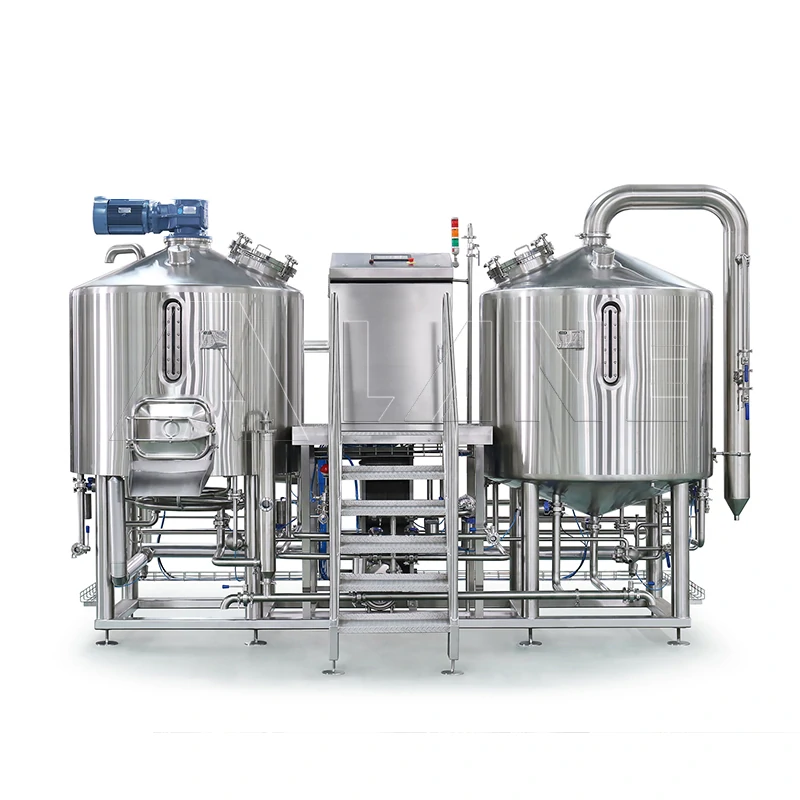
| Fermentation | Aerobic or anaerobic fermentation tank | Temperature, aeration or sealing, agitation |
| Solid-liquid separation | Screen, screw press, separator, settling tank | Solids removal, throughput, cleaning |
| Post-treatment | Blending tank, homogenizer, filter | Product consistency and filtration requirement |
| Storage and packaging | Storage tank, transfer pump, filling machine | Material compatibility and filling accuracy |
Buyer judgment: Do not accept a quotation that simply lists a “fermentation tank” without explaining its operating mode. A genuine fermentation vessel should be specified for the required process, including aeration or sealed operation, temperature control where needed, agitator design, cleaning access, and compatible materials.
LANE’s liquid fertilizer fermentation tank guide explains the difference between a fermentation tank, a mixing tank, and a chemical reactor. This distinction is important: a mixing tank can blend ingredients, but it does not automatically provide the biological process control required for fermentation.
A commercial process needs measurable control points. The correct limits depend on the formulation, but the following indicators are useful when evaluating how to make bio-liquid fertilizer consistently.
| Parameter | Why It Matters | Plant Control |
|---|---|---|
| Temperature | Influences microbial activity | Continuous or scheduled monitoring |
| pH | Tracks process changes and compatibility | Record at defined process stages |
| EC | Indicates dissolved ionic content | Compare with product specification |
| Suspended solids | Affects filtration and sediment | Test before and after separation |
| Nutrient content | Confirms fertilizer value | Laboratory analysis |
| Microbial count | Verifies viable microbial claims | Target-organism and contamination tests |
For microbial biofertilizers, viable cell count and contamination testing are not optional details. Tamil Nadu Agricultural University describes the scale-up of selected microbial inoculants through starter cultures and fermenters, with aeration, stirring, population checks, and contamination monitoring. That process is different from simply fermenting mixed organic waste.
A 2025 study in Agriculture also characterized liquid fertilizers produced through anaerobic fermentation and monitored properties including pH, conductivity, dissolved solids, and other product characteristics. Its findings demonstrate why a finished liquid should be tested rather than judged by color or odor alone.
The microbial inoculum preparation and fermentation procedures described by Tamil Nadu Agricultural University highlight the importance of controlled inoculation, aeration, continuous stirring, and contamination monitoring.
Capacity should be calculated from daily feedstock availability and the complete batch cycle, not from the fermentation tank’s nominal volume alone.
For a batch process, the plant must allow time for filling, fermentation, discharge, cleaning, and the next batch. If fermentation takes several days, the required working volume may be much larger than the volume needed for one day’s finished product.
For example, a plant targeting a regular daily output may need multiple fermentation tanks operating in rotation. One tank can be fermenting while another is being filled or discharged. The separation and filtration sections must also handle the liquid at the rate it leaves fermentation; otherwise, finished batches will wait in intermediate storage and delay the next cycle.
When evaluating how to make bio-liquid fertilizer at a target capacity, ask suppliers to state clearly:
A supplier should provide a process flow diagram and a capacity calculation. A single “tonnes per hour” figure is not enough to evaluate a batch fermentation plant.
The purchase price is only one part of the investment. A realistic budget should include raw material preparation, water, heating, aeration, electricity, cleaning, filtration consumables, labor, laboratory testing, storage, packaging, and residue handling.
Three areas are frequently underestimated.
Fermentation time and tank inventory. A longer fermentation cycle ties up working volume and may require additional tanks. A low initial equipment quote can become expensive if it does not provide enough capacity for continuous production
Separation and filtration. Fibrous or high-solids feedstock can increase cleaning frequency and reduce operating time. The cheapest filter is not necessarily the most economical choice if it blocks repeatedly or requires frequent replacement.
Product stability and quality testing. A liquid that looks acceptable immediately after processing may settle, change odor, lose viable microorganisms, or drift outside specification during storage. Stability tests and suitable storage arrangements should be budgeted before the plant is commissioned.
The more useful cost indicator is the cost per tonne of saleable product that meets specification—not the price per fermentation tank.
A supplier quotation should explain the process, not just list machines. Before ordering, provide the supplier with the feedstock type, daily input, target output, formulation, fermentation route, packaging format, and intended application.
Ask for a proposed process flow, equipment specifications, tank working volumes, material grades, motor power, heating or aeration requirements, filtration details, and cleaning arrangements. If viable microorganisms are part of the product, also ask how the supplier will support hygienic operation and prevent cross-contamination.
LANE offers liquid fertilizer equipment such as fermentation tanks, mixing tanks, filters, pumps, storage tanks, and filling systems. Its liquid fertilizer production line can be used as a starting point for configuring the liquid-processing section. The final arrangement should still be tailored to the feedstock and biological process.
For buyers comparing suppliers, a useful acceptance plan should include a trial with representative raw materials, a check of the finished liquid against agreed specifications, and confirmation that the equipment can complete the required batch cycle.
Plant residues, fruit and vegetable waste, suitable manure-derived materials, seaweed, and other biodegradable organic inputs may be used. The feedstock must be checked for contaminants, moisture, nutrient composition, and suitability for the chosen fermentation route.
The cycle depends on the raw material, microbial process, temperature, and whether fermentation is aerobic or anaerobic. LANE’s equipment guide gives reference ranges of 7–14 days for certain aerobic applications and 14–30 days for anaerobic operation, but the actual cycle must be validated for each formulation.
No. A mixing tank blends or dissolves ingredients, while a fermentation tank must support the required biological conditions. Depending on the process, it may need aeration, sealed operation, temperature control, agitation, and suitable cleaning provisions.
Most commercial processes need some form of screening or separation, but the required filtration level depends on the final product. Products for drip irrigation generally need stricter suspended-solids control than products sold as coarse organic suspensions.
Yes, if the tanks, pumps, seals, and pipelines are compatible with the formulations and the plant has a suitable cleaning procedure. Products containing different microbial strains may require additional hygiene and contamination-control measures.
The investment depends on capacity, fermentation method, tank material, automation, separation equipment, filtration, storage, and filling requirements. A reliable quotation needs feedstock information and a defined finished-product specification.
Organic liquid fertilizer mainly supplies nutrients and organic compounds from processed organic materials. Microbial biofertilizer is formulated around selected living microorganisms that perform specific functions, such as nitrogen fixation or phosphorus solubilization. Their production controls and quality tests are different.
Provide the raw material type, daily input, target finished-liquid output, fermentation route, intended application, packaging size, local power supply, and any nutrient or microbial specifications. A representative raw material sample helps the supplier evaluate mixing, pumping, and separation requirements.
Knowing how to make bio-liquid fertilizer is only the first step. Commercial production depends on selecting the right feedstock, controlling fermentation, separating solids effectively, and maintaining product quality through storage and packaging.
Before purchasing equipment, buyers should define whether they are making a fermented organic liquid or a microbial inoculant, then require the supplier to design and validate the process around that product. Confirm working volumes, fermentation conditions, separation performance, cleaning arrangements, and finished-product tests in writing.
LANE can help assess liquid fertilizer equipment and production line configurations according to your raw materials, target capacity, and product requirements. Explore the liquid fertilizer manufacturing process or review the liquid fertilizer fermentation tank before preparing your project specification.
For more details, please feel free to contact us.
Henan Lane Heavy Industry Machinery Technology Co., Ltd.
Email: sales@lanesvc.com
Contact number: +86 13526470520
WhatsApp: +86 13526470520
Leave a Comment
LANE has more than 500 successful cases and is committed to providing customers with first-class solutions, high-end machinery and equipment, and one-stop pre-sales, sales and after-sales comprehensive customer service.