
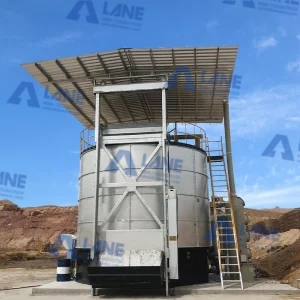
How to Choose a Liquid Fertilizer Fermentation Tank
A liquid fertilizer fermentation tank is worth buying only when it matches the solids and volume your line actually produces — for most plants that means sizing to 50–75% of daily batch, at 35–50 °C for the fermentation cycle. The decision that decides everything is not the tank’s sticker price; it is whether the vessel can hold your real feedstock without caking or foaming over.
This guide covers aerobic vs anaerobic, how to size tank volume, what drives cost, and the 5 questions to ask suppliers before you get a quote.
Not every liquid fertilizer line needs a fermentation tank — and buying one where it does not belong is how the budget dies quietly. A fermentation tank earns its keep only when your feedstock actually ferments: it carries enough organic solids and microbial activity to be biologically broken down, and you can hold it at temperature for days. Clear soluble NPK blends (UAN, urea-ammonium, potassium chloride solutions) do not ferment; a simple mixing tank dissolves them faster and cheaper.

That is the first filter. Fermentation pays when the product is a bio or organic liquid fertilizer — made from manure slurry, anaerobic digestate, seaweed or fish hydrolysate, or amino-acid fermentation — not when you are blending salts into water. Check your product against a liquid fertilizer production line before you buy the vessel.
If your product is a clear soluble blend, a fermentation tank is the wrong asset — you are paying for heating and aeration you will never use.
Where the fermentation tank sits in the line, and what to specify at each stage:
|
Stage |
Typical equipment | What to specify |
| Feedstock preparation | Solid-liquid separator / screw press / pump |
Inlet solids %, flow rate, pump type, buffer tank |
|
Fermentation |
Liquid fertilizer fermentation tank | Working volume, 304/316 grade, temperature jacket, aeration or sealing, agitator, CIP |
| Post-treatment | Filter / homogeniser |
Mesh size, particle size, sedimentation and stability target |
| Filling machine, storage tank | Fill accuracy, container size, line speed, dosing |
Table 1. Liquid fertilizer production stages, typical equipment and what to specify.
The single biggest tank decision is whether the biology runs with oxygen (aerobic) or without it (anaerobic). Aerobic tanks blow air through the liquid, break down organic matter faster — typically 7–14 days — and control odor well, but they cost more energy and need foam management. Anaerobic tanks are sealed, run 14–30 days, produce biogas as a by-product, and cut aeration energy, but they add sealing, heating and pressure-relief cost and a slower cycle.
Match the mode to the feedstock, not to what the brochure shows:
|
Tank type |
When it fits | Output form | Best for | Main trade-off |
| Aerobic fermentation tank | Organic slurry / manure / digestate, solids 3–8%, fast turnaround wanted | Stable liquid organic fertilizer | Manure valorisation, digestate finishing |
Aeration energy, foam control |
|
Anaerobic fermentation tank |
High-load, sealed digestion, biogas recovery useful | Liquid fertilizer + biogas | Anaerobic digestion tie-in, stable batches |
Long cycle, sealing/heating cost |
|
Mixing / blending tank |
Soluble salts, clear NPK, dissolution only | Clear liquid fertilizer | Water-soluble and NPK blends | No biological breakdown |
| Chelation reactor | Micronutrient chelation, pH/temperature control | Chelated trace-element liquid | Premium foliar / fertigation lines |
Precision heating and stirring |
Table 2. Liquid fertilizer fermentation tank type comparison (type / when it fits / output / best for / trade-off).
Three vessels look similar and do very different jobs. A mixing tank dissolves soluble inputs; it has an agitator and little else. A reactor carries a controlled chemical reaction — chelation, pH adjustment — with a heating jacket and often a condenser. A fermentation tank is a bioreactor: it holds temperature, supplies oxygen or seals it out, stirs gently, and is cleanable with CIP because biology fouls fast.
The upgrade mistake is buying a mixing tank with an agitator and calling it a fermentation tank — it will not aerate or hold temperature, and you will add a second vessel inside a season.
Read the specification, not the label: does the tank quote an aeration or sealed mode, a temperature jacket, and a CIP port? If none of the three appear, it is a mixing tank.
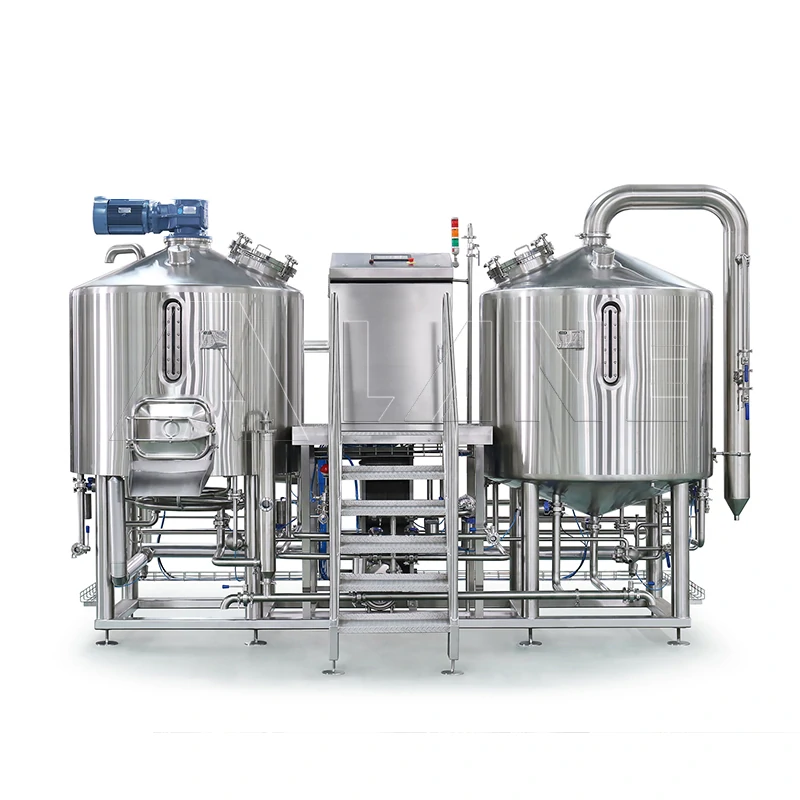
Sizing is a batch-volume exercise, not a guess at a round number. For a batch process, working volume should sit at 50–75% of your daily output target, with 10–15% freeboard above the liquid for foam. Total installed volume then follows from residence time: if you need 10 m³/day of finished liquid and run a 10-day aerobic cycle, you need roughly 100–150 m³ of working volume across tanks.
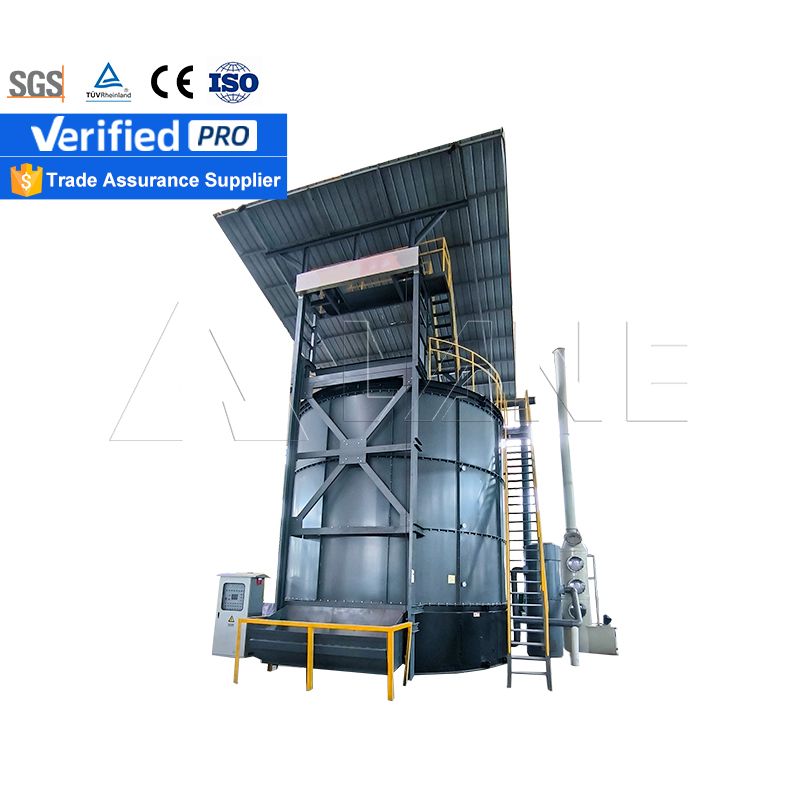
The vessel shell is the cheapest part of the asset. For a 5,000 L tank, the tank body alone runs roughly $2,700–$4,500 FOB from Chinese manufacturers — but the shell is only 30–50% of what the line really costs once you add heating, agitation, aeration or sealing, control, and CIP.
A quote that lists only a tank is not a cost. Push for a price split and compare against a liquid fertilizer plant cost breakdown before you commit.
A supplier who cannot answer these on your actual feedstock is not engineering your tank — they are selling you a catalog item. Ask all five, in writing:
Red flags: a supplier who only sends a product page; who cannot state the guaranteed batch cycle; who has no reference plant on your feedstock. If a supplier cannot give a mass balance at your actual solids and daily batch — only a brochure — that is the answer: the tank is not engineered for your line. Move on.
Whatever you buy, the finished liquid fertilizer must meet the heavy-metal limits in Regulation (EU) 2019/1009 Annex I — Cd 1.5, Pb 120, Ni 50 mg/kg, among others — and your market’s local fertilizer rules.
What feedstocks can a liquid fertilizer fermentation tank handle?
Manure slurry, anaerobic digestate, seaweed or fish hydrolysate and amino-acid broths, at roughly 3–12% solids. It is not for clear soluble NPK blends, which dissolve fine in a mixing tank.
Can it handle high-solids slurry above 12%?
Not well — high solids cake and sediment. Dewater or dilute to under ~12% first, or the bottom of the tank becomes sludge.
What capacity tank do I need for my production volume?
Size working volume to 50–75% of daily output and multiply by residence time; typical single vessels run 500 L to 50,000 L.
How long does fermentation take?
Aerobic cycles run about 7–14 days; anaerobic about 14–30 days. Plan tank count so one can be off-line for CIP while the rest run.
What is the lead time for a tank?
Standard 304 tanks ship in roughly 2–4 weeks FOB; custom 316 or jacketed builds add time. Confirm the battery limits — civil, electrical and install — in the quote.
What does a tank cost?
A 5,000 L tank body runs about $2,700–$4,500 FOB, but that is 30–50% of the real line cost once heating, agitation, control and CIP are added.
What maintenance does it need?
A daily CIP cycle, periodic agitator seal and sensor calibration, and insulation checks. Budget CIP downtime when you size tank count.
Is 316 stainless worth the upgrade?
Yes for acidic or chloride-heavy inputs like seaweed or some digestates; 304 is fine for standard manure and slurry feedstocks.
What voltage and power do I need?
Most builds run 380 V three-phase or 220 V single-phase; state voltage and power availability before quoting so the control panel matches.
Does it meet EU or US fertilizer regulation?
The finished liquid must meet heavy-metal limits such as Regulation (EU) 2019/1009 Annex I; organic-grade products for the US market follow 7 CFR 205.
Take the judging criteria and the 5 questions to your suppliers. For a spec sheet and a cost breakdown sized to your feedstock, talk to the liquid fertilizer equipment team — we will walk the mass balance before we quote.
Leave a Comment
LANE has more than 500 successful cases and is committed to providing customers with first-class solutions, high-end machinery and equipment, and one-stop pre-sales, sales and after-sales comprehensive customer service.