

Manure Dewatering Machine: A Buyer’s Selection Guide
A manure dewatering machine separates a pumpable manure mixture into a drained liquid stream and a wetter solid fraction by screening and mechanical compression. For livestock operations and organic fertilizer plants, this step can reduce the volume of slurry handled by storage tanks, pumps, and downstream treatment equipment. It can also make the retained solids easier to convey or blend with other composting materials.
The purchasing risk with a manure dewatering machine is not whether a screw can squeeze water from manure. It is whether the selected manure dewatering machine can handle the actual feed: its total solids, fiber, bedding, sand, particle size, and daily flow variation. A model that works with screened dairy manure may behave differently with dilute pig slurry or poultry waste containing coarse particles.
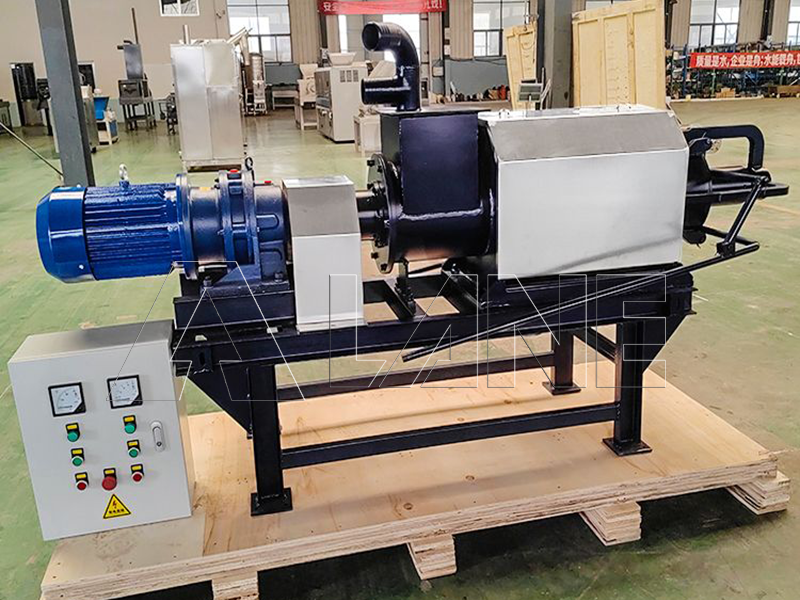
This guide focuses on the engineering checks that matter before ordering: feed suitability, screw-press operation, published LANE model data, wear parts, plant integration, and acceptance testing. The aim is to help buyers specify a machine against measurable operating conditions rather than choose by model name alone.
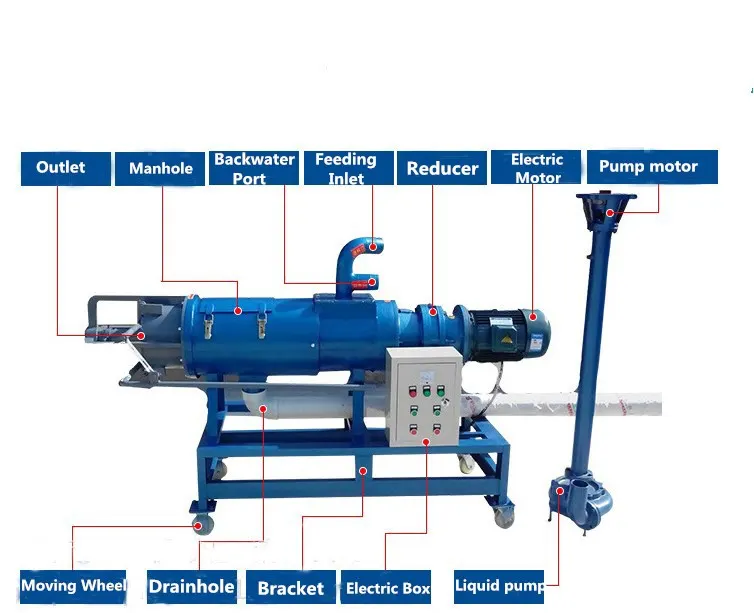
A manure dewatering machine based on screw-press separation removes liquid from a wet mixture through a perforated or wedge-wire screen and a rotating screw shaft. The main assembly normally includes a feed inlet, screen cylinder, screw, drive, discharge adjustment mechanism, liquid outlet, and solids outlet.
In a manure dewatering machine, the feed enters the separation chamber and moves along the screen as the screw rotates. Liquid drains through the screen openings, while larger particles remain inside. Toward the discharge end, the screw chamber and outlet restriction create compression. More liquid is forced through the screen before the retained solids leave the machine.
LANE describes its Screw Extrusion Dehydrator as a physical squeezing system: the screw gradually pushes material forward, the available screw-cavity volume decreases, and pressure forces water through the screen and out through the drain pipe. The front-end adjustment device can influence discharge speed and moisture. These are operating principles, not a promise that every manure feed will reach the same final moisture.
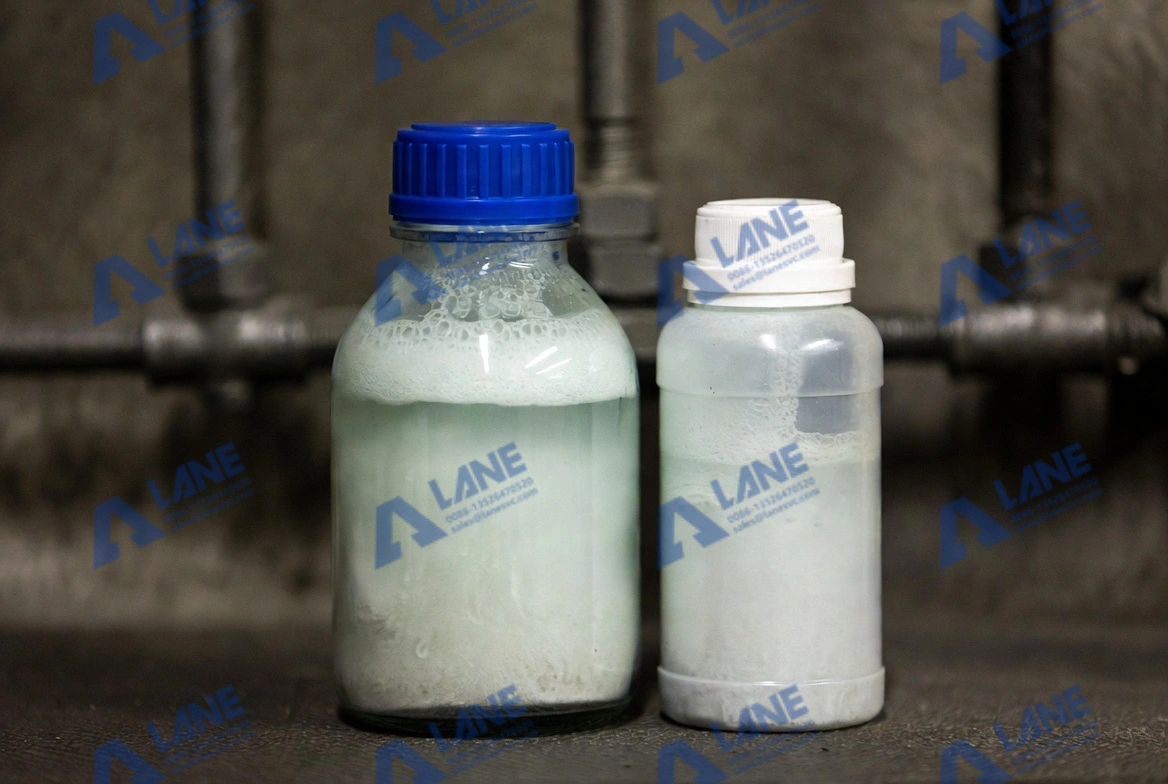
A manure dewatering machine performs solid-liquid separation; it does not produce bone-dry powder. The discharged cake still contains moisture. If the downstream process requires a dry, free-flowing fertilizer feed, buyers should assess whether a separate dryer is needed rather than expecting the screw press to do both jobs.
The name of the livestock source is not enough to select a manure dewatering machine. Two farms producing cattle manure can have different feed behavior because of bedding, wash water, sand, storage time, and prior treatment. The supplier needs a representative sample or a clear feed specification.
| Feed Material | Main Operating Concern | Information to Give the Supplier |
|---|---|---|
| Dairy manure | Fiber, bedding, and sand can affect conveying and wear | Total solids, bedding type, sand content |
| Pig slurry | Dilution and fine suspended solids can limit cake formation | Total solids, daily volume, flow variation |
| Poultry manure | High solids and variable particle size | Moisture, particle size, feeding consistency |
| Anaerobic digestate | Fine particles and changing composition | Digestion stage, total solids, residual fibers |
| Mixed livestock manure | Feed composition can change between batches | Representative sample and mixing method |
The University of Wisconsin–Madison Extension notes that screw-press separation generally performs better with manure slurry above approximately 4% total solids than with more dilute slurry. Treat this as an application reference, not a universal minimum specification for every manure dewatering machine or feed material. The actual result also depends on screen openings, screw configuration, feed preparation, and the required output.
Sand and bedding deserve particular attention. Sand can settle in feed lines and accelerate abrasion. Long fibers can interfere with steady conveying, while very dilute slurry may not form a stable solid fraction at the discharge end. If the feed contains stones, metal, or other foreign objects, discuss screening or a solids trap upstream.
Buyer’s judgment: Specify total solids as a measured percentage, not simply “wet manure.” Also report the expected hourly flow, peak flow, bedding, sand, and whether the material is raw manure or digestate. These details are more useful for choosing a manure dewatering machine than the animal category alone. They also give the supplier a defensible basis for recommending a screen and screw configuration for the manure dewatering machine.
For buyers comparing a manure dewatering machine, LANE lists four Screw Extrusion Dehydrator models: LA180, LA200, LA280, and LA1200. The product page publishes voltage, motor power, dimensions, weight, capacity figures, and several connection or screen dimensions. The capacity row does not state a unit, so the figures below are reproduced as published and must not be treated as m³/h or tonnes/h until the manufacturer confirms the measurement basis.
| Parameter | LA180 | LA200 | LA280 | LA1200 |
|---|---|---|---|---|
| Voltage | 380 V | 380 V | 380 V | 380 V |
| Power | 4 + 3 kW | 4 + 3 kW | 5.5 + 3 kW | 3 + 3 kW |
| External dimensions (mm) | 2000 × 600 × 1300 | 2200 × 610 × 1350 | 2400 × 800 × 1300 | 2600 × 1200 × 1600 |
| Weight (kg) | 340 | 510 | 680 | 480 |
| Published capacity (unit not stated) | 5–6 | 8–10 | 12–15 | 35–40 |
| Filter inner diameter (mm) | 180 | 200 | 280 | 260 |
| Inlet diameter (mm) | 76 | 76 | 76 | 76 |
| Overflow port diameter (mm) | 76 | 76 | 76 | 760 |
| Drain pipe diameter (mm) | 110 | 110 | 110 | 160 |
Do not size a plant from the capacity row alone. Before selecting a manure dewatering machine, ask LANE to confirm:
Planning a fertilizer project? Contact LANE engineering team to get a free 3D plant layout drawing, motor power calculation, and factory-direct quote within 4 hours. Request 3D Layout & Budget Estimate →
When evaluating a manure dewatering machine, buyers should inspect the screw, shaft, screen, and replaceable wear components instead of relying on a general durability claim.
LANE states that the screw, main shaft, and spiral blades of its Screw Extrusion Dehydrator are made from thickened 304 stainless steel. The product page also specifies wear-resistant manganese alloy in easily worn parts of the winch and claims a 2–3 times service-life increase compared with similar products. This is a manufacturer-stated comparison; it should not be treated as a guaranteed operating life without defined test conditions.
The screen is described as a V-shaped wedge-wire mesh. Its profile is intended to reduce blockage during operation. However, no screen aperture is listed in the published model table. Buyers should request the opening size, wire specification, replacement cost, and cleaning procedure. A smaller opening may retain more fine solids but can increase flow resistance; a larger opening may drain more freely while allowing more fine particles into the liquid stream.
For a manure dewatering machine processing sand-bearing slurry, ask which surfaces are most exposed to abrasion and whether liners, screw sections, or screens can be replaced separately. Also request a recommended inspection schedule and a list of standard spare parts. Maintenance planning should be based on feed abrasiveness and operating hours, not an assumed universal interval.

For a manure dewatering machine installed in a fertilizer plant, the solid and liquid outlets need different downstream routes. The separated solid fraction may go to a composting area, a mixing stage, or further drying. The liquid fraction may require temporary storage, additional treatment, or another separation step depending on its suspended-solids content and the plant’s process target.
If the liquid stream still carries too many suspended particles for the next operation, buyers can review LANE’s Solid Liquid Separator page as a related equipment and process reference. The two machines should not automatically be specified in series: first define the required quality of each output, then determine whether a second separation stage is justified.
For projects that convert separated manure solids into organic fertilizer, the manure dewatering machine should be coordinated with conveyors, composting equipment, mixers, and dryers. LANE’s fertilizer equipment and production solutions provide the broader equipment context. Its LANE Machinery website also describes remote technical guidance and on-site installation guidance as service options.
A practical layout review should cover daily feed volume, peak hourly flow, buffer-tank capacity, pump rate, machine access, drainage routing, and the capacity of downstream equipment. A separator that is oversized relative to the receiving process can create unnecessary capital cost; an undersized unit can become a bottleneck even if the rest of the plant has spare capacity.
A quotation for a manure dewatering machine should identify the feed conditions and expected outputs. Ask the supplier to state the capacity unit, test material, operating duration, and measurement method. “High dewatering efficiency” is not an acceptance criterion.
Before issuing a purchase order, put these points in writing:
The strongest acceptance test uses a representative sample of the buyer’s own manure. Record feed rate, incoming total solids, operating settings, discharge moisture, and the condition of the liquid stream. If the supplier cannot test the actual feed, agree on a substitute material and document the limitations. This gives both parties a measurable basis for evaluating the manure dewatering machine.
Potentially, yes, but not with an assumed identical setup. Feed solids, fiber, bedding, sand, and particle size affect screw conveying and separation. A supplier should review a representative sample before confirming the manure dewatering machine configuration.
LANE states that the moisture content after dewatering is around 60%, while also noting that different raw materials produce different results. Treat this as a general product-page reference, not a guaranteed manure-cake value. Put the target moisture and test method into the quotation if they are critical to the next process.
The published figures are 5–6, 8–10, 12–15, and 35–40, but the capacity unit is not specified. Ask LANE to confirm the unit, feed basis, and test conditions before comparing the LA180, LA200, LA280, and LA1200 or sizing a plant.
There is no single maintenance interval that applies to every feed. Inspect the screen, screw, bearings, drive, and discharge adjustment according to operating hours and feed abrasiveness. Sand-heavy material may require closer wear monitoring than screened slurry.
LANE’s company website lists remote technical guidance and on-site installation guidance among its services. Confirm whether on-site support is included in the quotation, who covers travel costs, and what commissioning and operator training will be provided.
The right manure dewatering machine is the one that can process the buyer’s real manure stream at a verified throughput and deliver a solid fraction and liquid fraction suitable for the next process. Model size and motor power are only part of that decision.
Before ordering, confirm three items: the capacity unit and feed basis; the screen and wear-part configuration; and the performance test that will be used for acceptance. These checks help prevent a common procurement problem: receiving a machine that matches the brochure but not the plant’s actual material.
For more details, please feel free to contact us.
Henan Lane Heavy Industry Machinery Technology Co., Ltd.
Email: sales@lanesvc.com
Contact number: +86 13526470520
WhatsApp: +86 13526470520
Leave a Comment
Latest Posts
LANE has more than 500 successful cases and is committed to providing customers with first-class solutions, high-end machinery and equipment, and one-stop pre-sales, sales and after-sales comprehensive customer service.