

Liquid Fertilizer Mixing Tank: A Buyer’s Guide
A liquid fertilizer mixing tank does more than hold raw materials. It must create a consistent batch, keep the required ingredients moving, and deliver a product that meets the formulation target before filtration, transfer or filling. For fertilizer manufacturers, a poorly matched tank can lead to undissolved solids, sediment at the bottom, inconsistent nutrient concentration, excessive mixing time and unnecessary power consumption.
The right specification depends on the actual product being manufactured. A tank used to blend fully soluble liquid ingredients has different requirements from one handling mineral suspensions, organic extracts or concentrated formulations. Buyers should therefore evaluate the working volume, agitator arrangement, material compatibility and discharge conditions together—not select a vessel by capacity alone.
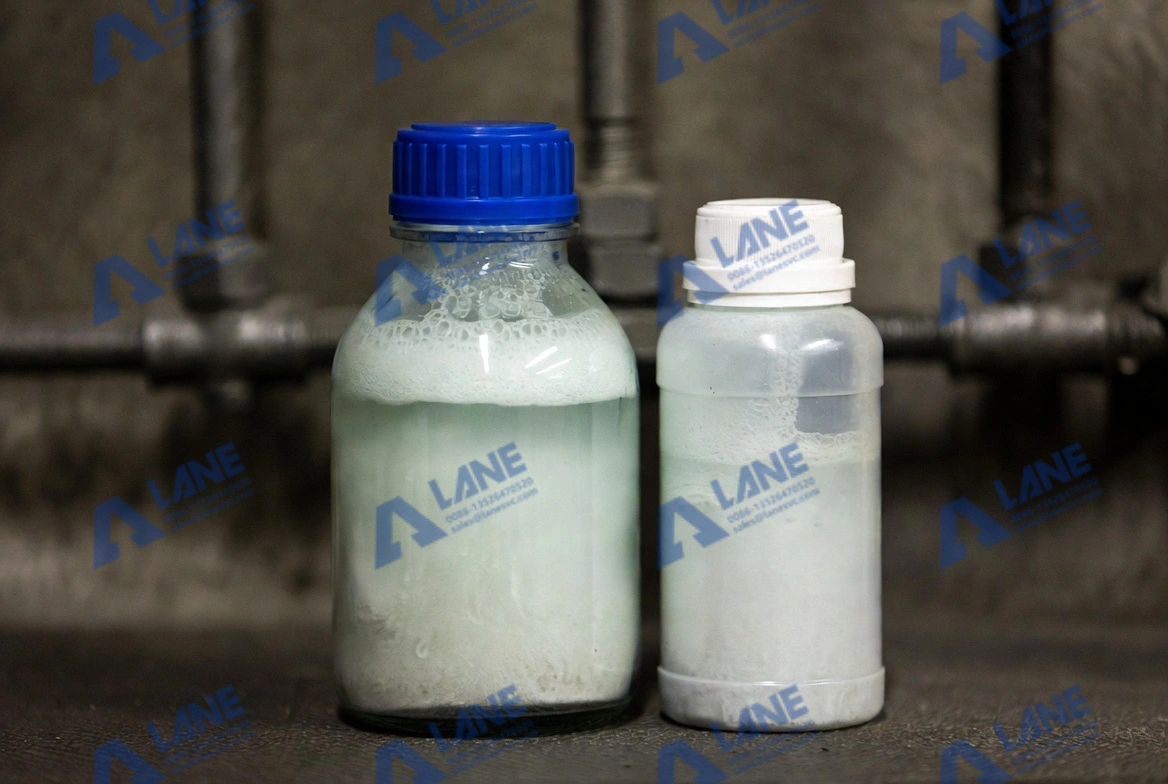
This guide is intended for fertilizer plant owners, production managers and equipment purchasers comparing mixing equipment for a new line or an existing plant upgrade.
A liquid fertilizer mixing tank is generally used for batch preparation, blending, dissolving and holding materials during a production stage. Its job is to produce a batch with the required uniformity before the material moves to the next operation.
Typical duties include:
These duties should not be treated as interchangeable. Dissolving a soluble powder, for example, is not the same mixing task as keeping dense mineral particles suspended. A standard agitator may be suitable for one duty but inadequate for the other.
For this reason, buyers should describe the expected product condition at the tank outlet. Is the target a clear solution, a uniform suspension or simply a blended intermediate? That answer is more useful to the equipment supplier than a request for a tank with a particular motor size.
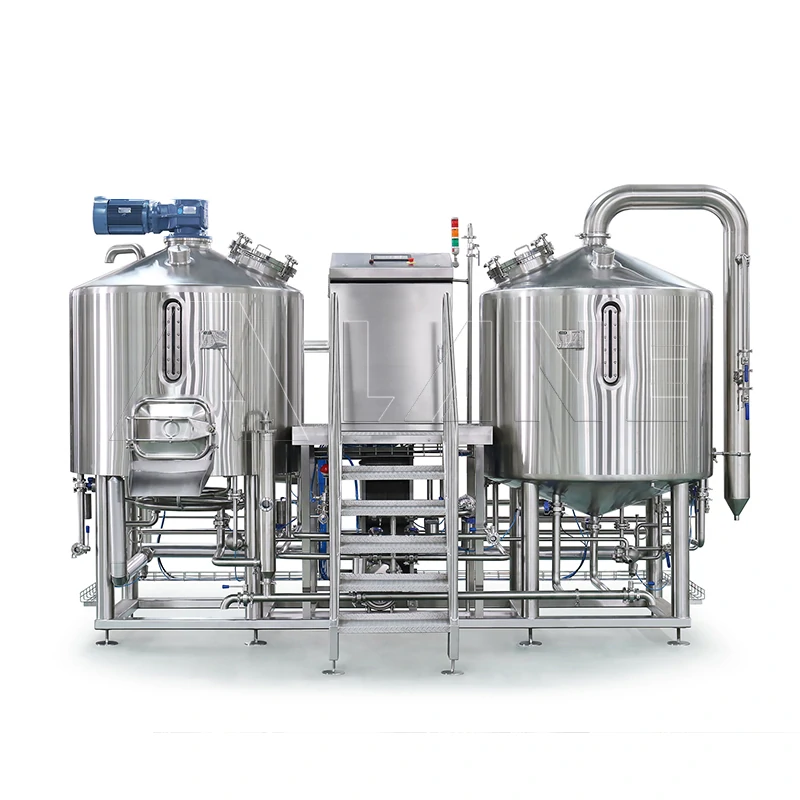
The first selection decision is the mixing duty. The second is the physical behavior of the material.
For low-viscosity liquids that mix readily, the main requirement is sufficient circulation throughout the vessel. If the ingredients have noticeably different densities, the mixer must also prevent concentration gradients from remaining in different parts of the tank.
For powder dissolution, the powder feeding point matters. If dry material is added too quickly or directly into a poorly circulated zone, it may form lumps that take longer to break down. The mixing arrangement should create enough liquid movement around the addition area without drawing excessive air into the batch.
Suspension formulations require a different approach. Particle size, particle density, solids loading and settling tendency affect the required impeller flow and operating conditions. A mixer that only creates a strong surface vortex may still leave solids accumulated near the bottom.
The practical selection rule is straightforward: specify the material and the required result before specifying the agitator. Industrial mixing guidance from Sulzer’s agitator selection notes also identifies tank geometry, process duty and media properties as central factors in agitator selection.

Before requesting a quotation, prepare the following information:
A supplier who asks for these details is doing useful engineering work. A quotation based only on nominal tank capacity is not enough to establish whether the equipment will perform correctly.
Planning a fertilizer project? Contact LANE engineering team to get a free 3D plant layout drawing, motor power calculation, and factory-direct quote within 4 hours.
Request 3D Layout & Budget Estimate →
LANE’s product page lists a stainless steel mixing tank with a barrel volume range of 100–10,000 L and a spindle speed range of 0–150 rpm. The page identifies SUS304 and SUS316 in its parameter information. Its product description also mentions SUS316L, so buyers should confirm the exact material grade before placing an order.
The following table separates published information from items that still require project-specific confirmation.
| Parameter | Published Information | What Buyers Should Confirm |
|---|---|---|
| Barrel volume | 100–10,000 L | Nominal capacity, working volume and minimum operating level |
| Spindle speed | 0–150 rpm | Actual operating range under the selected agitator and material load |
| Material | SUS304, SUS316; product description also mentions SUS316L | Exact grade for the tank body and all product-contact parts |
| Power | 75 kW listed on the page | Whether this is model-specific, optional or applicable to a particular configuration |
| Usage | Heating, blending and mixing | Required process duty and whether heating or cooling is included |
| Warranty | 1 year | Warranty scope, exclusions and spare-parts arrangements |
Important specification note: The published page does not provide a complete model-by-model table linking capacity, motor power, agitator type and tank dimensions. The 75 kW figure should therefore not be treated as the standard motor power for every tank in the 100–10,000 L range. Request a technical datasheet for the exact configuration being quoted.
No. Tank volume alone does not determine plant output.
A 5,000 L vessel does not automatically produce 5,000 L of finished fertilizer per batch. The usable working volume may be lower than the nominal volume because the tank needs operating space for liquid circulation, powder addition, foaming or other process requirements.
Buyers should distinguish three figures:
For example, a plant running several formulations may need time to empty and clean the tank between batches. A larger vessel will not necessarily increase daily output if upstream dosing or downstream filtration is the actual bottleneck.
When evaluating a liquid fertilizer mixing tank, ask the supplier to calculate the expected batch cycle using your recipe and operating schedule. The calculation should include filling, ingredient addition, mixing, sampling, discharge and cleaning where applicable.
The agitator should match the flow pattern required inside the vessel. Higher rotational speed is not automatically better. A fast mixer can create a deep vortex, draw air into the liquid or consume more power without improving circulation at the bottom of the tank.
For liquid blending, the supplier should consider the tank diameter, liquid height, impeller position and liquid viscosity. For suspension mixing, the design must also account for particle settling and the need to keep solids moving near the tank bottom.
Tank geometry matters just as much as the drive unit. In a tall vessel, one impeller may not circulate the full liquid column effectively. A different impeller arrangement or multiple mixing levels may be needed, depending on the material and batch depth.
ProQuip’s industrial tank design discussion explains why viscosity and vessel geometry influence mixer placement and configuration. This is why buyers should request an agitator proposal based on their actual formulation rather than accepting a generic motor-and-shaft arrangement.
For LANE’s equipment, the product page identifies the tank, stirring device and jacket as major structural components. The jacket may be configured for heating or cooling, with full-jacket and semicircular-coil jacket forms mentioned in the product description. The final arrangement should be confirmed against the required temperature range and heat-transfer duty.

Neither grade is universally suitable for every fertilizer formulation. Material selection must be based on the chemical composition, concentration, temperature and cleaning conditions of the product.
SUS304 may be suitable for less aggressive media, while SUS316 or SUS316L may be considered where the formulation presents greater corrosion concerns. However, choosing a higher-grade stainless steel without checking the actual chemistry is not a substitute for a material compatibility review.
Ask the supplier to identify the material used for each wetted component, including:
Do not accept a quotation that simply says “stainless steel” if corrosion resistance is important to the process. The purchase specification should state the material grade clearly and identify which components it covers.
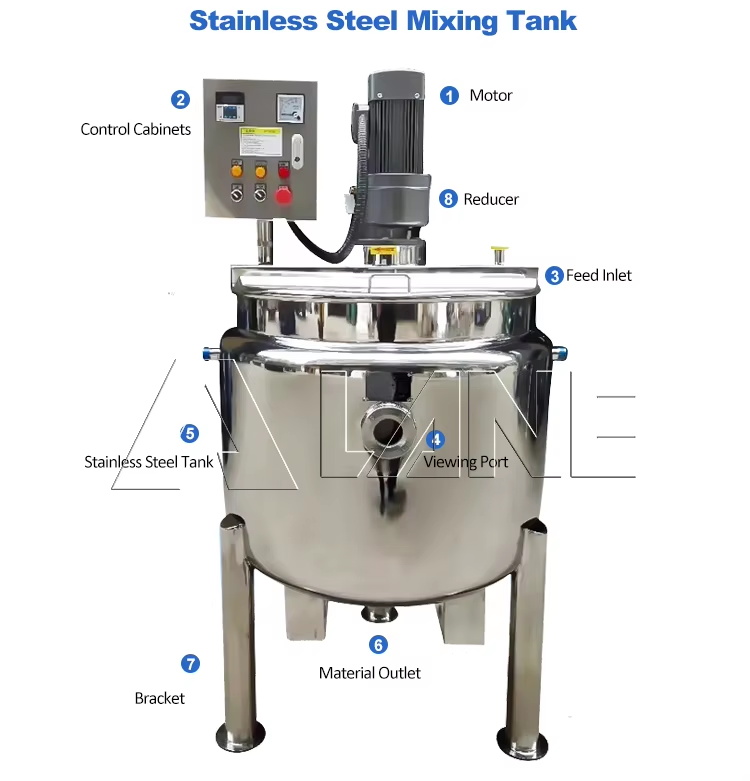
A mixing tank is usually one part of a connected production system. Depending on the formulation, the process may include raw material storage, weighing or dosing, mixing, filtration, intermediate storage and filling.
For a plant producing several formulations, the transfer route and tank arrangement deserve attention. Poorly planned pipework can leave product in dead legs, complicate cleaning or make it difficult to switch between batches.
The mixing stage may be connected to a liquid fertilizer production line with suitable transfer and downstream equipment. If the process requires a controlled chemical reaction rather than simple blending, buyers should also distinguish a mixing vessel from a reactor. A liquid fertilizer reactor is selected when reaction conditions such as temperature, dosing sequence or reaction time must be controlled as part of the process.
The distinction matters commercially. Specifying a mixing tank for a process that actually requires reaction control can result in missing functions and later equipment modifications.
A useful quotation should connect the vessel specification to the production duty. Before comparing prices, make sure each supplier is quoting against the same operating conditions.
Ask for:
For international orders, confirm the shipping dimensions, gross weight, packing method and loading arrangement. A supplier should provide the packing dimensions before shipment so the buyer can check container loading and local unloading requirements.
Do not assume that installation and commissioning are automatically included in the equipment price. Confirm whether the supplier provides drawings, foundation requirements, electrical connection diagrams, remote guidance or on-site support, and state these items in the purchase contract.
The published barrel volume range is 100–10,000 L. The actual working volume depends on the batch formulation, liquid level and required mixing space. Buyers should request the recommended working volume for their selected model rather than treating nominal capacity as usable batch capacity.
Yes, provided the agitator and feeding arrangement are selected for the material. Fully soluble powders, dense mineral particles and viscous organic ingredients create different mixing demands. Send the supplier the ingredient list, solids content and required batch result before confirming the configuration.
No. The correct material depends on the formulation’s chemical composition, concentration, temperature and cleaning chemicals. LANE’s page mentions SUS304 and SUS316 in its parameters and SUS316L in the product description, so the exact grade and wetted components should be confirmed in writing.
The exact lead time must be confirmed in the supplier’s quotation. It depends on the tank capacity, material, agitator configuration, optional jacket and order schedule. Ask for separate manufacturing, inspection, packing and shipping estimates, as well as the loading dimensions and shipping terms.
The inspection frequency should follow the operating hours and the material being processed. Operators should check the agitator, shaft seal, gearbox, motor, fasteners and product-contact surfaces at the intervals specified by the manufacturer. After each batch, follow the agreed cleaning procedure and inspect for residue or corrosion. The supplier should provide a maintenance schedule and recommended spare-parts list.
A suitable liquid fertilizer mixing tank is not defined by its capacity or motor power alone. Before approving the purchase, confirm three points:
These details help prevent a common procurement mistake: buying a vessel that looks correct on a specification sheet but does not match the real production duty.
For a project-specific configuration, provide your formulation, target batch volume, operating temperature and required output to the engineering team. LANE can use this information to discuss the tank arrangement and its connection with the wider liquid fertilizer production process.
For more details, please feel free to contact us.
Henan Lane Heavy Industry Machinery Technology Co., Ltd.
Website: LANE Liquid Fertilizer Equipment
Leave a Comment
Latest Posts
LANE has more than 500 successful cases and is committed to providing customers with first-class solutions, high-end machinery and equipment, and one-stop pre-sales, sales and after-sales comprehensive customer service.