

Solid Liquid Separator: A Buyer’s Guide for Industry
A solid liquid separator helps fertilizer manufacturers and organic waste processors divide wet materials into two manageable streams: a solid fraction and a liquid fraction. This can reduce the volume of material that needs to be stored or transported, improve downstream processing, and create more options for using the separated solids.
However, not every separator performs equally well with every raw material. Manure, digestate, food waste and other organic slurries differ in solids content, fiber structure and flow behavior. Choosing a machine based only on its advertised capacity is a common purchasing mistake.
For plant owners, production managers and equipment buyers, the real question is whether the separator can handle the actual feed material and produce two output streams suitable for the next processing stage. This guide focuses on the working principle, equipment specifications, material compatibility and purchasing factors of screw press separation equipment.
A solid liquid separator separates suspended solids and liquid from a pumpable mixture. In organic fertilizer production, this operation is commonly used to process livestock manure, digestate, food-processing residues and other wet organic materials.
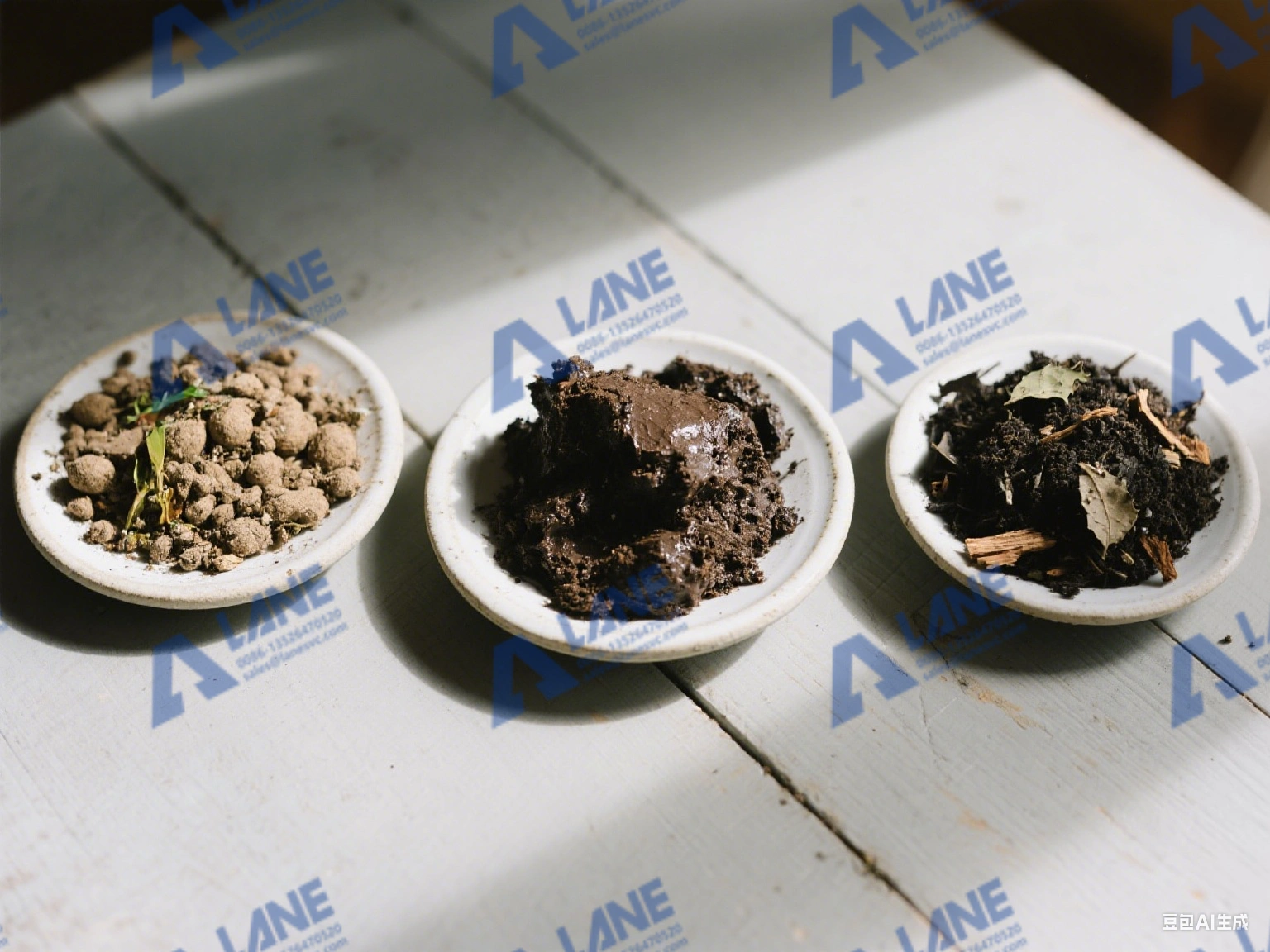
The machine produces two different outputs:
The purpose is not necessarily to remove every solid particle or produce completely dry material. Instead, the equipment changes the physical characteristics of the feed so that the two fractions can be handled more efficiently.
For example, manure solids may be easier to stack, transport or mix with other composting materials after separation. The liquid fraction may also be easier to pump than untreated slurry.
The University of Wisconsin–Madison Extension explains that the separated streams can be managed independently and integrated with other treatment equipment. It also notes that screw press separators are used in manure processing and other organic waste applications.
Buyer’s judgment: Before choosing a machine, define what you want to achieve with each output. If the solid fraction will enter a composting line, its moisture and consistency matter. If the liquid fraction will enter another treatment process, its remaining suspended solids are equally important.
A screw press is a mechanical separation system. Its main working components are a feed inlet, a cylindrical screen, a rotating screw shaft, a discharge adjustment mechanism and separate outlets for liquid and solids.
The process follows several stages.
First, the raw material enters the machine. A pump or feeding system transfers the slurry into the separation chamber. Consistent feeding is important because sudden changes in flow can affect separation performance.
Next, the screw moves the material forward. As the screw rotates inside the screen, it transports the solid-containing material toward the discharge end.
Then, liquid passes through the screen. The screen openings allow liquid and sufficiently small particles to pass through while retaining larger solid material.
Finally, the retained material is compressed and discharged. The screw and discharge restriction create pressure inside the chamber. Liquid is squeezed out through the screen, while the remaining solids leave through the discharge outlet.
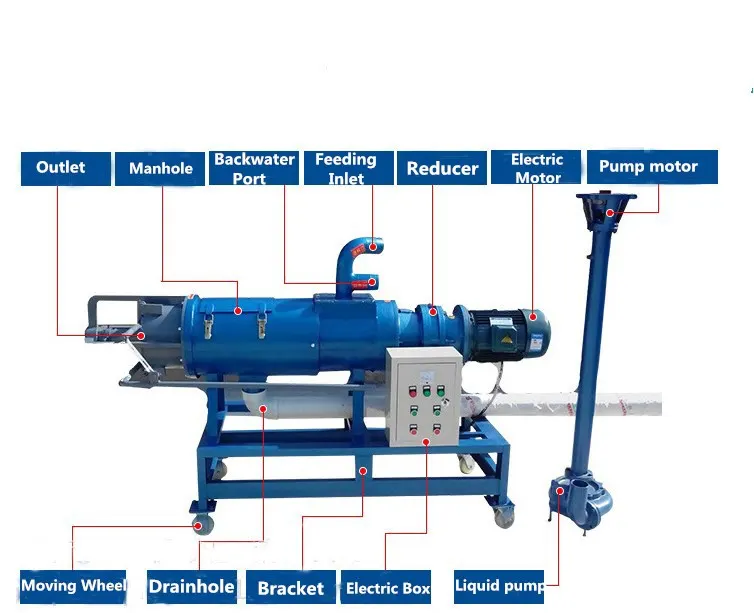
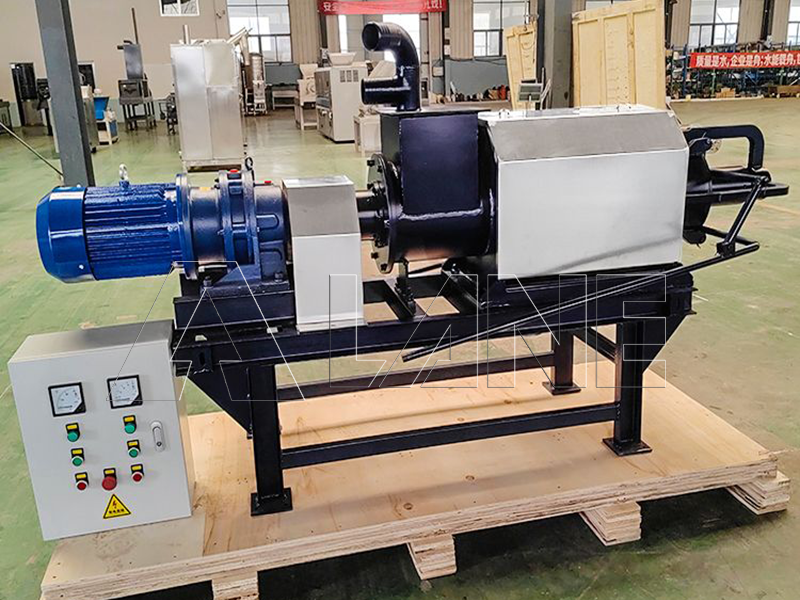
LANE’s screw extrusion dehydrator uses this physical squeezing principle. Its product description explains that the screw gradually pushes the material forward, while the decreasing space in the screw chamber increases pressure and forces liquid through the screen.
The discharge adjustment mechanism can be used to influence the discharge condition and moisture of the separated material. However, the actual result depends on the incoming material and machine configuration.
A useful technical reference is the University of Wisconsin–Madison Extension guide to screw press separation. It explains how screen openings affect particle capture and why feed characteristics influence the final separated streams.
A screw press separator is commonly used for organic materials that can be fed into the machine as a slurry or wet mixture. LANE lists food factories, slaughterhouses, chemical factories and household waste processing among its application areas.
Typical materials to evaluate include:
| Feed material | Potential application | Important selection consideration |
|---|---|---|
| Livestock manure | Separate fibrous solids from liquid manure | Total solids, bedding material and sand content |
| Anaerobic digestate | Recover solid material before further treatment | Feed consistency and remaining fine particles |
| Food-processing waste | Reduce liquid content in wet organic residues | Particle size, fiber structure and material variability |
| Slaughterhouse waste | Separate liquid from suitable organic residues | Feed preparation, hygiene and material compatibility |
| Household organic waste | Dewater suitable wet organic fractions | Composition, contamination and feeding consistency |
Not all materials should be processed under the same settings. A slurry containing long fibers behaves differently from one containing fine suspended particles. Similarly, a highly diluted feed may pass through a screw press without forming a stable solid fraction.
Research and extension guidance from the University of Wisconsin–Madison indicates that screw press separators generally perform better with manure slurry containing more than approximately 4% total solids than with more dilute streams. This is a reference observation for manure applications, not a universal operating limit for every machine or material.
The Cornell Dairy Environmental Systems Program guide also warns that screw press separation is less suitable for very dilute manure and raw manure containing sand bedding.
Buyer’s judgment: Do not send a supplier only the name of your raw material. Provide a representative sample or detailed information about total solids, particle size, fiber content and feed consistency. These details are more useful for equipment selection than a general application label.
A solid liquid separator should be evaluated through more than its model name or nominal processing capacity. Buyers need to compare the screw assembly, screen dimensions, motor configuration, material of construction and actual processing results.
LANE publishes the following technical information for its screw extrusion dehydrator:
| Parameter | LA180 | LA200 | LA280 | LA1200 |
|---|---|---|---|---|
| Voltage | 380 V | 380 V | 380 V | 380 V |
| Power | 4 + 3 kW | 4 + 3 kW | 5.5 + 3 kW | 3 + 3 kW |
| External dimensions (mm) | 2000 × 600 × 1300 | 2200 × 610 × 1350 | 2400 × 800 × 1300 | 2600 × 1200 × 1600 |
| Weight (kg) | 340 | 510 | 680 | 480 |
| Published capacity | 5–6 | 8–10 | 12–15 | 35–40 |
| Filter inner diameter | 180 mm | 200 mm | 280 mm | 260 mm |
Several details deserve closer attention.
Capacity must be confirmed under actual feed conditions. A machine’s rated capacity cannot be compared reliably with another model unless the unit, feed material and operating conditions are clear. Ask whether the quoted figure refers to kilograms per hour, cubic meters per hour or another measurement.
Motor power should be considered together with throughput. A higher motor rating does not automatically mean better separation. The machine must maintain suitable feeding, screw movement and drainage under the expected operating load.
Screen dimensions affect the separation result. Smaller openings can retain finer particles, but may also increase resistance to liquid flow and require more attention to cleaning. Larger openings may improve drainage while allowing more fine solids to pass into the liquid fraction.
Machine dimensions and weight affect installation. Buyers should check the required floor space, feeding height, discharge clearance and access for maintenance before confirming the layout.
A machine’s construction can influence wear life, cleaning frequency and operating stability. These details are worth checking when comparing equipment quotations.
LANE states that the screw, main shaft and spiral blades are made of thickened 304 stainless steel. These are important working components because they continuously contact the incoming material and experience mechanical loading during operation.
Buyers processing corrosive or chemically aggressive materials should still confirm whether 304 stainless steel is suitable for their feed composition and cleaning conditions.
The product page describes the use of a wear-resistant manganese alloy in easily worn parts of the screw assembly. This is relevant because abrasive particles and repeated compression can increase wear in the conveying and pressing areas.
Ask the supplier to identify exactly which components use the wear-resistant material and whether replacement parts are available.
LANE uses a V-shaped wedge wire mesh screen. Its product description presents this design as a way to reduce blockage and frequent cleaning.
That is a useful design consideration, but no screen can be assumed to remain blockage-free under all feed conditions. Fibrous material, sticky solids and foreign objects can still affect operation.
Buyers should request information about screen opening size, cleaning access and replacement procedures.
The discharge adjustment device influences the pressure applied to the retained solids. Changing this setting can affect the balance between throughput and the moisture content of the discharged material.
Higher pressure may improve dewatering in some conditions, but excessive restriction can reduce throughput or increase mechanical loading. The appropriate setting needs to be established through material testing.
Capacity planning should start with the volume of material that needs to be processed per day, not simply the largest model listed in a product table.
For example, a plant operating eight hours per day with a known daily feed volume can estimate its required average hourly throughput. The selected machine should then be checked against peak feeding conditions, material variability and planned operating hours.
A practical selection process includes four steps:
If one machine cannot handle the required daily volume, multiple units operating in parallel may be considered. The University of Wisconsin–Madison Extension notes that screw press separators can be arranged in parallel to increase overall handling capacity or integrated in series with other treatment equipment.
A separator may also be only one stage of a larger process. For example, separated solids can be sent to a belt press for further moisture removal, while the liquid fraction can pass through an inclined screen to remove additional fine particles.
The right arrangement depends on the final product, not on how many machines can be included in the line.
The purchase price depends on the model, processing capacity, construction materials, screen design, motor configuration and supporting equipment.
However, the machine price is only one part of the investment. Buyers should also consider:
One commonly underestimated cost is the handling of separated material. The solid fraction needs a suitable collection area, while the liquid fraction needs a storage or transfer arrangement. If these are not planned in advance, operators may face material accumulation and unnecessary downtime.
The Cornell guide identifies electricity, replacement screens and augers, daily maintenance and storage space as relevant operating considerations for screw press separation systems.
There is no dependable universal price for every application. A useful quotation should identify the machine model, included accessories, material specifications, electrical requirements, spare parts and delivery scope.
Even a correctly selected separator can perform poorly if the feeding and maintenance arrangements are inadequate.
Problem: The liquid outlet still contains too many solids.
Possible causes include unsuitable screen openings, excessive feed rate or feed material containing a large proportion of fine particles.
A smaller screen opening may improve particle retention, but it can also affect drainage and the moisture of the solid fraction. Test the separation result before finalizing the screen specification.
Problem: The discharged solids are too wet.
This may be caused by unsuitable feed characteristics, insufficient pressure, excessive feeding or an unsuitable adjustment setting.
Check the feed rate and discharge adjustment together. Increasing pressure without considering throughput can create other operating problems.
Problem: The screen becomes blocked.
Sticky material, long fibers or foreign objects may restrict drainage. Check the feed preparation process and cleaning arrangements. Ask the supplier how the screen can be inspected and replaced.
Problem: Screw components wear too quickly.
Abrasive feed material and continuous mechanical loading can increase wear. Confirm the material and construction of the screw, blades and other wear parts before purchasing.
The practical lesson is that maintenance costs should be considered during equipment selection. A separator that is slightly cheaper initially may become more expensive if its screen and screw components require frequent replacement.
A solid liquid separator divides a wet mixture into a solid fraction and a liquid fraction. It is commonly used in manure processing, digestate treatment, food waste handling and organic fertilizer production.
Yes. Screw press separators are widely used for suitable manure slurries. However, total solids, sand bedding, fiber content and feed consistency should be checked before selecting the machine.
It depends on the incoming material and machine settings. LANE states that the moisture content after dewatering is around 60%, but also notes that different raw materials produce different results. This should be treated as a reference figure rather than a guaranteed result.
The product page lists LA180, LA200, LA280 and LA1200, with published capacity figures of 5–6, 8–10, 12–15 and 35–40 respectively. The unit is not specified online, so buyers should confirm it before comparing models.
No. Mechanical screw press separation reduces the solids content of the liquid stream but does not necessarily remove fine suspended particles. Additional screening, filtration or treatment may be needed.
Yes, where the material composition and local requirements are suitable. Separated solids may be sent for composting, drying or further processing. Additional treatment may be required before producing a finished fertilizer product.
There is no universal cleaning or replacement interval. It depends on feed characteristics, operating hours, screen design and maintenance practices. Ask the supplier for inspection procedures and recommended spare parts.
Provide the raw material type, daily processing volume, total solids content, moisture level, particle and fiber characteristics, operating hours and desired output condition. This information helps the supplier recommend a suitable model and supporting equipment.
A reliable solid liquid separator should be selected according to the material being processed, the required throughput and the intended use of both output streams. Screw design, screen openings, pressure adjustment, construction materials and maintenance access all affect long-term performance.
Before placing an order, buyers should request a model-specific technical sheet, confirm the capacity unit and test the machine with representative feed material whenever possible. Do not compare suppliers only by advertised capacity or initial price.
LANE provides screw extrusion dehydration equipment for organic material processing. If you are planning a manure treatment project, digestate separation system or organic fertilizer production line, you can review the LANE Screw Extrusion Dehydrator and discuss the required configuration with its technical team.
For more details, please feel free to contact us.
Henan Lane Heavy Industry Machinery Technology Co., Ltd.
Email: sales@lanesvc.com
Contact number: +86 13526470520
WhatsApp: +86 13526470520
Leave a Comment
Latest Posts
LANE has more than 500 successful cases and is committed to providing customers with first-class solutions, high-end machinery and equipment, and one-stop pre-sales, sales and after-sales comprehensive customer service.