
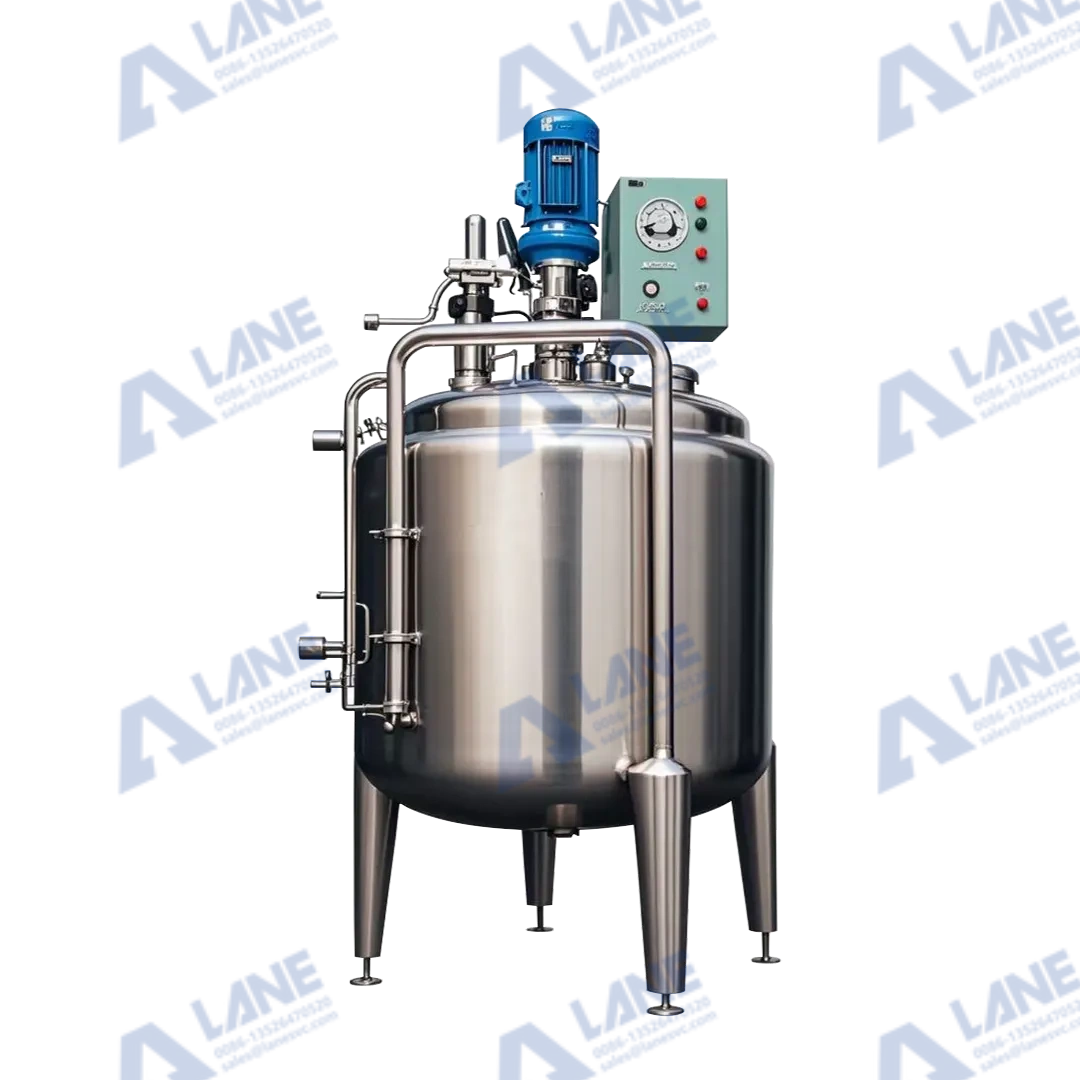
A liquid fertilizer reactor does more than mix raw materials. It provides controlled conditions for dissolution, neutralization, chelation, pH adjustment and product stabilization. For fertilizer manufacturers, the difference between a basic mixing vessel and a properly engineered reactor can determine whether each batch meets its nutrient specification or requires costly rework.
The right equipment depends on the formulation, reaction characteristics, required batch volume and production schedule. A reactor designed for clear liquid NPK may not be suitable for a concentrated suspension or an acidic micronutrient formulation. This guide helps plant owners, production managers and purchasing teams evaluate the important technical details before requesting a quotation.
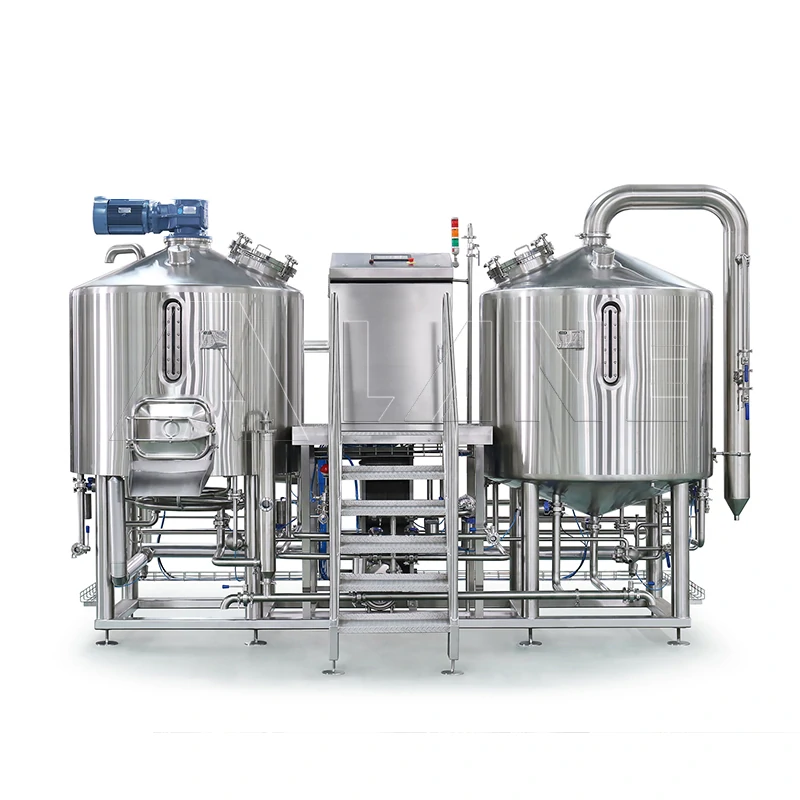
A liquid fertilizer reactor is a process vessel where raw materials undergo controlled mixing and, when required, chemical reactions. Unlike a standard storage or blending tank, it can combine agitation, temperature regulation, metered feeding and process monitoring.
Typical applications include:
The important purchasing distinction is whether the production process actually requires a reaction vessel. If the recipe only involves dissolving compatible materials in water, a conventional mixing tank may be sufficient. If the process involves heat release, controlled addition, chelation or a defined reaction period, a dedicated liquid fertilizer reactor is more appropriate.
Buying a more complicated vessel than the process requires increases capital cost without necessarily improving the product. Conversely, treating a reaction process as simple blending can create inconsistent batches and difficult operating conditions.
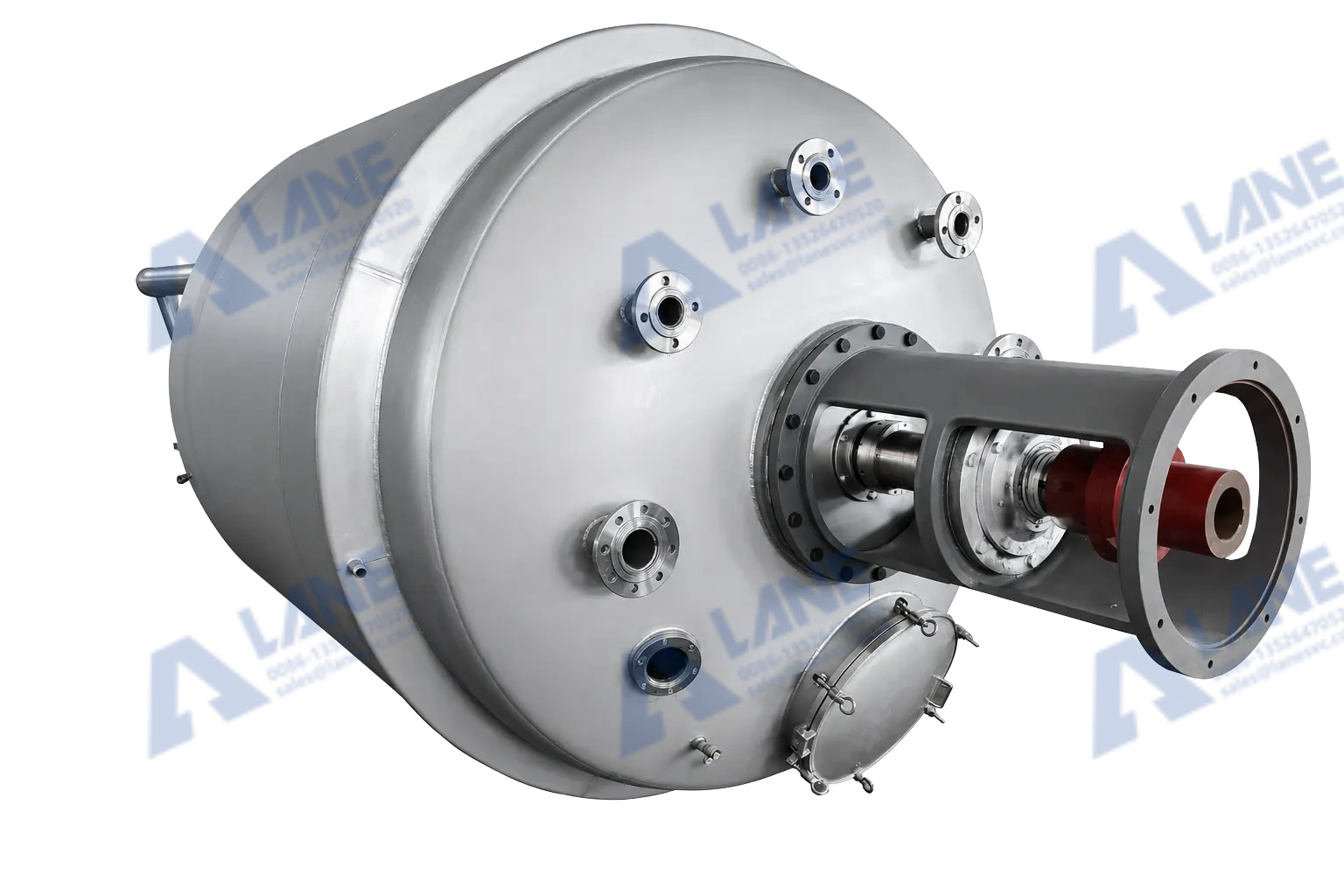
The operating principle is based on controlling four variables: ingredient addition, agitation, temperature and reaction time. Their importance varies with the fertilizer formula.
A typical batch process follows these stages:

A liquid fertilizer reactor should be designed around the actual sequence of operations. For example, adding an acid too quickly may produce a localized temperature rise, while insufficient circulation can create uneven conditions inside the vessel. These problems are not solved simply by installing a larger motor.
The vessel material, agitator, heating and cooling arrangement, and control system should be evaluated together. Selecting each component independently can result in an expensive machine that does not perform well with the intended formulation.
LANE lists SS304 and SS316L stainless steel options for its liquid fertilizer reactors. SS316L is recommended on the product page for formulas containing chloride ions, phosphoric acid, sulfuric acid and organic acids because of its stronger corrosion resistance.
However, stainless steel grade alone does not establish chemical compatibility. Buyers should provide the supplier with the complete formulation, operating temperature and concentration of corrosive ingredients. Gaskets, mechanical seals, valves, pipes and weld areas also need to be considered.
For particularly aggressive chemical service, glass-lined or other lined configurations may be worth evaluating. The final choice should be supported by a material compatibility review rather than a general statement that a material is corrosion-resistant.
The agitator determines how effectively the vessel circulates its contents. Anchor or turbine agitators can support bulk circulation, while a high-shear disperser may be needed to break agglomerates or disperse fine powders.
A variable-frequency drive allows operators to adjust speed for different process stages. Baffles and suitable internal geometry can also reduce vortex formation and improve circulation.
For a liquid fertilizer reactor handling suspensions, the buyer should pay particular attention to solids concentration, particle characteristics and settling behavior. A mixing arrangement that works for a low-viscosity solution may not keep a denser suspension uniform.
The product page describes full jackets, dimple jackets and internal coils, with steam, hot water, thermal oil or chilled water as possible heat-transfer media.
Heating is useful when a formulation requires a controlled temperature to dissolve or react. Cooling is equally important when neutralization or another reaction releases heat. The system should be sized around the actual heat load and the required temperature profile.
Do not accept a generic statement such as “heating and cooling available” as sufficient technical evidence. Ask for the proposed heat-transfer area, utility conditions, temperature control range and expected heating or cooling performance under your batch conditions.
Multiple dosing ports can be used for acids, chelating agents, micronutrient solutions and pH regulators. Load cells or metering pumps support controlled ingredient addition.
A PLC and HMI can store production recipes, including dosing sequences, agitation settings, temperature profiles and mixing times. This is particularly useful for factories producing several fertilizer grades.
The value of automation is not simply fewer operators. It is the ability to repeat a defined process and investigate a batch when its test results fall outside specification.
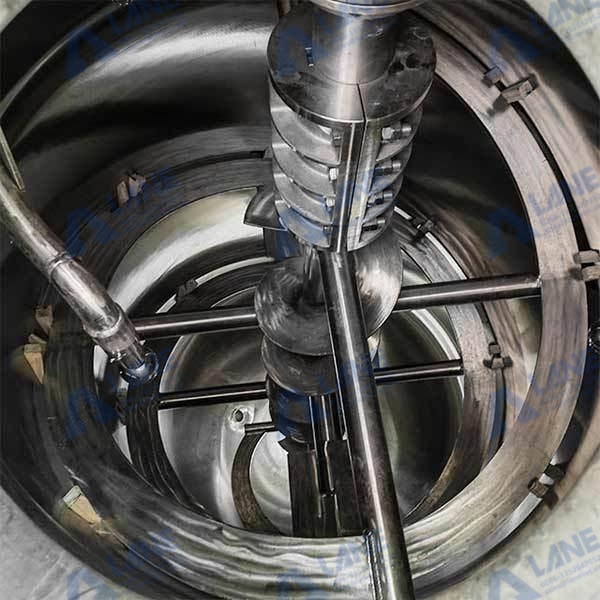
The LANE product page lists batch volumes from 500 L to 30,000 L, with SS304 or SS316L construction and options for dual agitation, jacket heating and cooling, dosing ports and PLC recipe control.
The page also advertises a customized capacity of 1–20 TPH. This throughput figure should not be confused with the vessel’s batch volume. Buyers need to ask whether it refers to the whole production line, a specific process configuration or another operating basis.
| Item | Published information or available option | What buyers should confirm |
|---|---|---|
| Batch volume | 500–30,000 L per batch | Working volume, usable filling ratio and batch cycle |
| Vessel material | SS304 or SS316L | Full chemical compatibility of all wetted parts |
| Agitation | Dual agitation; anchor or turbine options | Impeller type, motor power, speed range and viscosity |
| Dispersion | High-shear disperser or emulsifier option | Whether the formulation requires high-shear treatment |
| Heating and cooling | Full jacket, dimple jacket or internal coil | Heat-transfer duty, utility conditions and temperature range |
| Dosing | Multiple ports, metering pumps or load cells | Dosing accuracy and ingredient addition sequence |
| Control | PLC and HMI recipe management | Sensors, data logging, alarms and recipe storage |
| Cleaning | CIP-ready design | Cleaning coverage, drainage and changeover procedure |
A larger vessel does not automatically mean a more economical plant. The correct size depends on the required daily output, number of batches, reaction time, cleaning time and downstream equipment capacity.
For example, a factory producing several fertilizer grades in relatively small quantities may benefit from a smaller batch vessel with flexible recipe control. A plant producing one or two high-volume products may prioritize larger batch capacity or a more continuous process arrangement.
Before choosing a liquid fertilizer reactor, calculate the complete batch cycle rather than considering the vessel volume alone. Include charging, dissolution, reaction, cooling, sampling, discharge and cleaning. A vessel that holds a large volume but takes too long to complete each batch may become the bottleneck of the production line.
| Production consideration | Why it matters | Information to provide to the supplier |
|---|---|---|
| Daily output target | Establishes the required production rate | Target tonnes or cubic metres per day |
| Product variety | Determines recipe changes and cleaning frequency | Number of formulas and batch sequence |
| Reaction time | Affects the number of batches per shift | Expected process duration for each formula |
| Working volume | Determines usable batch size | Target batch volume and liquid density |
| Downstream capacity | Prevents discharge and storage bottlenecks | Filter, storage and filling capacity |
| Operating schedule | Affects equipment utilization | Shifts per day and working hours |
| Future expansion | Avoids premature equipment replacement | Expected demand growth and expansion plan |
A standalone reactor can be a practical choice when the factory already has suitable raw material storage, mixing, filtration and filling equipment. It may also be appropriate when replacing an existing vessel or upgrading a specific reaction stage.
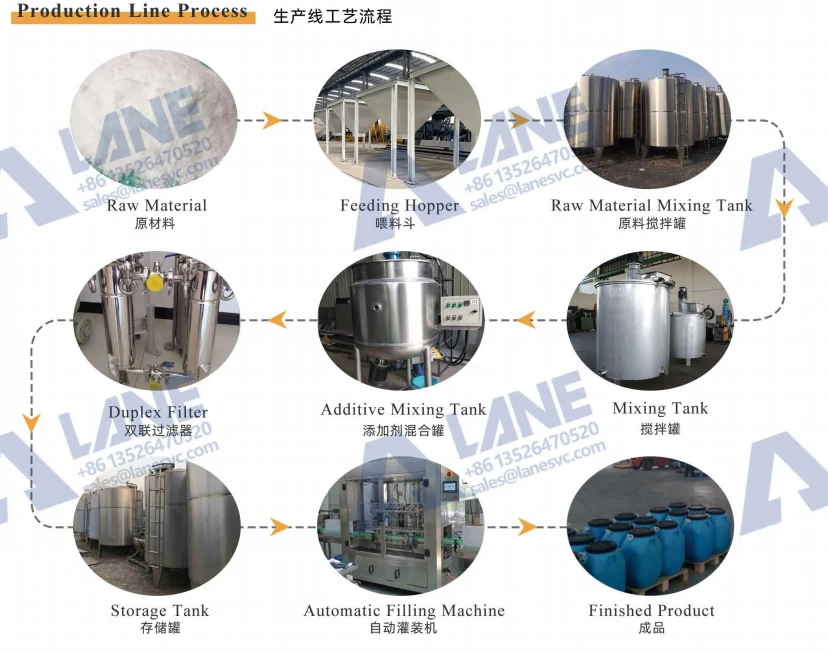
For a new factory, however, purchasing the reactor as part of an integrated line often makes engineering coordination easier. The reactor must work with upstream batching and premixing equipment, as well as downstream filtration, storage and packaging systems.
A typical arrangement is:
Water treatment → Raw material batching → Premixing tank → Reactor → Filtration → Homogenization → Storage → Filling and labeling
The premixing tank dissolves and prepares ingredients. The reactor performs the required reaction, chelation or pH adjustment. Filtration removes unwanted undissolved material, while storage and homogenization help maintain product uniformity before packaging.
You can review LANE’s liquid fertilizer production line to understand how reactor tanks connect with mixing, filtration, pumps, storage and filling equipment.
One point deserves attention: a reactor cannot compensate for an incompatible formulation or poor raw material preparation. If precipitation occurs after the product leaves the reactor, the problem may be chemical stability rather than insufficient filtration or mixing capacity.
The purchase price is only one part of the investment. A low initial quotation may exclude utilities, dosing equipment, control instruments, installation or downstream connections.
Before comparing suppliers, check whether the quotation includes:
For a liquid fertilizer reactor, corrosion-related maintenance can become a major cost if the selected material is unsuitable. Energy consumption can also be higher than expected if the heating and cooling system is poorly matched to the actual process.
Ask suppliers to separate the equipment price from optional components and site services. This makes quotations easier to compare and reduces the chance of discovering essential costs after the order is placed.
A supplier quotation should describe more than vessel dimensions and motor power. It should explain what the machine is expected to do with the buyer’s actual fertilizer formulation.
Before placing an order, request:
The acceptance test should be linked to measurable requirements. These may include leakage inspection, agitator operation, sensor response, control sequence verification and, where practical, a trial using an agreed test liquid or representative formulation.
For pressure-rated or vacuum service, the applicable design code and inspection requirements should be agreed before manufacturing. Do not assume that a standard atmospheric vessel is suitable for pressure or vacuum operation.
A mixing tank mainly dissolves and blends ingredients, while a reactor also controls reaction conditions such as temperature, dosing sequence, pH and reaction time. The required equipment depends on the actual fertilizer process.
A suitable configuration can process liquid NPK, water-soluble fertilizers, foliar concentrates, chelated micronutrients, amino acid and humic acid formulations, suspensions and selected organic liquid fertilizers. The formula and raw materials determine the final configuration.
No. SS316L is recommended for certain acidic and chloride-containing formulations, but the correct material depends on the complete chemical composition, concentration and operating temperature. SS304 may be suitable for less aggressive service.
Yes, provided that the vessel, seals, agitator and process connections are compatible with all formulas. A suitable CIP system and validated cleaning procedure are important for preventing cross-contamination.
The required size depends on batch volume, daily output, reaction time, working shifts and downstream capacity. LANE lists reactor batch volumes from 500 L to 30,000 L, but the appropriate model must be selected against the buyer’s process requirements.
Not every formulation requires both, but temperature control is important for processes involving heat-sensitive ingredients, dissolution requirements or exothermic reactions. The required arrangement should be determined from the process heat balance.
There is no reliable universal price because vessel volume, material grade, agitation, heating and cooling, instrumentation and automation all affect the quotation. Buyers should submit the formulation and technical requirements to obtain a comparable equipment proposal.
Yes. It can be connected with raw material batching, premixing, filtration, storage, filling and CIP systems. The control interface and transfer capacity should be coordinated during the engineering stage.
The best purchasing decision starts with the fertilizer formula, not the equipment catalogue. Confirm the raw materials, reaction conditions, batch volume and required daily output before comparing vessel designs.
Buyers should pay particular attention to wetted-part compatibility, agitator performance, heat-transfer capacity, dosing accuracy and cleaning arrangements. These details have a direct influence on product consistency, maintenance requirements and long-term operating costs.
LANE Machinery supplies liquid fertilizer reactors in customized configurations and can support equipment selection, process layout, installation and commissioning. If you are planning a new facility or upgrading an existing process, provide your raw material list, target formula, batch size and automation requirements for a more practical equipment proposal.
For more details, please feel free to contact us.
Henan Lane Heavy Industry Machinery Technology Co., Ltd.
Email: sales@lanesvc.com
Contact number: +86 13526470520
WhatsApp: +86 13526470520
Leave a Comment
Latest Posts
LANE has more than 500 successful cases and is committed to providing customers with first-class solutions, high-end machinery and equipment, and one-stop pre-sales, sales and after-sales comprehensive customer service.