
Liquid Fertilizer Equipment Manufacturer: Buyer Guide
A liquid fertilizer equipment manufacturer should do more than fabricate tanks and sell individual machines. For a fertilizer plant owner or procurement manager, the real requirement is a coordinated process system that can handle the intended raw materials, maintain batch consistency, and deliver finished liquid fertilizer at the required output.
A typical production line may include raw material preparation, dosing, mixing, reaction, filtration, storage, transfer pumps, and filling equipment. The exact configuration depends on whether the plant produces clear soluble NPK, suspension fertilizer, foliar fertilizer, or liquid organic fertilizer.
LANE’s published liquid fertilizer production line includes grinding machines, mixing machines, reactor tanks, filters, industrial pumps, gear pumps, pipelines, product storage tanks, and automatic capping and filling machines. Its project examples also cover different production routes, including bio-liquid fertilizer, organic liquid fertilizer, and water-soluble fertilizer plants.
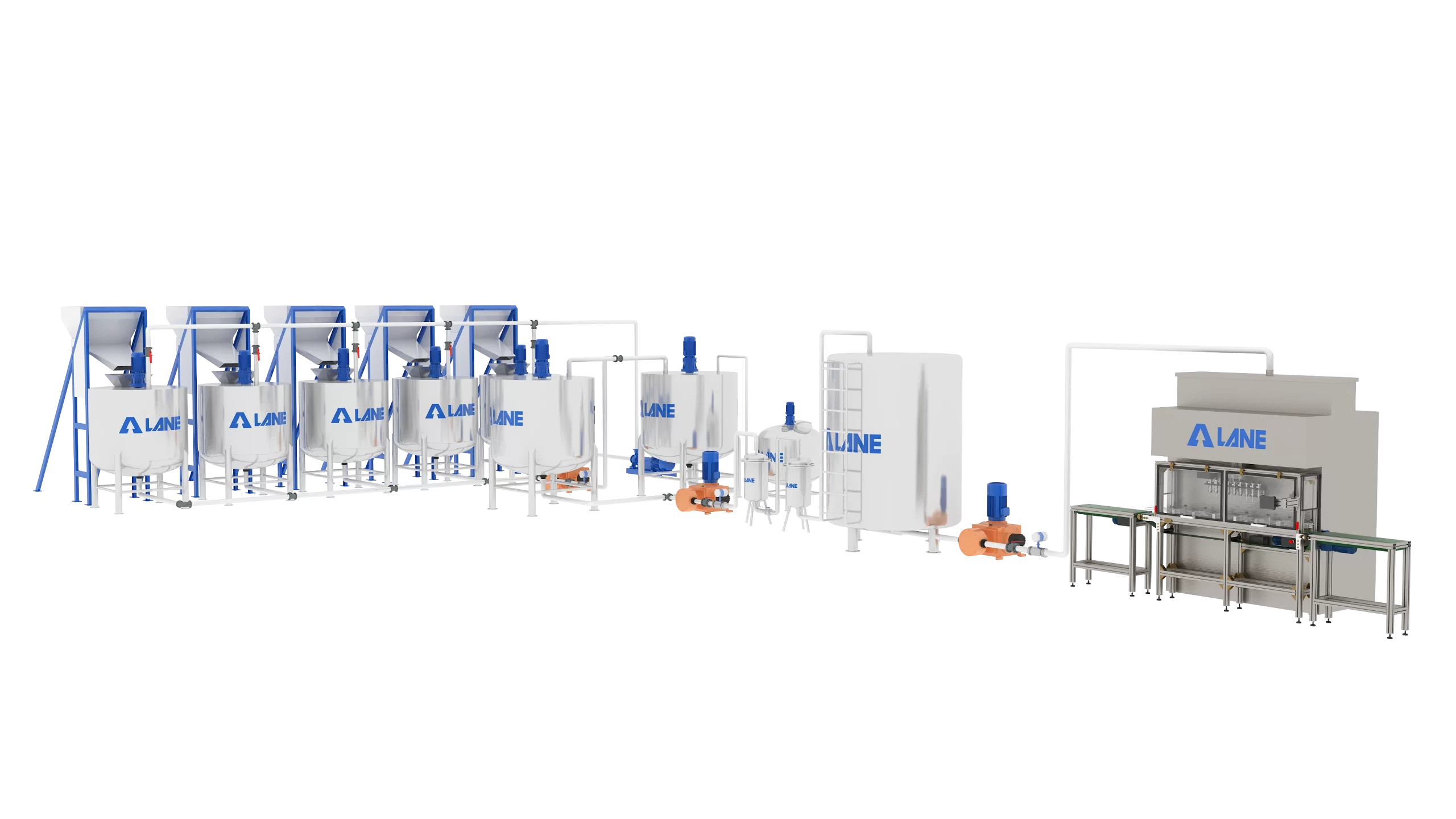
For buyers, this matters because a manufacturer should be able to explain why each machine is included. A long equipment list is not proof of a suitable solution. The process design must match the product formulation and actual operating conditions.
See LANE’s liquid fertilizer production line for an overview of its main equipment sections.
The first technical check is whether the supplier can cover the complete process or only a few standalone machines.
A practical line is normally divided into several functional sections:
A clear soluble fertilizer line may not need the same equipment as a manure-based organic fertilizer plant. For example, adding a fermentation tank to a simple soluble NPK blending project increases investment without necessarily improving the product.
Planning a fertilizer project? Contact LANE engineering team to get a free 3D plant layout drawing, motor power calculation, and factory-direct quote within 4 hours. Request 3D Layout & Budget Estimate →
The following table provides a practical checklist for comparing equipment configurations.
| Equipment | Main function | What buyers should verify |
|---|---|---|
| Raw material crusher | Reduces suitable solid feed materials | Feed type, output particle size, capacity |
| Dosing system | Measures liquid or solid ingredients | Flow range, dosing accuracy, wetted materials |
| Mixing tank | Dissolves and blends ingredients | Working volume, agitator type, motor power |
| Reactor tank | Supports required reaction or treatment | Temperature control, pressure conditions, material grade |
| Filter or separator | Removes particles or separates solids | Flow rate, mesh or filtration area, cleaning method |
| Storage tank | Holds raw, intermediate, or finished liquid | Volume, corrosion resistance, agitation, discharge |
| Transfer pump | Moves liquid between process stages | Flow rate, head, viscosity and solids compatibility |
| Filling and capping machine | Packages finished fertilizer | Container range, filling accuracy, line speed |
A supplier’s catalogue is only a starting point. The final quotation should state the working parameters of the selected model and explain how they relate to the product being manufactured.
LANE’s published liquid fertilizer mixing tank range covers 500–50,000 L, with SS304 or SS316L construction, variable-speed agitation, jacket heating or cooling, and optional PLC control. The appropriate tank depends on batch size, viscosity, solids content, and the mixing duty.
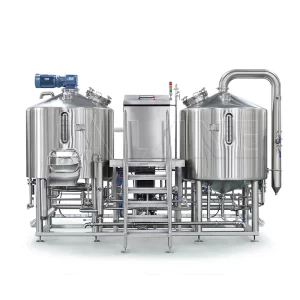
Its liquid fertilizer storage tank range covers 1,000–100,000 L. Published options include level monitoring, insulation, recirculation, and optional agitation. These features are relevant when a plant needs buffer storage, seasonal inventory, or suspension-product handling.
The liquid equipment category also lists a stainless steel duplex filter with a published flow range of 2–10 m³/h and a filtration range of 60–400 mesh.
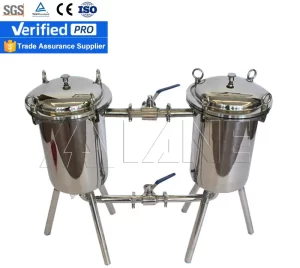
A buyer should confirm the required filtration grade against the actual particle distribution and downstream filling equipment rather than choosing the finest mesh automatically.
| Equipment | Published reference | Important confirmation before purchase |
|---|---|---|
| Liquid fertilizer mixing tank | 500–50,000 L | Working volume, agitator design, motor power, heating/cooling duty |
| Liquid fertilizer storage tank | 1,000–100,000 L | Usable volume, material grade, venting, insulation and discharge |
| Stainless steel duplex filter | 2–10 m³/h; 60–400 mesh | Actual operating flow, mesh selection, pressure drop and cleaning |
| Homogenizer emulsifier | 1–20 m³/h | Product viscosity, required shear, solids and operating flow |
| Centrifugal separator | 5–25 m³/h | Feed solids, separation target and liquid recovery |
These are published product-range references, not guaranteed operating conditions for every formula or project. The manufacturer should confirm the selected model, design conditions, and performance requirements in the technical agreement.
Material selection should start with the chemical composition of the liquid, not simply the word “fertilizer.” Chloride ions, phosphoric acid, organic acids, and concentrated micronutrient salts can create corrosion conditions that differ significantly from those of ordinary water-based solutions.
LANE offers SS304 and SS316L options for its mixing and storage tanks. SS304 can suit many general liquid fertilizer applications, while SS316L is recommended for more aggressive formulations, including products containing chlorides or acids.
However, stainless steel grade alone does not settle the material question. Buyers should also confirm:
For example, specifying an SS316L tank but leaving the transfer pump, valve seats, or connecting pipework unsuitable for the product creates a weak point in the system.
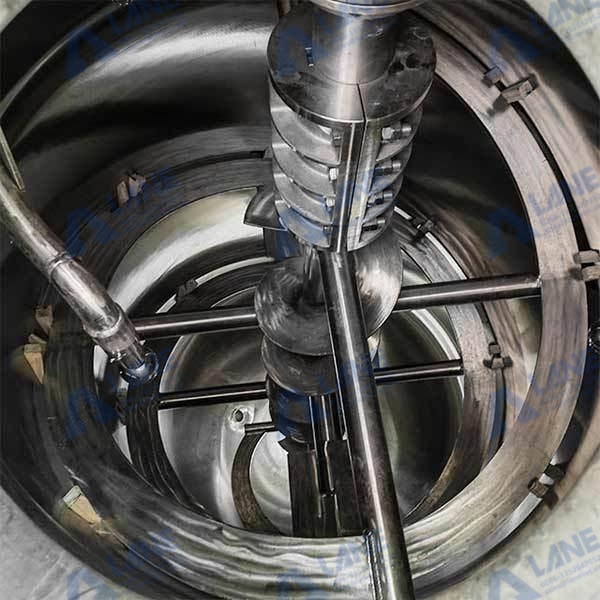
See the liquid fertilizer storage tank for details about material options, level monitoring, insulation, recirculation, and tank construction.
A reliable liquid fertilizer equipment manufacturer should distinguish between product routes before recommending a standard package.
Water-soluble NPK and clear liquid blends
These products generally need accurate batching, dissolution, mixing, filtration, storage, and filling. The key purchasing concerns are dissolution time, batch uniformity, raw material compatibility, and prevention of crystallization during storage.
Suspension fertilizers
Suspension products contain insoluble or partly insoluble particles. They may need high-shear mixing, suitable recirculation, and storage-tank agitation to limit sedimentation. The filter arrangement must be selected carefully because an excessively fine filter can remove intended product solids or cause frequent blockage.
Liquid organic fertilizer
Manure slurry, digestate, fish-based materials, and other organic feedstocks can contain suspended solids and fibrous matter. Depending on the process, the line may require a screw press or other solid-liquid separator, fermentation or reaction tanks, homogenization, filtration, and dedicated transfer pumps.
For these applications, LANE’s liquid fertilizer equipment range includes equipment such as screw press separators, centrifugal separators, duplex filters, homogenizers, and UV sterilizers. Not every project needs all of them; the selection depends on the feedstock and finished-product specification.
A supplier’s ability to manufacture a tank is not the same as its ability to deliver a working production line. Buyers should ask for evidence of fabrication capacity, process engineering, quality control, and commissioning arrangements.
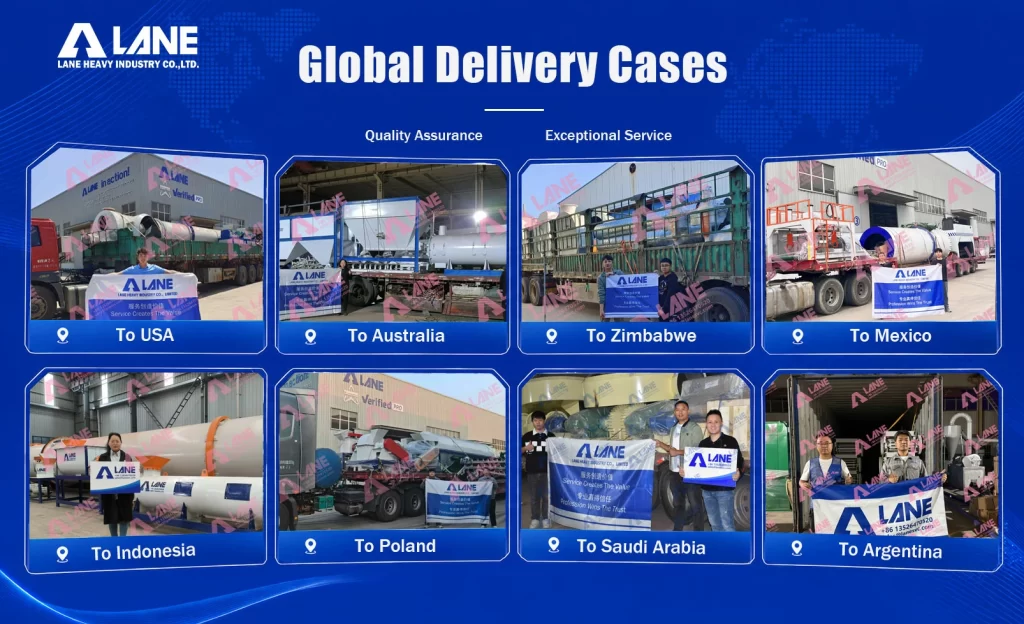
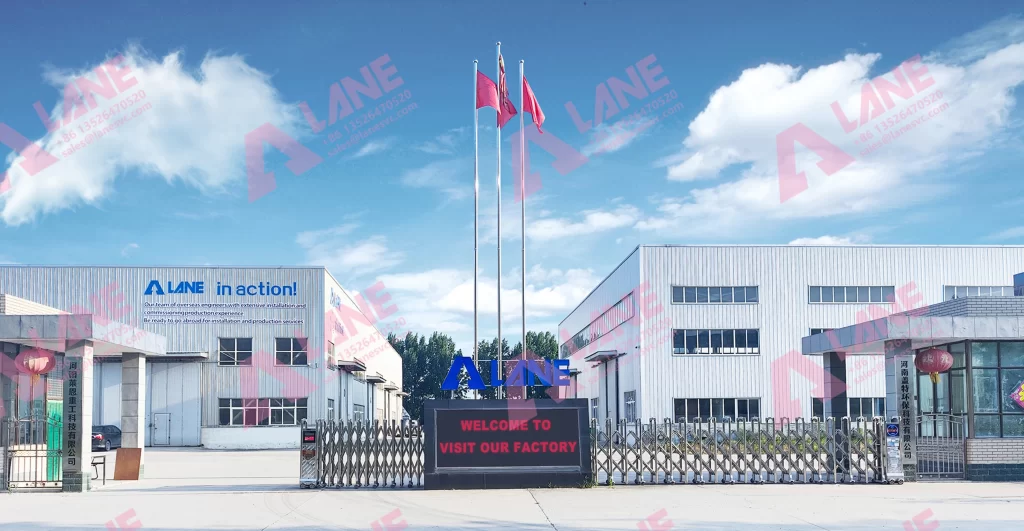
LANE’s liquid fertilizer production line page states that it has a 15,000 m² factory in Xinxiang, China, and provides equipment selection, engineering design, 3D drawing solutions, manufacturing, logistics, and overseas installation services. The same page presents project references for liquid fertilizer plants in the USA, South Africa, UAE, Tanzania, South Korea, and Brazil.
During supplier evaluation, request the following:
ISO 9001 is a quality management system standard, not a guarantee that every machine will meet a buyer’s process requirements. Buyers can review the official ISO 9001 overview, but should still require equipment-specific inspection and acceptance documents.
A manufacturer cannot size the line accurately from a target capacity alone. A useful inquiry should include:
The quotation should identify what is included and excluded. Ask whether the price covers pumps, valves, pipelines, control cabinets, platforms, electrical wiring, commissioning, freight, and installation. These details prevent a low initial quotation from becoming a more expensive project after the order.
For plant planning, LANE’s liquid fertilizer factory design guide explains the relationship between process stages, storage, utilities, and plant layout.
Yes, some equipment can be shared, but the complete process configuration may need to change. Mixing tanks, storage tanks, pumps, and filling machines may serve more than one product after compatibility checks and cleaning. Organic feedstocks containing solids may additionally require separation, fermentation, or more robust filtration.
The delivery schedule must be confirmed in the project contract; there is no single lead time suitable for every line. Tank volume, stainless steel grade, automation, inspection requirements, and customized fabrication all affect manufacturing time. Buyers should request separate dates for drawing approval, fabrication, factory testing, dispatch, shipping, and on-site commissioning.
The first step is to match all product-contact materials to the actual formulation. Confirm the tank grade, pump casing, impeller, mechanical seal, valves, gaskets, and pipework. For abrasive or solids-containing liquids, ask the manufacturer to assess particle size, concentration, pump type, and wear points rather than relying on stainless steel grade alone.
Maintenance frequency depends on operating hours, feedstock condition, and the manufacturer’s instructions. Operators should routinely inspect pump seals, filter elements, agitator bearings, valves, and leakage points. Filters and tanks may need more frequent cleaning when formulas contain suspended solids or when the plant changes products regularly.
Yes, LANE lists overseas installation support as part of its service offering, but the project scope should be confirmed before ordering. The contract should state whether support is remote or on-site, who handles travel and accommodation, what the buyer must prepare, and whether commissioning includes operator training and performance testing.
Before approving a supplier, make sure three things are clear:
A dependable liquid fertilizer equipment manufacturer should be able to explain the engineering decisions behind the quotation—not simply offer the largest equipment package or the lowest price. Compare suppliers on process understanding, fabrication capability, documented specifications, and the ability to support the plant after delivery.
For more details, please feel free to contact us.
Henan Lane Heavy Industry Machinery Technology Co., Ltd.
Email: sales@lanesvc.com
Contact number: +86 13526470520
WhatsApp: +86 13526470520
LANE Liquid Fertilizer Equipment | Fertilizer Industry Leader | LANE Machinery
Leave a Comment
Latest Posts
LANE has more than 500 successful cases and is committed to providing customers with first-class solutions, high-end machinery and equipment, and one-stop pre-sales, sales and after-sales comprehensive customer service.