
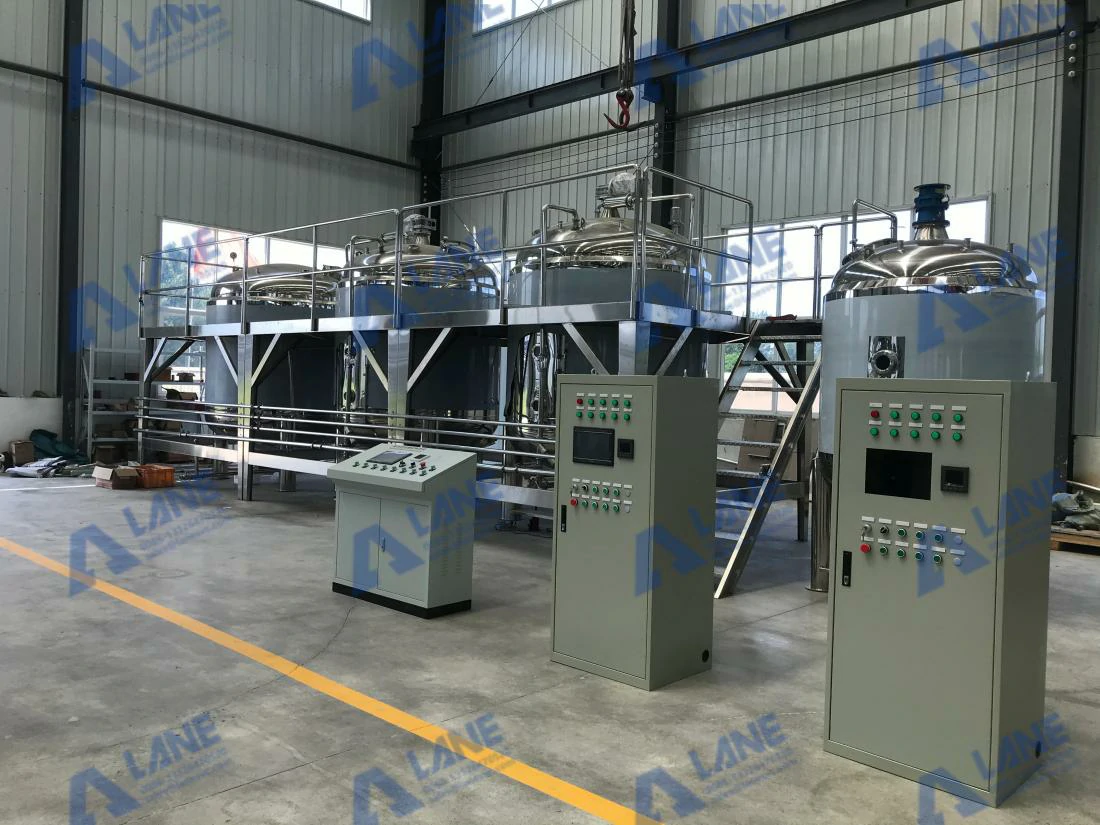
Most liquid fertilizer projects run into trouble before any steel goes up. The scope gets fixed by whichever supplier replies first, the process route drifts during negotiation, and the tank farm ends up sized for a product mix the plant never produces. Good liquid fertilizer factory design starts with the product you intend to sell: nutrient analysis, concentration, packaging, and the markets that will buy it. Tank volumes, mixing equipment, and storage follow from those decisions.
Liquid fertilizer is not one product, and the plant that makes it is not one design. Four families drive most projects:
End uses span row crops, orchards, greenhouse and fertigation programs, and turf. Each family changes the mixing equipment, filtration duty, tank agitation, and filling line, so settle the product list first.
Three shifts are worth planning around. Fertilizer supply remains politically sensitive: the FAO and WTO published a joint mapping exercise on global fertilizer markets and policies for G20 leaders after the 2022 supply disruption. Potash economics still shape blend pricing, and the U.S. Geological Survey puts the estimated 2024 sales value of U.S. marketable potash at $530 million. Application practice is tightening under 4R Nutrient Stewardship: the right nutrient source at the right rate, in the right place, at the right time.
For a plant owner, that means demand for consistent quality and batch traceability, and for recipes flexible enough to match local agronomic programs.
Three questions usually settle the process route: which raw materials are cheapest at your site, how concentrated the finished product must be, and whether you sell clear liquids, suspensions, or both.
Cold blending and dissolution
Solid urea, potash, and phosphate go into a dissolving tank with water and agitation, sometimes with indirect heating. The batch is checked for density, filtered, then sent to storage. Capital cost is the lowest of the four routes, and it suits clear liquid blends and micronutrient products. The limits are concentration and the settling risk of less soluble phosphate sources.
Reaction and hot-mix routes
UAN production is the classic example. Urea and ammonium nitrate solutions are combined in a reactor with controlled temperature and cooling, diluted to the target nitrogen concentration, and inhibited for cold storage. The route needs tighter instrumentation, corrosion-resistant wetted parts, and vapor control, and it yields a high-analysis product that travels well in bulk.
Suspension fertilizers
A high-shear mixer disperses gelling clay and fine solids into a saturated liquid base, which keeps nutrients suspended instead of dissolved. Suspensions carry more nutrient per tonne and handle micronutrient packages that would otherwise precipitate. The trade-offs are pump selection, agitation during storage, and settling if product sits too long.
Organic liquid fertilizers
Organic routes sit closer to process industry work than to blending. Feedstock is fermented or extracted, solids are separated, and the liquid fraction is concentrated and standardized to a declared nutrient content. Odor control, wastewater handling, and stability over a storage season matter more here than raw nutrient concentration.
A liquid fertilizer production line moves through seven stages, and each one creates a cost or quality decision:
Batch operation suits product variety and smaller volumes. Continuous operation suits one or two high-volume grades.
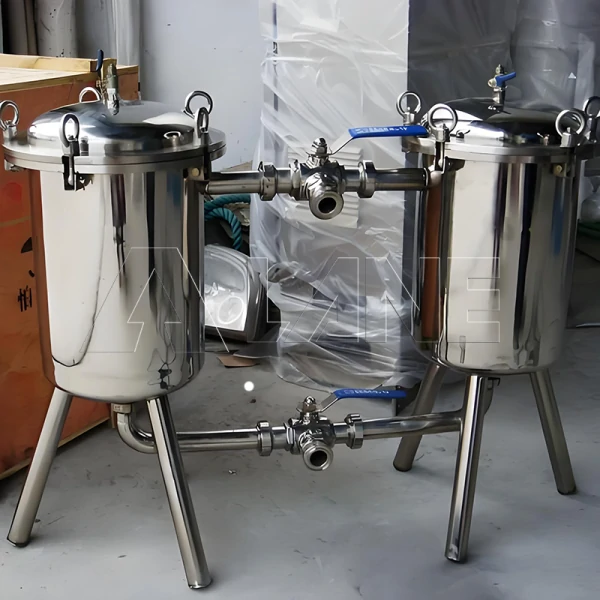
| Equipment group | Function |
|---|---|
| Silos, hoppers, screw conveyors | Store and feed urea, potash, and phosphate |
| Dissolving and mixing tanks | Dissolve solids and homogenize the batch; 316L stainless steel or FRP |
| High-shear mixer | Disperse gelling clay and micronutrients for suspension grades |
| Reactors and heat exchangers | Control reaction temperature and remove dissolve heat |
| Filtration skid | Remove undissolved solids before storage |
| Transfer and dosing pumps | Move product between stages, centrifugal or positive displacement |
| Storage tank farm with agitation | Hold finished product; insulation depends on salt-out risk |
| Weighing and flow instrumentation | Enforce the recipe with load cells and mass flow meters |
| PLC or DCS with recipe management | Repeatability, traceability, and batch reporting |
| Filling and load-out systems | Fill totes, drums, jugs, and tankers |
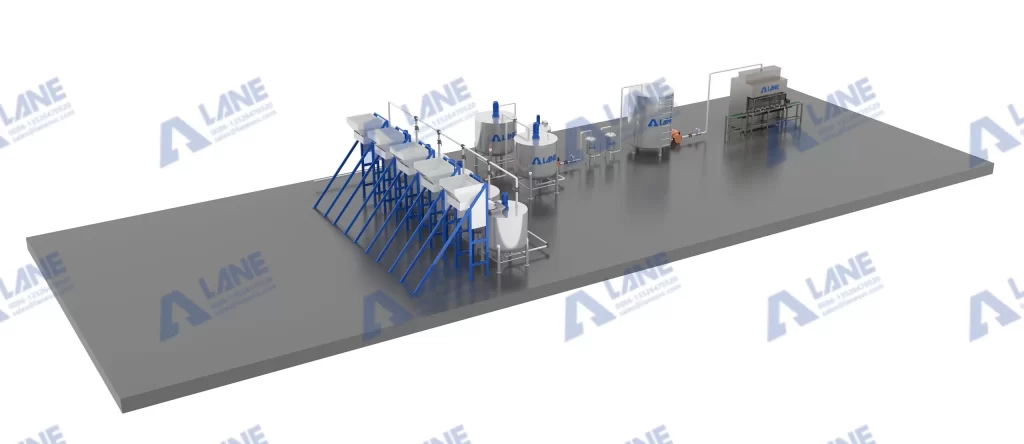
Capacity comes from demand, not from the largest machine a supplier wants to sell. Work backward from annual target tonnage and the length of your selling season. A plant shipping most of its volume in a twelve-week spring window needs either more storage or higher daily throughput, and those two answers cost very different amounts. Sizing also sits early in any liquid fertilizer factory design because it fixes tank volumes, pipe sizes, and utilities.
Layout follows a simple logic: raw materials at one end, process in the middle, finished storage and load-out at the other, with truck traffic separated from pedestrians. Settle secondary containment, drainage that keeps spills away from surface water, heated lines in cold climates, and room to add a tank later without a shutdown.
Liquid fertilizer plant cost is driven by scope definition far more than by any single machine. The main levers are capacity and batch size, product mix (clear liquids are cheaper to handle than suspensions), the ratio of liquid to solid feed, tank farm size, automation level, materials of construction, civil works, utilities, packaging lines, and compliance items such as scrubbers and containment.
Raw materials dominate operating cost, so formulation efficiency and raw material logistics usually decide profitability. Water is a cost as well, because shipping dilute product moves money with every load, which is why concentration and local blending both matter. Because these trade-offs differ by site, a credible quotation should come from a mass and energy balance for your recipe rather than a generic price per tonne. Ask for the scope boundary in writing, including which civil, utility, and installation work sits outside the supply.
Requirements vary by country, state, and product, but the categories are predictable:
Designing these items at the start costs less than retrofitting them after an inspection.
Quality control in a liquid plant comes down to repeatability. A working program covers batch records tied to raw material lots, density and nutrient analysis before release, pH and viscosity testing, and settling and cold storage tests for winter markets. Calibration schedules for load cells, flow meters, and lab equipment belong in the maintenance manual.
Liquid fertilizer is corrosive and often abrasive, so maintenance is a design input. Pumps, mechanical seals, agitator gearboxes, filters, and valves carry the wear. A realistic plan covers wall thickness inspection of tanks and lines, seal and impeller replacement intervals, filter changes tied to batch volume, and winterization of exposed lines.
Spare parts strategy matters more than most first-time buyers expect. Keeping seals, filter elements, pump components, and key instruments on site prevents a full stoppage during the selling season, when a two-day delay costs more than the parts.
A supplier who can quote equipment is not the same as one who can deliver a plant. Strong candidates bring process engineering: a mass and energy balance, a piping and instrumentation diagram, a general arrangement drawing, utility loads, and a scope boundary that names what is included and what is not.
Ask for references in the same product family rather than any fertilizer project. Ask how the factory acceptance test will run and what documentation ships with the machines, including mill certificates for stainless steel, electrical compliance for the destination market, and manuals in your language. Confirm who supervises installation and commissioning, what training is provided, how long the warranty runs, and how spare parts and remote support are handled after handover.
How much does it cost to build a liquid fertilizer plant?
No single number is honest. Cost depends on capacity, product type, site infrastructure, automation, and local civil work. The first useful step is a feasibility study that turns a recipe into a defined equipment scope.
What equipment does a liquid fertilizer plant need?
Raw material storage and feeding, dissolving or mixing tanks, transfer pumps, filtration, agitated storage, weighing and flow instrumentation, controls, and a filling or load-out system. Reactors and high-shear mixers are added when the route requires them.
What is the difference between liquid and granular fertilizer production?
Granular lines need granulation, drying, cooling, screening, and coating, which adds energy use and dust control. Liquid plants skip those steps but need accurate dissolution, filtration, and storage. Liquid production usually costs less to build and more to ship per unit of nutrient.
How much land does a liquid fertilizer plant need?
Storage volume, truck access, and the containment and drainage layout set the land area, not the process equipment itself.
Can a liquid fertilizer plant make organic liquid fertilizer?
Yes, but treat it as a different process. Organic feedstock needs fermentation or extraction, solids separation, concentration, odor control, and wastewater handling. Blending and filling can be shared with a mineral liquid line.
What raw materials do liquid fertilizer plants use?
Urea, ammonium nitrate solution, potassium chloride and potassium sulfate, phosphate sources such as MAP or phosphoric acid, water, chelated micronutrients, and additives including corrosion inhibitors and gelling clays.
How long does it take to build a liquid fertilizer factory?
Projects move through feasibility, design, fabrication, factory testing, shipping, installation, commissioning, and handover. Equipment lead time and site civil work usually drive the schedule, so early design decisions affect the timeline more than construction speed.
What permits does a fertilizer plant need?
Expect to review chemical storage and handling rules, air and water discharge requirements, dust and fire codes, and labeling rules for every market you sell into. Confirm requirements with local regulators during the feasibility study.

Leave a Comment
Latest Posts
LANE has more than 500 successful cases and is committed to providing customers with first-class solutions, high-end machinery and equipment, and one-stop pre-sales, sales and after-sales comprehensive customer service.