
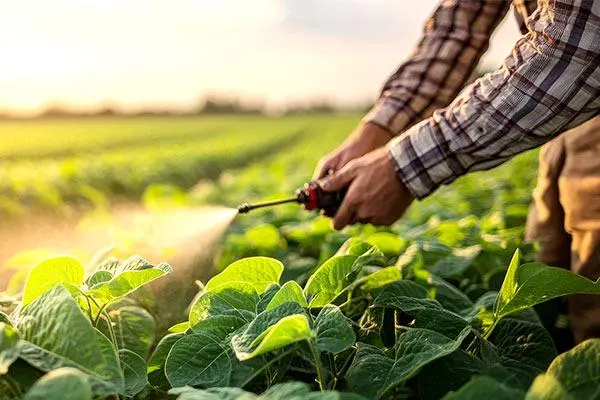
Foliar Liquid Fertilizer Production: Equipment & Process
Foliar liquid fertilizer production is an increasingly attractive business opportunity for fertilizer manufacturers looking to serve commercial farms, greenhouse growers, orchards, and specialty crop markets. Unlike soil-applied fertilizers, foliar fertilizers are formulated for application directly onto plant leaves, allowing nutrients to be absorbed through leaf surfaces. This creates specific requirements for nutrient concentration, solubility, pH, compatibility, and product stability.
For factory owners and procurement managers, producing a reliable foliar fertilizer is not simply a matter of dissolving nutrients in a mixing tank. The formulation must remain uniform, avoid unwanted precipitation, and meet the requirements of the intended spraying equipment and crop application. Choosing the wrong processing configuration can lead to sediment, inconsistent nutrient content, excessive cleaning, and customer complaints.
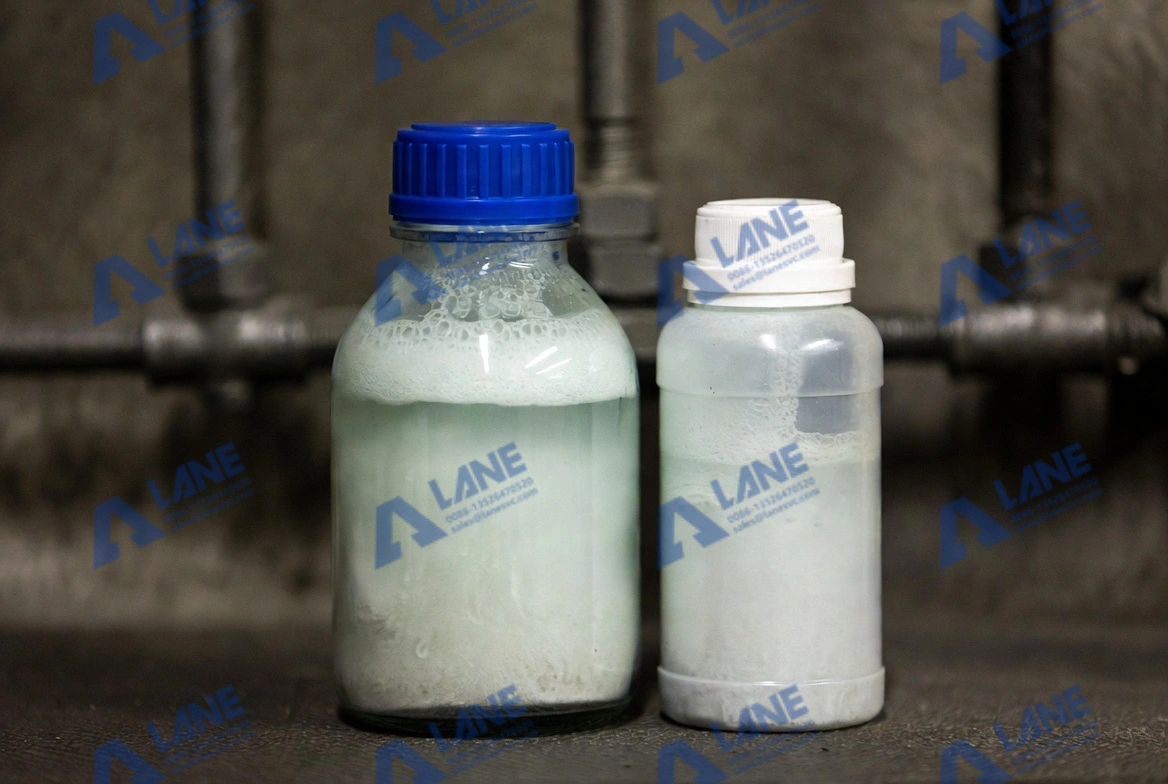
This guide examines the raw materials, manufacturing process, essential equipment, production capacity, and purchasing considerations that matter when investing in a foliar fertilizer manufacturing project.
Foliar fertilizers are applied by dissolving nutrients in water and spraying the diluted solution directly onto plant foliage, as explained by the FAO. The main difference is the application route. Foliar fertilizer is sprayed onto plant leaves rather than delivered primarily through soil or irrigation water. Consequently, the finished product must be designed around leaf contact and nutrient availability.
A well-designed foliar formulation generally needs several characteristics:
These requirements influence every stage of foliar liquid fertilizer production, from raw material selection to final filtration.
One common purchasing mistake is assuming that a standard liquid fertilizer line can manufacture every foliar formulation without modification. A simple water-based nutrient solution may need only dissolution and mixing, while an organic formulation containing plant extracts or biological ingredients may require additional pretreatment, separation, or homogenization.

The equipment should therefore be selected according to the actual product recipe, not just the product name.
Raw material selection determines the nutrient composition, manufacturing difficulty, and final product performance.
Nitrogen, phosphorus, and potassium are common components of foliar fertilizer formulations.
Not every nitrogen, phosphorus, and potassium source can be combined freely. Calcium-containing ingredients, for example, may react with certain phosphate or sulfate sources and create insoluble deposits.
Micronutrients are important for specialty foliar fertilizer products.
Common ingredients include:
Chelated micronutrients may be considered where formulation chemistry and nutrient availability justify their use.
Some manufacturers expand their product range with amino acids, humic substances, fulvic acids, seaweed extracts, and other plant-derived materials.
These ingredients can increase formulation complexity. Organic extracts may contain insoluble matter, variable viscosity, or components that are sensitive to temperature and processing conditions.
For this reason, foliar liquid fertilizer production should begin with a clear raw material specification and compatibility assessment.
The production process depends on the formulation, but a typical water-based foliar fertilizer line follows several main stages.
Before production, manufacturers should inspect raw material quality, nutrient content, moisture, and physical condition.
Solid materials may require crushing or preliminary grinding to obtain a suitable particle size for dissolution. Liquid ingredients can be transferred through dedicated pipelines and pumps.
Raw material preparation is not a stage to overlook. Large particles, foreign matter, or inconsistent ingredient quality can create problems later during mixing and filtration.
Water is introduced into the mixing tank according to the formulation. Solid ingredients are added in a controlled sequence while the agitator operates.
The mixing system must provide sufficient circulation without introducing unnecessary air or excessive foam.
For foliar liquid fertilizer production, the order of ingredient addition should be established through formulation trials. Different salts and additives have different dissolution and compatibility characteristics.
Adding all ingredients at once may appear faster, but it can produce local concentrations that encourage precipitation or incomplete dissolution.

After the main nutrients dissolve, additional ingredients can be incorporated.
The operator adjusts the formulation according to the required nutrient concentration, pH, and other product specifications.
Some products require only mechanical blending. Others may need a controlled reaction or specialized processing stage.
A reactor tank is therefore not automatically necessary for every foliar fertilizer project. The supplier should confirm whether the formulation requires reaction, heating, or simply efficient agitation.
The mixture passes through a suitable filtration system to remove remaining unwanted particles.
Filtration is particularly important for products intended for fine spraying equipment. However, filtration cannot correct chemical incompatibility. If ingredients react and form new precipitates after production, the problem must be solved through formulation adjustment.
Manufacturers should inspect the product for sediment, appearance changes, and filtration performance before approving a batch.
After inspection, the fertilizer is transferred into storage tanks.
The product can then be packaged using an automatic or semi-automatic filling machine according to the target market’s container requirements.
For factories producing several formulations, tank drainage, cleaning access, and product changeover procedures should be included in the original engineering design.
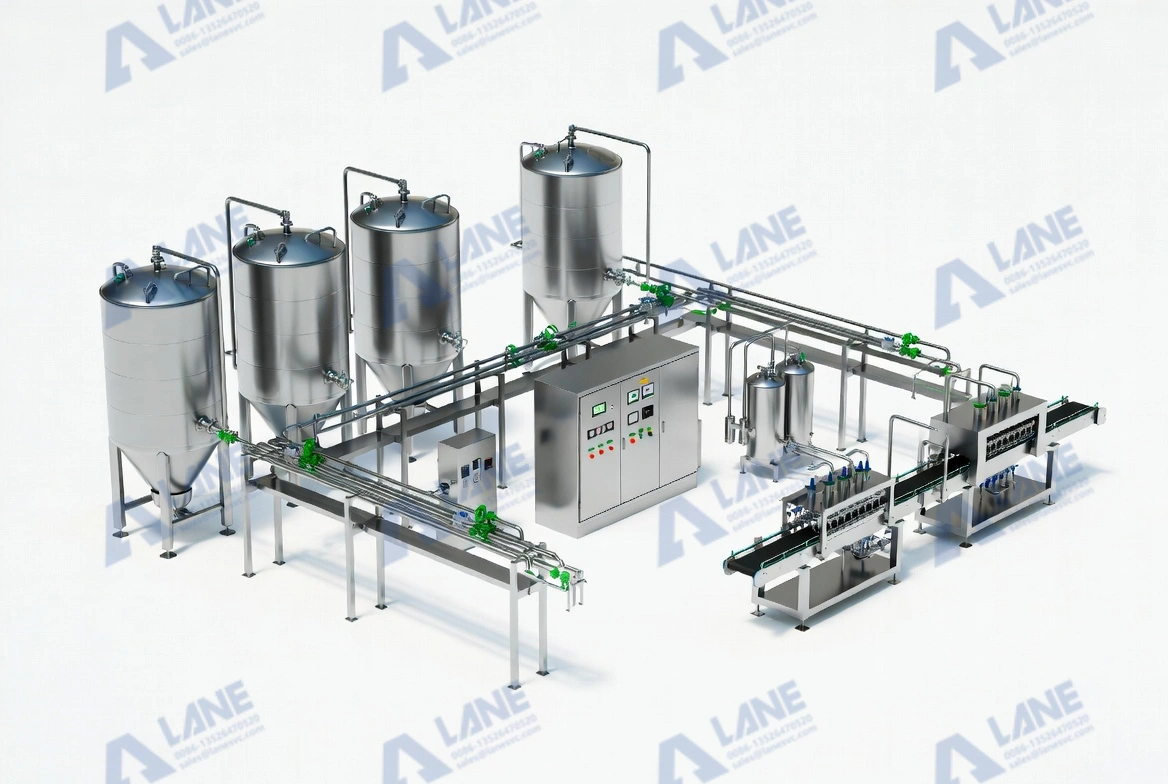
A practical manufacturing line usually combines preparation, mixing, transfer, filtration, storage, and packaging equipment.
LANE’s published liquid fertilizer production solutions include crushing machines, mixing systems, reactor tanks, filters, industrial pumps, gear pumps, pipelines, storage tanks, and automatic capping and filling machines.
The following equipment arrangement provides a useful reference for buyers.
| Equipment | Main Function | Key Purchasing Consideration |
|---|---|---|
| Crushing Machine | Prepares solid raw materials | Particle size and feed material |
| Mixing Tank | Dissolves and blends nutrients | Tank volume and agitator design |
| Reactor Tank | Handles required reactions | Temperature control and compatibility |
| Premix Tank | Prepares concentrated additives | Batch flexibility and cleaning |
| Industrial Pumps | Transfers liquid materials | Flow rate and chemical resistance |
| Dual Filter | Removes unwanted particles | Filtration rating and cleaning |
| Storage Tank | Stores finished fertilizer | Corrosion resistance and drainage |
| Filling Machine | Packages finished products | Filling accuracy and container sizes |
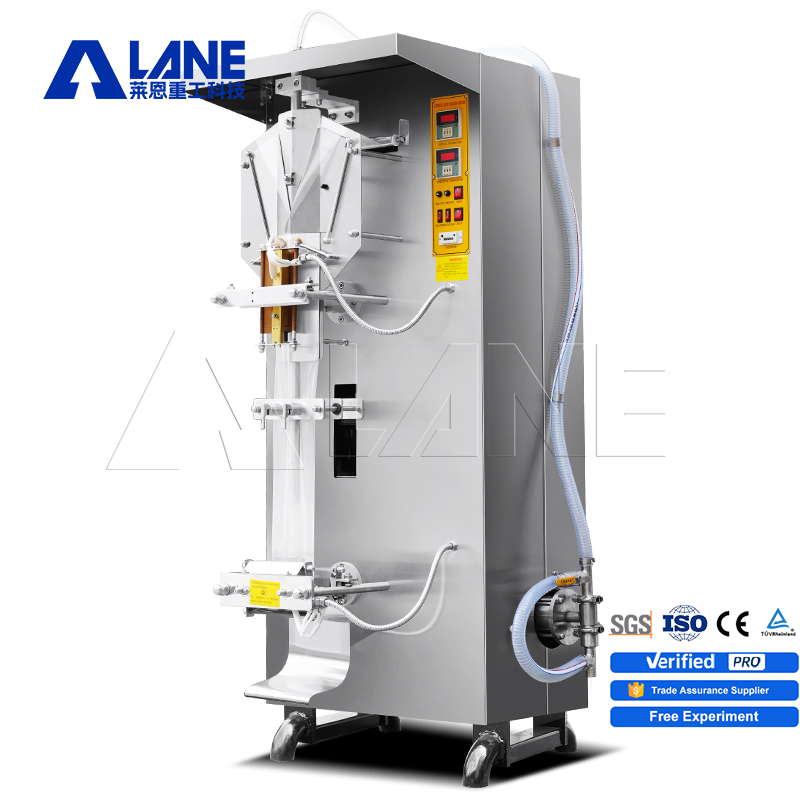
LANE publishes a 1–3 T/H liquid fertilizer production line with selected equipment specifications, including a 6 mm stainless steel mixing tank with 7.5 kW power, a 6 mm stainless steel storage tank, a 6 mm stainless steel duplex strainer with 3.8 kW power, and an automatic filling machine rated at 19 kW.
These are published reference specifications for a general liquid fertilizer production line, not guaranteed specifications for every foliar fertilizer formulation.
Before purchasing foliar liquid fertilizer production equipment, buyers should confirm the actual working volume, stainless steel grade, motor configuration, pump flow rate, filtration accuracy, and filling speed.
A 7.5 kW agitator, for example, cannot be judged independently of tank geometry, liquid viscosity, impeller design, and batch volume.
The supplier should provide a complete equipment list and explain how each component contributes to the required production capacity.
Product quality is where experienced manufacturers distinguish themselves from factories that simply mix ingredients and fill containers.
The finished product should meet the formulation’s target pH and nutrient specifications.
The University of Florida IFAS identifies a spray solution pH of approximately 5.5–6.5 as an important reference for certain foliar applications. The actual target must depend on the crop, nutrient source, and formulation.
Electrical conductivity can also help monitor dissolved salt concentration, although it should not replace laboratory nutrient analysis.
A formulation may look clear immediately after mixing but develop sediment during storage or after dilution.
Manufacturers should conduct compatibility tests, observe the product over time, and evaluate its behavior under different storage temperatures.
High nutrient concentrations can damage plant tissues. The source of nitrogen also matters.
University of Florida IFAS highlights the importance of low-biuret urea in certain foliar applications, with biuret at 0.2% or less as a specific reference to reduce leaf injury risk.
This is a formulation consideration, not a universal guarantee of crop safety. Actual application rates and crop tolerance still require validation.
A practical quality control program should include:
The best time to discover an unstable formulation is during pilot production, not after hundreds of containers have been shipped.
Production capacity should match expected sales, formulation characteristics, and operating schedules.
LANE publishes a 1–3 T/H liquid fertilizer production line, while its website also presents larger liquid fertilizer projects, including 3 T/H, 5 T/H, 8 T/H, and 10 T/H examples.
These projects indicate different manufacturing scales, but they do not establish a guaranteed foliar fertilizer output. Actual capacity must be confirmed using the proposed formulation and process cycle.
| Production Scale | Suitable Project Direction | Main Selection Consideration |
|---|---|---|
| Small Batch | New manufacturers and specialty products | Flexible mixing and manual handling |
| 1–3 T/H | Small to medium factories | Batch cycle and filling efficiency |
| 3–5 T/H | Expanding regional manufacturers | Automated transfer and storage |
| 5–10 T/H | Large commercial projects | Process control and packaging capacity |
These are indicative project-planning categories rather than verified universal capacity limits.
Automation should focus on the stages where it reduces measurable operating problems.
Automatic batching can improve ingredient accuracy. Automated liquid transfer can reduce manual handling. Process monitoring can improve batch repeatability, while automatic filling can reduce packaging labor.
However, an expensive automation system is not necessarily the right choice for a factory producing only a few specialized formulations. Buyers should calculate actual labor savings and production requirements before upgrading.
The initial machine quotation rarely represents the full investment.
Several costs deserve attention before the purchase contract is signed.
Raw material losses: Poor dissolution, excessive foam, and residues left in tanks or pipelines can reduce usable output.
Cleaning and changeover: Manufacturers producing different micronutrient or organic formulations may need more frequent cleaning to prevent cross-contamination.
Filter maintenance: Incorrect filter selection increases cleaning frequency and can interrupt production.
Material compatibility: Fertilizer ingredients may be corrosive. Pumps, seals, valves, and tanks should be selected according to actual chemical exposure.
Laboratory equipment: pH meters, EC meters, balances, and nutrient analysis arrangements contribute to quality control costs.
Packaging: Container sizes, caps, labels, and filling accuracy affect both production efficiency and distribution expenses.
A lower initial quotation can become expensive if the production line creates frequent downtime or requires extensive manual cleaning.
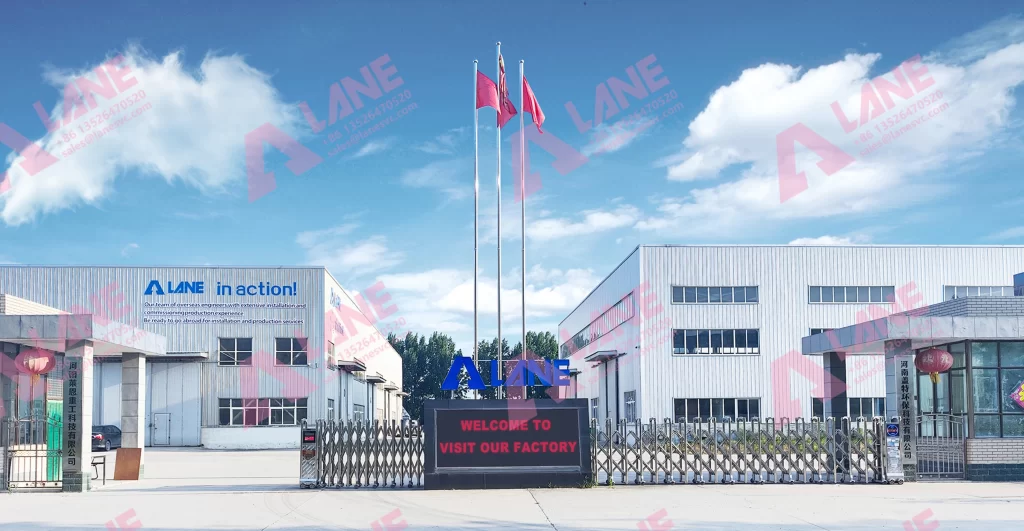
Henan Lane Heavy Industry Machinery Technology Co., Ltd. supplies liquid fertilizer production equipment and customized production-line solutions.
Its published equipment range includes mixing tanks, reactor tanks, storage tanks, premix tanks, filters, pumps, and packaging equipment.
For manufacturers planning foliar liquid fertilizer production, the appropriate configuration should be developed around the target nutrient formula, raw material characteristics, production capacity, and finished-product specifications.
LANE describes a one-stop service covering:
The company also presents liquid fertilizer project references, including organic liquid fertilizer, bio-liquid fertilizer, and water-soluble fertilizer projects.
These references demonstrate experience in different liquid fertilizer processing applications, although buyers should request confirmation of foliar-specific project experience when that is a critical purchasing requirement.
Explore the LANE liquid fertilizer production line and its liquid fertilizer equipment range for more information.
For manufacturers interested in organic formulations, the related guide on bio-liquid fertilizer for greenhouse production provides additional information about fermentation, extraction, blending, filtration, and packaging.
Common raw materials include soluble nitrogen, phosphorus, and potassium sources, micronutrient salts, chelated minerals, and selected organic additives. Their compatibility must be checked before combining them.
A typical system includes raw material preparation equipment, mixing tanks, pumps, filters, storage tanks, and filling machines. Reactor tanks are added when the formulation requires a controlled reaction.
Yes, provided the mixing system, materials, cleaning procedures, and process controls support the intended formulations. Cross-contamination risks must be addressed.
LANE publishes a 1–3 T/H liquid fertilizer production line. The appropriate capacity depends on sales demand, batch cycle time, product viscosity, and packaging speed.
Use compatible raw materials, establish the correct addition sequence, ensure complete dissolution, and conduct stability testing. Filtration alone cannot eliminate precipitation caused by chemical incompatibility.
No. Many water-based formulations can be produced through dissolution and mixing. A reactor is required only when the formulation needs additional reaction or controlled processing.
Formulation concentration, nutrient sources, pH, and biuret content must be controlled according to the intended crop and application. Field validation and appropriate product instructions are also essential.
LANE offers customized liquid fertilizer production equipment and engineering solutions. Buyers should provide their raw material list, target formula, expected capacity, and packaging requirements so the proposed configuration can be evaluated.
Successful foliar liquid fertilizer production depends on matching the formulation with the right processing equipment and quality control system. Buyers should pay particular attention to nutrient solubility, ingredient compatibility, mixing performance, filtration accuracy, storage stability, and the finished product’s suitability for foliar spraying.
Before purchasing a production line, request a detailed equipment configuration based on your actual raw materials and target formulations. Confirm tank volumes, agitator specifications, pump materials, filter ratings, cleaning arrangements, and realistic hourly output.
If you are planning a new foliar fertilizer factory or expanding an existing liquid fertilizer business, contact LANE to discuss your project requirements. Providing your target formulation and production capacity will help the engineering team evaluate a more suitable equipment configuration and investment plan.
For more details, please feel free to contact us.
Henan Lane Heavy Industry Machinery Technology Co., Ltd.
Email: sales@lanesvc.com
Contact number: +86 13526470520
Whatsapp: +86 13526470520
Leave a Comment
Latest Posts
LANE has more than 500 successful cases and is committed to providing customers with first-class solutions, high-end machinery and equipment, and one-stop pre-sales, sales and after-sales comprehensive customer service.