
Liquid Fertilizer for Drip Irrigation: Buyer’s Guide
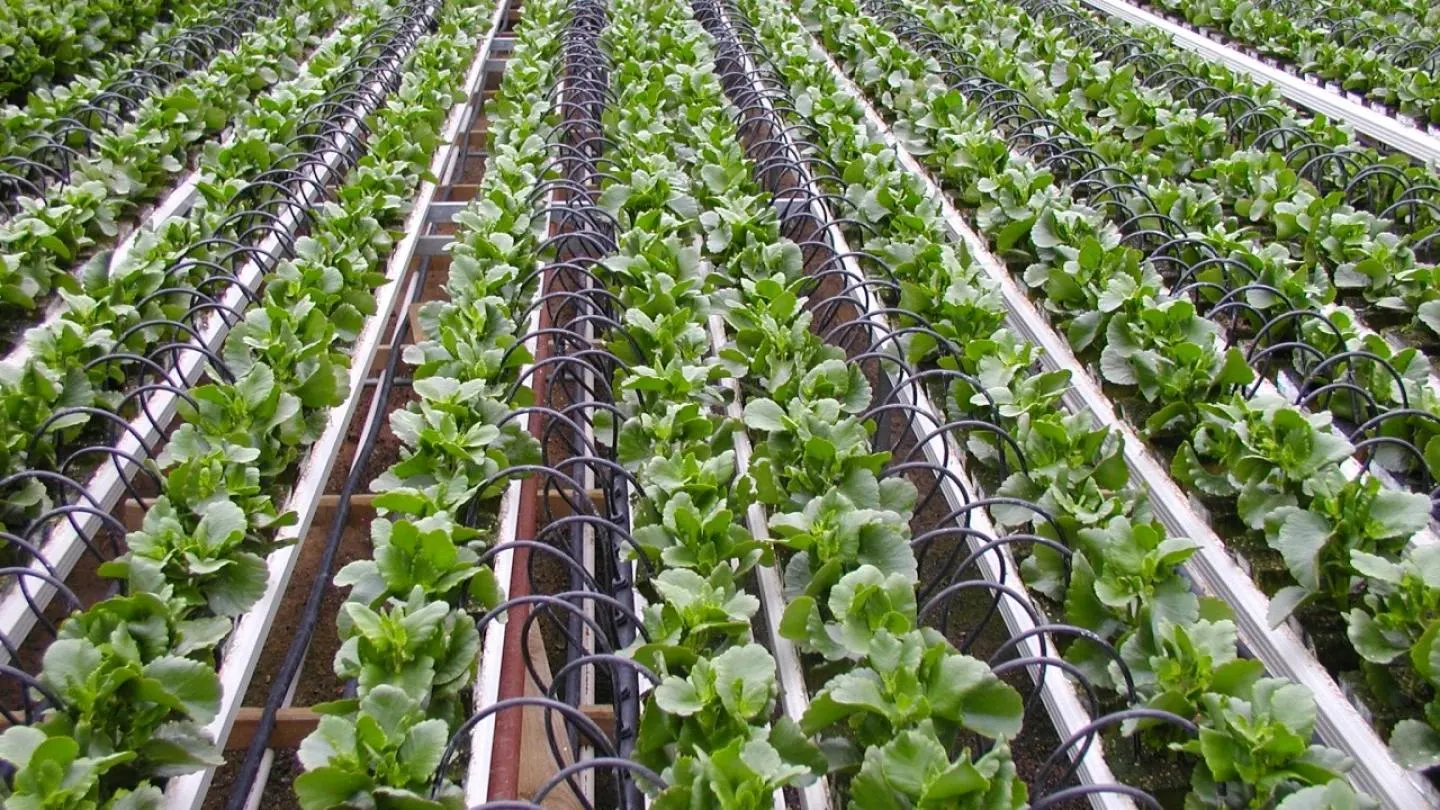
Liquid fertilizer for drip irrigation has become an important product category for fertilizer manufacturers serving greenhouse growers, commercial farms, orchards, and intensive horticultural operations. Unlike conventional granular fertilizers, liquid formulations can be injected into irrigation water and delivered directly to the crop root zone. However, producing a reliable product requires more than dissolving nutrients in water. Solubility, chemical compatibility, filtration, storage stability, and accurate formulation all influence whether the finished fertilizer performs properly in a drip irrigation system.
For fertilizer factory owners and procurement managers, the real investment question is not simply how much fertilizer a production line can manufacture per hour. It is whether the equipment can consistently produce a formulation that remains stable during storage and passes through irrigation emitters without causing deposits or blockages. This guide examines the production process, equipment selection, operating considerations, and purchasing decisions that matter.
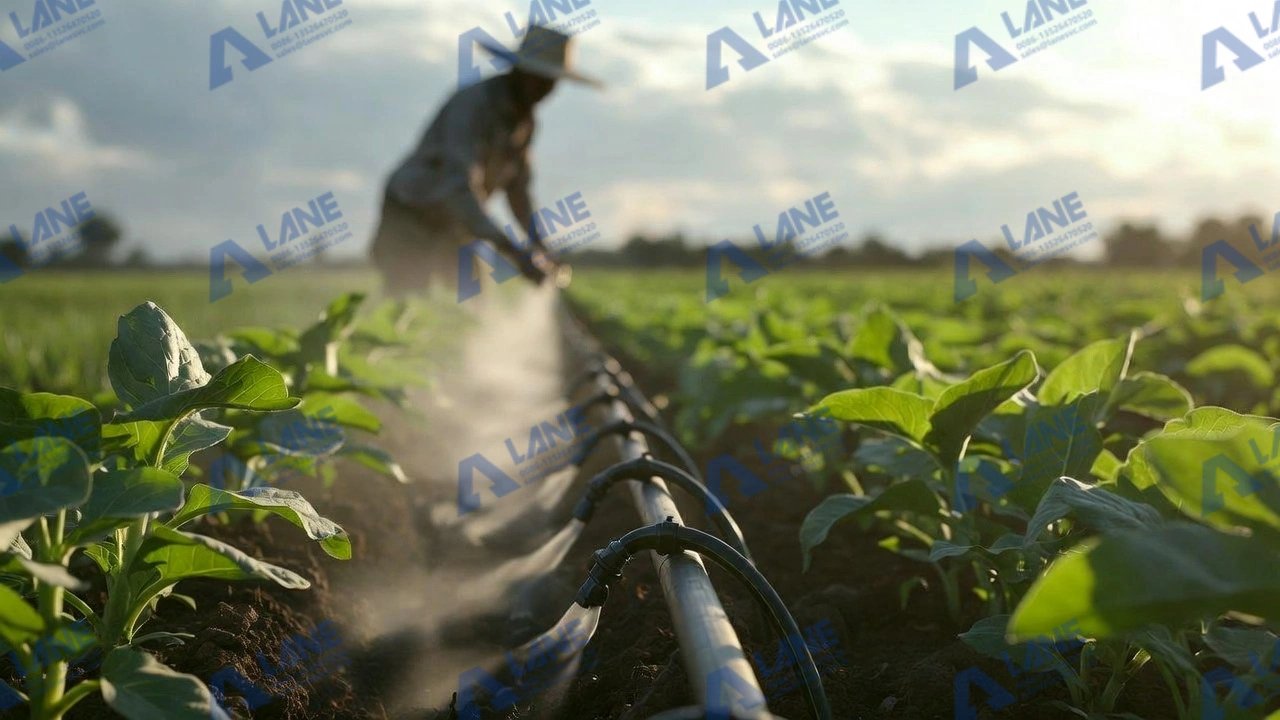
The main advantage of liquid fertilizer for drip irrigation is the ability to deliver nutrients together with irrigation water. Instead of distributing fertilizer across the entire soil surface, growers can apply nutrients through a controlled irrigation network, placing them close to the active root zone.
This approach offers several practical advantages:
For manufacturers, these advantages create opportunities in specialty fertilizers, greenhouse nutrition, fruit production, vegetable cultivation, and commercial horticulture.
Nevertheless, liquid fertilizer for drip irrigation is not automatically suitable for every irrigation system. A formulation that looks uniform in a storage tank may still produce sediment after dilution with hard irrigation water. Product performance must therefore be evaluated under actual application conditions.
The formulation determines the equipment requirements. Manufacturers should identify their target product range before purchasing tanks, pumps, and filtration systems.
NPK Liquid Fertilizer
NPK formulations supply nitrogen, phosphorus, and potassium in different proportions. They are widely relevant to commercial crop nutrition because nutrient ratios can be adjusted to suit different crops and growth stages.
A manufacturer may produce balanced formulations for general feeding or specialized products with higher nitrogen or potassium content. The important consideration is whether the selected raw materials remain compatible at the intended concentration.
Liquid Nitrogen and Potassium Fertilizers
Nitrogen-based liquid fertilizers support vegetative growth, while potassium formulations are commonly used in programs targeting fruit development and crop quality.
These products may have different solubility, pH, and concentration requirements. Equipment selection should account for the actual chemical properties rather than assuming that every liquid fertilizer can use the same mixing conditions.
Micronutrient Liquid Fertilizer
Micronutrient products may contain iron, zinc, manganese, boron, and other essential elements. Chelated micronutrients can help maintain nutrient availability in certain formulations.
However, the use of micronutrients requires careful compatibility testing. The presence of other dissolved salts and minerals in irrigation water may affect product stability.
Organic Liquid Fertilizer
Organic liquid products may incorporate amino acids, humic substances, seaweed extracts, and other organic ingredients.
These formulations can create additional processing challenges because some organic materials contain suspended particles or insoluble fractions. A manufacturer targeting drip irrigation should pay particular attention to filtration requirements and long-term sediment formation.
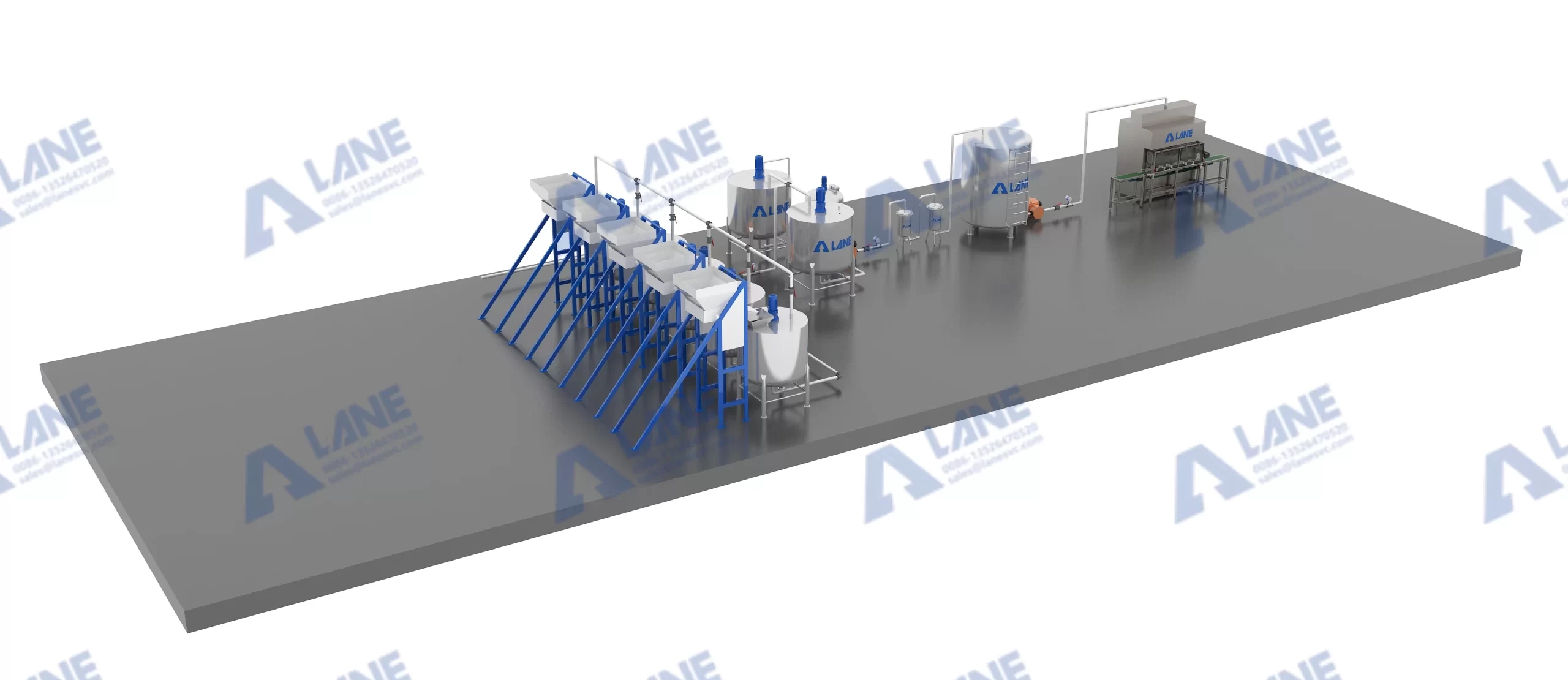
A suitable production line combines raw material preparation, mixing, reaction where required, filtration, storage, and filling. The precise arrangement depends on whether the factory produces clear solutions, organic liquid fertilizers, or suspension-based products.
Step 1: Raw Material Preparation
The production process begins with checking raw material quality, nutrient content, moisture, and compatibility.
Solid ingredients may require crushing or preliminary preparation before entering the mixing system. Liquid ingredients can be transferred through pumps and pipelines.
Batching accuracy matters here. Incorrect weighing or inconsistent raw material quality can create nutrient deviations that cannot be corrected simply by extending the mixing time.
Step 2: Mixing and Dissolution
Raw materials are added to a mixing tank in a controlled sequence. Agitation helps distribute nutrients evenly and supports the dissolution of soluble ingredients.
The mixing tank should be selected according to batch volume, formulation viscosity, chemical properties, and required mixing intensity.
For manufacturers producing several formulations, flexible batching arrangements are generally more practical than a system designed around only one fixed recipe.

Step 3: Reaction and Formulation Adjustment
Some liquid fertilizers require a reaction stage or additional processing to achieve their intended composition and stability.
A reactor tank may be needed for formulations involving chemical reactions, while other products can be manufactured through controlled mixing alone.
This distinction is important. Installing a reactor does not automatically improve every fertilizer product. The equipment should match the actual formulation and production chemistry.
Step 4: Filtration and Quality Inspection
Filtration removes unwanted particles and helps protect downstream equipment and the final product.
For liquid fertilizer for drip irrigation, this stage deserves particular attention. A product intended for small irrigation emitters must meet the cleanliness and particle-size requirements of the target application system.
A dual-filter arrangement may be considered where the formulation and production capacity justify it. Filter selection should account for the expected particle load, pressure drop, cleaning method, and required filtration rating.
Step 5: Storage and Packaging
After filtration, the finished fertilizer enters a storage tank for inspection and temporary storage before filling.
The packaging system can be configured for different container sizes and production requirements. Automatic filling and capping equipment may be appropriate for factories serving distributors or large agricultural customers.
The production line should also allow effective tank cleaning and product changeover, especially when different formulations are manufactured on the same equipment.
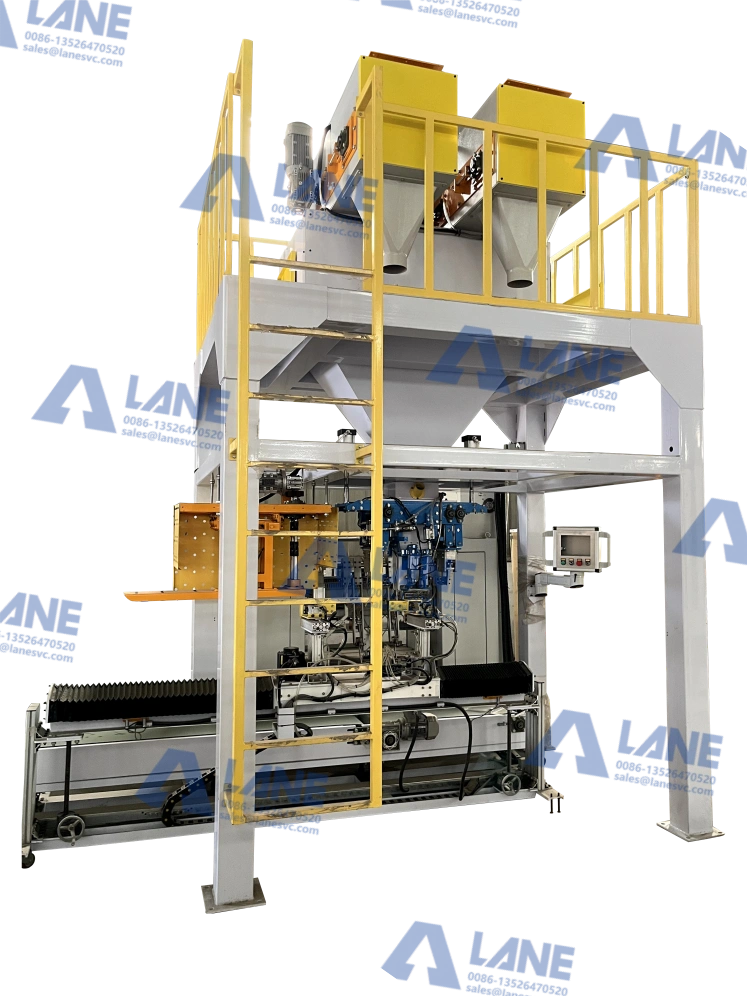
The equipment configuration should follow the production process rather than a supplier’s standard machine list. LANE’s liquid fertilizer production solution identifies crushing, hybrid mixing, reaction, and packaging as major production sections.
The following table outlines the main equipment and its purchasing considerations.
| Equipment | Main Function | Buyer’s Inspection Point |
|---|---|---|
| Crushing Machine | Prepares solid raw materials | Particle size and feed material compatibility |
| Mixing Tank | Dissolves and blends ingredients | Volume, agitator and material compatibility |
| Reactor Tank | Supports required chemical reactions | Temperature control and corrosion resistance |
| Premix Tank | Prepares concentrated ingredients | Batch flexibility and cleaning access |
| Industrial Pumps | Transfers liquids | Flow rate and viscosity range |
| Dual Filter | Removes particles | Filtration rating and cleaning method |
| Storage Tank | Stores finished fertilizer | Corrosion resistance and usable volume |
| Filling Machine | Packages finished fertilizer | Filling accuracy and container range |
Supplier reference: LANE’s published equipment range includes reactor tanks, process tanks, storage tanks, premix tanks, dual filters, and liquid fertilizer production lines.
LANE’s published 1–3 T/H liquid fertilizer production line lists the following reference specifications:
| Equipment | Material | Thickness | Power |
|---|---|---|---|
| Mixing Tank | Industrial-grade stainless steel | 6 mm | 7.5 kW |
| Storage Tank | Industrial-grade stainless steel | 6 mm | Not specified |
| Duplex Strainer | Industrial-grade stainless steel | 6 mm | 3.8 kW |
| Automatic Filling Machine | Industrial-grade stainless steel | Not specified | 19 kW |
These are published reference values, not universal design standards. Buyers should request confirmation of the exact equipment configuration, motor specifications, tank working volume, filtration accuracy, and applicable material grade in the final quotation. In particular, the supplier should clarify the specification and intended function of each filtration component.
Purchasing principle: Do not compare production lines by motor power or stainless steel thickness alone. The complete system must be assessed against the formulation, operating conditions, finished-product requirements, and actual production schedule.
This is one of the most important quality-control questions for manufacturers producing liquid fertilizer for drip irrigation.
A product may pass a factory appearance inspection but still cause problems after dilution with local irrigation water. Calcium, magnesium, phosphates, and sulfates can interact and form insoluble compounds under certain conditions.
Three checks deserve priority.
First, test solubility. Confirm that the raw materials dissolve properly at the intended concentration and operating temperature. Inspect for undissolved particles and sediment after mixing.
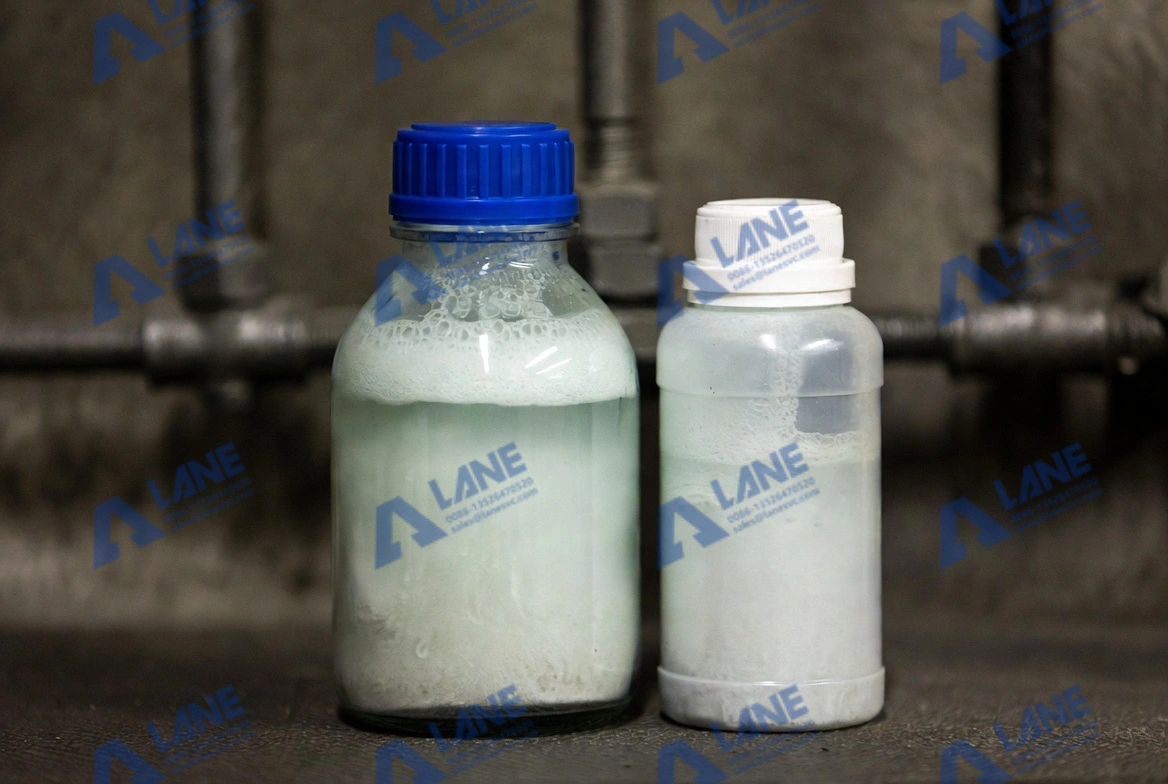
Second, conduct compatibility testing. A jar test using the actual irrigation water is a practical screening method. Mix the fertilizer at the intended dilution ratio, observe cloudiness or precipitation, and check for sediment formation over an appropriate observation period.
Third, verify filtration performance. The filtration arrangement must be matched to the finished product and the irrigation system’s emitter requirements. A filter cannot correct chemical incompatibility or prevent precipitation that occurs later in the pipeline.
Manufacturers should also evaluate product pH and electrical conductivity (EC). These measurements help monitor formulation consistency and nutrient concentration, although acceptable values depend on the crop, formulation, water source, and application program.
An important reference is Agriculture Victoria’s fertigation guidance, which discusses fertilizer compatibility, pH and EC monitoring, filtration, and irrigation-system maintenance.
LANE publishes a 1–3 T/H liquid fertilizer production line, while its liquid fertilizer website also presents project examples ranging from 2 T/H to 10 T/H.
These figures demonstrate different project scales, but they should not be treated as guaranteed output for every formulation.
A factory producing a low-viscosity, fully soluble fertilizer may have different mixing and transfer requirements from one manufacturing a concentrated organic liquid or suspension product.
Before selecting capacity, buyers should answer four questions:
Automation should also be selected according to operational needs.
A semi-automatic system may be sufficient for a smaller factory producing a limited product range. A larger manufacturer may benefit from automated batching, liquid transfer, process monitoring, and filling.
However, automation is valuable only when it improves repeatability and reduces operating errors. A highly automated line with poorly designed cleaning procedures can still produce inconsistent batches.
The initial equipment quotation is only one part of the investment.
For liquid fertilizer for drip irrigation, several less visible costs can affect long-term profitability.
Water quality management: Water used in production may contain minerals that affect dissolution and product stability. Depending on the formulation, water treatment or additional testing may be necessary.
Cleaning and changeover: Different formulations can leave deposits in tanks, filters, and pipelines. Frequent product changes increase cleaning time and may reduce effective production capacity.
Corrosion and spare parts: Fertilizer solutions can be chemically aggressive. Incorrect material selection may shorten the service life of pumps, seals, valves, and tanks.
Packaging and logistics: Liquid fertilizers require suitable containers, storage arrangements, and transportation planning. Packaging costs can become significant when products are distributed over long distances.
Quality control: Laboratory testing, sampling, and batch documentation are essential for maintaining consistent nutrient specifications.
A lower-priced production line is not necessarily the more economical option. Buyers should compare the total cost of ownership, including maintenance, labor, energy, cleaning, and expected production losses.
Henan Lane Heavy Industry Machinery Technology Co., Ltd. provides liquid fertilizer production equipment and customized production-line solutions.
Its published liquid fertilizer production configuration covers raw material preparation, mixing, reaction, filtration, storage, and packaging.
For buyers planning a new factory or upgrading existing equipment, the company describes the following services:
LANE also publishes liquid fertilizer project references, including a 5 T/H bio-liquid fertilizer factory in the United States, a 3 T/H organic liquid fertilizer line in South Africa, and a 10 T/H water-soluble fertilizer project in the UAE.
These examples provide useful starting points for project discussions. Buyers should request detailed references and confirm which equipment, formulations, and operating conditions were included in each project.
Explore the LANE liquid fertilizer production line or review its liquid fertilizer equipment range to understand the available configurations.
1. What is the best liquid fertilizer for drip irrigation?
The best product depends on crop nutrient requirements, irrigation water quality, and the target application system. Fully soluble and chemically compatible formulations are generally preferred.
2. Can all liquid fertilizers be used in drip irrigation?
No. Some formulations contain suspended particles or ingredients that may precipitate after dilution. Always check solubility, compatibility, and filtration requirements before application.
3. What equipment is required to manufacture liquid fertilizer?
A typical line may include raw material preparation equipment, mixing tanks, reactor tanks where necessary, pumps, filters, storage tanks, and filling machines.
4. What production capacity should I choose?
Select capacity according to expected sales volume, working hours, batch cycle time, formulation type, and packaging requirements. LANE publishes a 1–3 T/H production-line configuration, while larger project solutions can be customized.
5. How can manufacturers prevent sediment in liquid fertilizer?
Use compatible raw materials, control mixing conditions, verify dissolution, and conduct stability testing. Filtration helps remove particles but cannot prevent precipitation caused by incompatible ingredients.
6. Is a reactor tank always necessary?
No. Simple liquid blending formulations may only require mixing and dissolution. A reactor is necessary when the product chemistry requires a controlled reaction stage.
7. Can one production line manufacture different liquid fertilizer formulations?
Yes, provided the equipment, material compatibility, process controls, and cleaning procedures support the intended product range. The supplier should evaluate changeover requirements before finalizing the design.
8. How long does it take to install a liquid fertilizer production line?
The installation schedule depends on equipment customization, factory preparation, shipping, utilities, and commissioning requirements. Buyers should request a project-specific manufacturing and installation schedule rather than rely on a general delivery estimate.
Investing in liquid fertilizer for drip irrigation production requires more than selecting a mixing tank and filling machine. Manufacturers should first define their target formulations, confirm raw material compatibility, establish finished-product quality requirements, and calculate realistic production capacity.
For procurement managers, the most important step is to request an equipment proposal based on the actual product recipe and operating conditions. Tank specifications, filtration performance, pump compatibility, cleaning arrangements, and filling accuracy should all be confirmed before signing the purchase contract.
If you are planning a new liquid fertilizer factory or expanding an existing production facility, contact LANE to discuss your raw materials, target capacity, product formulations, and equipment requirements. A properly configured production line can help establish consistent manufacturing quality while supporting the growing demand for liquid fertilizers in modern fertigation markets.
For more details, please feel free to contact us.
Henan Lane Heavy Industry Machinery Technology Co., Ltd.
Email: sales@lanesvc.com
Contact number: +86 13526470520
Whatsapp: +86 13526470520
Leave a Comment
Latest Posts
LANE has more than 500 successful cases and is committed to providing customers with first-class solutions, high-end machinery and equipment, and one-stop pre-sales, sales and after-sales comprehensive customer service.