
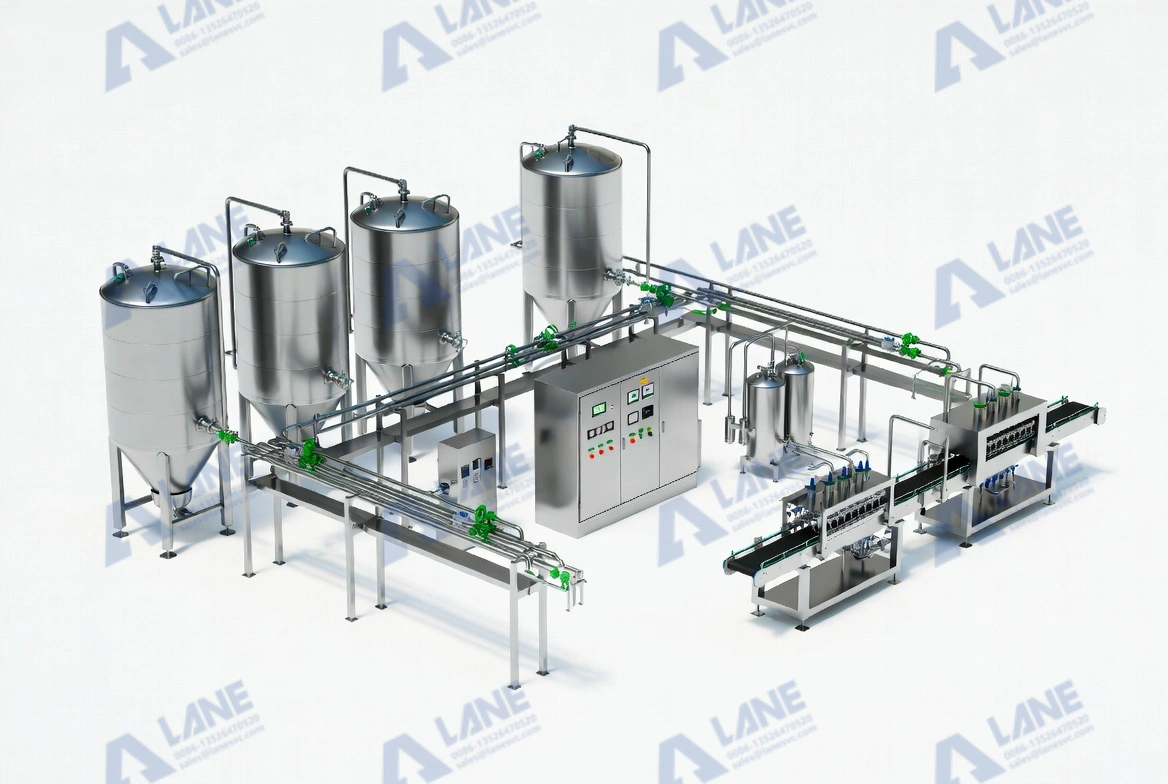
A Complete Guide to Suspension Fertilizer Manufacturing Equipment: Types, Applications, and Efficiency Tips
The fertilizer landscape is evolving as modern agriculture is becoming more demanding. This demand for high-concentration, easily absorbable nutrients has led to the rise of liquid-based solutions. Among these liquid fertilizers, suspension fertilizers stand out for their ability to carry high levels of N-P-K (Nitrogen, Phosphorus, and Potassium) along with secondary and micronutrients in a stable, fluid form. Suspension fertilizer offers high nutrient content and ease of application. The production of this valuable fertilizer requires specialized machinery to ensure quality, efficiency, and safety. Suspension fertilizer manufacturing equipment by LANE is designed to produce stable, nutrient-dense suspension fertilizers.
LANE Heavy Industry’s Machinery, a leading fertilizer equipment manufacturer, has developed a full range of suspension fertilizer manufacturing equipment that integrates advanced mixing, reaction, and control technologies to deliver reliable, efficient production lines for global fertilizer businesses.
Suspension fertilizer, also known as slurry fertilizer, is a type of liquid fertilizer which contains high concentrations of nutrients suspended in a liquid medium. Suspension fertilizers carry higher nutrient concentrations, better storage stability, and wider crop adaptability than clear liquid fertilizers. This type of fertilizer provides uniform nutrients to the plants and has a reduced risk of leaching. This makes them suitable for large-scale farming operations and precise agricultural practices.
Suspension fertilizers carry higher nutrient concentrations, better storage stability, and wider crop adaptability. This makes suspension fertilizer manufacturing equipment essential for large-scale agricultural fertilizer production. The production of high-quality suspension fertilizer relies heavily on industrial-quality suspension fertilizer manufacturing equipment.
The production line for suspension fertilizer involves several pieces of machinery which work with each other. Here’s a breakdown of the most essential equipment:
The first step of production is to handle raw materials such as ammonium phosphate, urea, and potassium chloride. They must be properly stored and transported. Conveyors, hoppers, and storage tanks are the most important part of this process.
Mixing is the most important step of production. With mixing equipment, solid raw materials are dissolved with purified water or liquid solution. High-speed mixers and agitators are used to blend the raw materials with water and other additives to form a uniform slurry. Efficient mixing improves nutrient distribution and prevents sedimentation in the final product.
To achieve a fine and uniform consistency, raw materials often require grinding. LANE uses Raymond mills or hammer mills to break down large particles to ensure better solubility and nutrient availability.
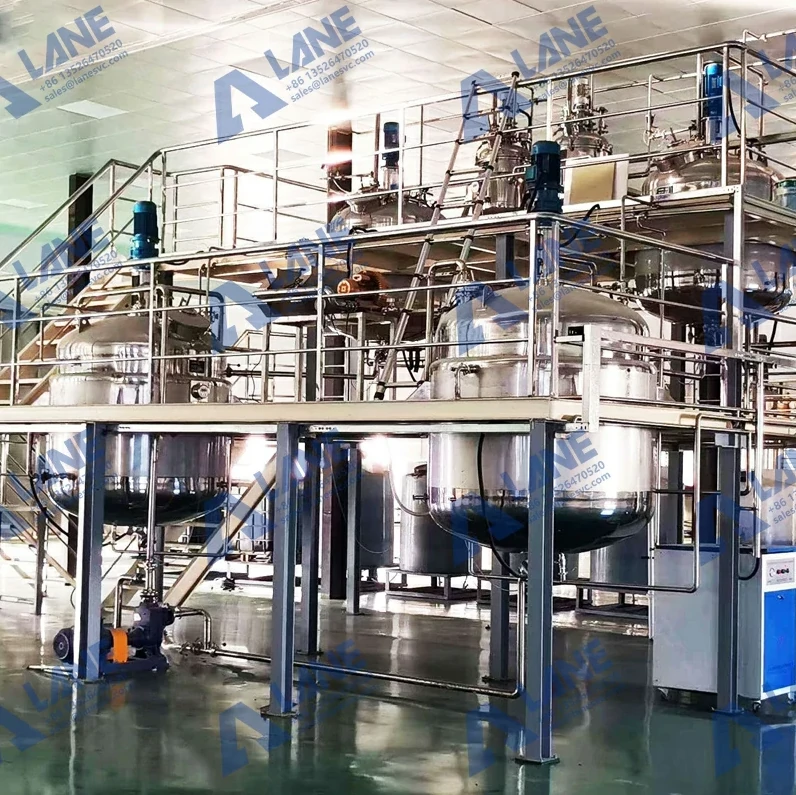
The heart of the production line is the suspension reactor. Here, different raw materials are mixed to produce the desired nutrient composition. LANE Heavy Industry’s suspension fertilizer reactors are designed for high efficiency, precise temperature control, and optimal mixing, minimizing production waste.
After the reaction, homogenization ensures that all particles remain evenly distributed in the suspension. Filtration units remove any oversized particles and ensure smooth pumping and application. These units are crucial for maintaining consistent quality in suspension fertilizer manufacturing equipment.
Finally, the finished suspension fertilizer is packed using automatic packing machines. The finished packaging is designed to prevent leakage and contamination, maintaining the integrity of the fertilizer until it reaches the end-user.
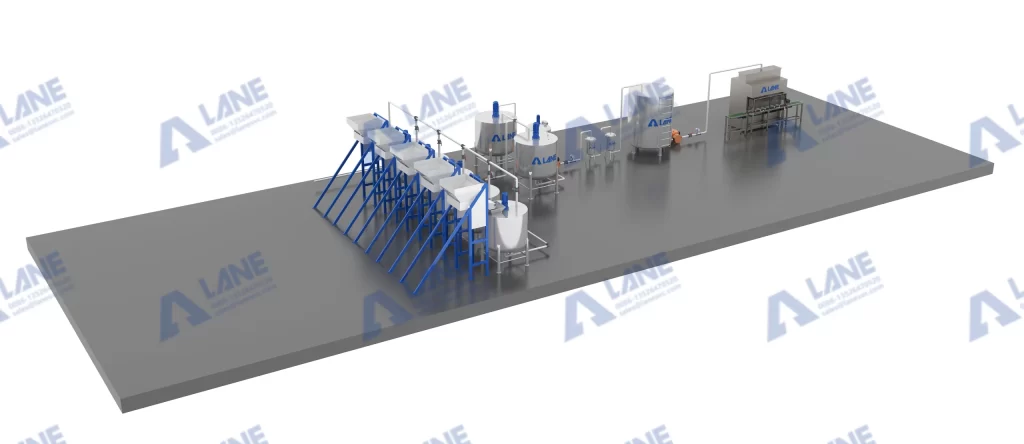
There are several types of suspension fertilizer manufacturing equipment, each of these equipment pieces is designed to optimize different stages of production.
Choosing the right combination of equipment depends on production scale, raw material types, and the desired fertilizer formulation.
Suspension fertilizer is used across multiple agricultural and industrial applications, including:
LANE Heavy Industry’s fertilizer production line ensures versatility and allows manufacturers to produce different types of suspension fertilizers efficiently.
Optimizing suspension fertilizer manufacturing equipment not only improves output but also reduces operational costs. Here are some practical tips:
LANE Heavy Industry has over 20 years of experience in creating fertilizer machinery equipment. Key advantages of LANE machinery include:
Investing in LANE Heavy Industry’s machinery allows manufacturers to scale production, maintain consistent quality, and reduce operational risks.
Common Challenges and Solutions
Even with advanced suspension fertilizer manufacturing equipment, manufacturers may face challenges:
By addressing these challenges proactively, manufacturers can optimize production efficiency and product quality.
Suspension fertilizer manufacturing equipment is the foundation of efficient, high-quality modern fertilizer production. From raw material handling to mixing, reaction, and packing, each step requires precision and durable machinery. By choosing LANE’s suspension fertilizer manufacturing equipment, businesses gain stable output, precise nutrient control, low operational costs, and strong after-sales support. With LANE’s technology, you can build a high-performance suspension fertilizer production line that drives agricultural growth and sustainable success.
Q1: What is the main function of suspension fertilizer manufacturing equipment?
A1: Its primary function is to mix, react, and stabilize raw materials into a uniform, nutrient-rich liquid fertilizer.
Q2: Can LANE Heavy Industry equipment produce different fertilizer formulas?
A2: Yes, their production line supports customization to produce fertilizers tailored to specific crops and soil conditions.
Q3: How often should the equipment be maintained?
A3: Routine maintenance is recommended every 3–6 months, depending on production volume and raw material abrasiveness.
Q4: Is automation included in LANE Heavy Industry’s production line?
A4: Yes, the line includes automated feeding, mixing, and packing systems to enhance efficiency and reduce labor costs.
For more details, please feel free to contact us.
Henan Lane Heavy Industry Machinery Technology Co., Ltd.
Email: sales@lanesvc.com
Contact number: +86 13526470520
Whatsapp: +86 13526470520
Leave a Comment
Latest Posts
LANE has more than 500 successful cases and is committed to providing customers with first-class solutions, high-end machinery and equipment, and one-stop pre-sales, sales and after-sales comprehensive customer service.