

Key Equipment Needed for High-Stability Sugar Alcohol Chelated Fertilizer Manufacturing
Sugar alcohol chelated fertilizer is a highly-efficient, easily absorbed liquid fertilizer. The core advantage of this fertilizer is the stable chelation structure formed by sugar alcohol and trace/macro elements with better nutrient utilization and crop stress resistance. Sugar alcohol chelated fertilizer improves nutrient stability, mobility, and absorption efficiency in plants. However, achieving this product stability and quality requires a precisely engineered production line with advanced fertilizer processing equipment.
Sugar alcohol chelated fertilizer leverages natural polyols—such as sorbitol, mannitol, and xylitol—to deliver nutrients through a plant’s vascular system with unprecedented speed. However, the efficiency of these fertilizers depends on their chemical stability. A poorly manufactured chelate will “salt out,” precipitate, or fail to move through the phloem. This is where LANE Heavy Industry Machinery Technology Co., Ltd. plays a critical role. We provide fully integrated fertilizer production systems designed specifically for organic, compound, and chelated fertilizer manufacturing with high automation and consistency.
This article explains the key equipment required for high-stability sugar alcohol chelated fertilizer manufacturing, along with a complete process overview using LANE Heavy Industry machinery.
The manufacturing of sugar alcohol chelated fertilizer is not a simple blend between raw materials. It is an endothermic chemical reaction. The sugar alcohol molecules must form coordinate bonds with metal ions like Calcium, Boron, or Zinc. This requires a stable environment where heat and agitation are perfectly controlled.
Technical Specifications of the LANE Reactor
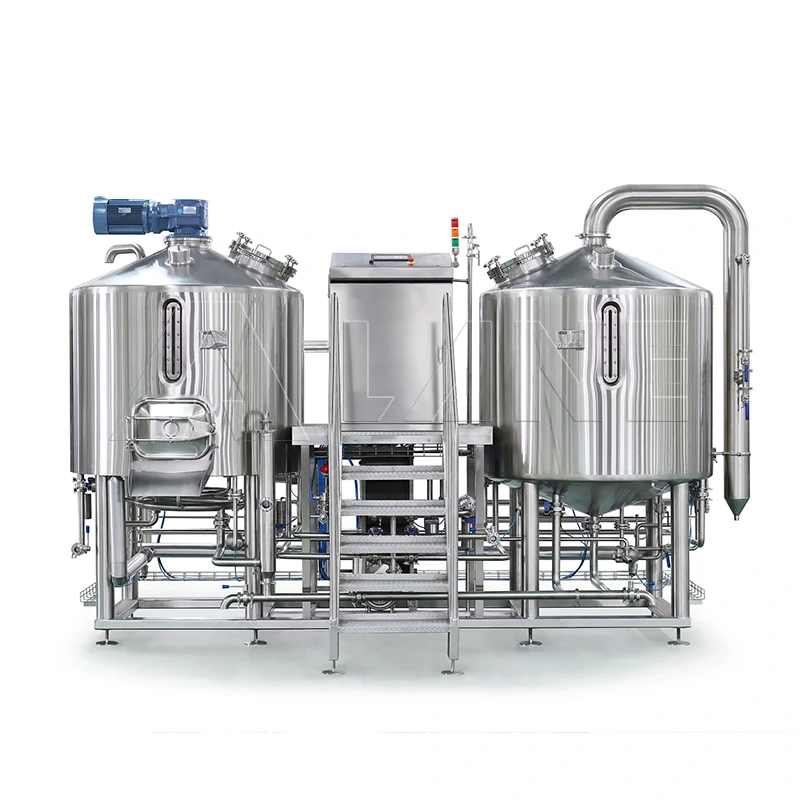
At the center of the sugar alcohol chelated fertilizer production line is the 316L Stainless Steel Jacketed Reactor. While 304 stainless steel is common in general industry, 316L is mandatory for chelation due to its superior resistance to the corrosive nature of concentrated mineral acids and high-analysis salts.
The dual-layer jacket allows for indirect heating using steam or thermal oil. Sugar alcohols are sensitive to “hot spots”; the LANE reactor ensures a uniform temperature distribution between 60°C and 90°C, which is the optimal window for the chelation bond to form without scorching the organic components.
One of the most frequent complaints in the liquid fertilizer industry is “layering” or sedimentation in the bottle. High-stability sugar alcohol chelated fertilizer must remain a clear, homogeneous solution for at least two years of shelf life.
The LANE High-Shear Homogenizer
To prevent sedimentation, LANE Heavy Industry integrates a High-Shear Homogenizer into the production module. This equipment uses a stator and rotor system to exert massive mechanical shear forces on the liquid. By breaking down molecular clusters to a microscopic scale, the homogenizer ensures that the chelated complexes are evenly dispersed throughout the water carrier. This process is particularly vital when producing suspension fertilizers, where solid particles must be ground finely enough to remain suspended without the use of excessive gelling agents.
The stability of a sugar alcohol chelate is extremely fragile and depends heavily on the pH of the solution. If the pH drifts even slightly outside the stability window, the chemical bond breaks and the nutrient become insoluble.
The LANE Control Module
LANE’s fully automated systems utilize high-precision flow meters and industrial-grade pH sensors that provide real-time feedback to a central PLC (Programmable Logic Controller). When the system detects a pH shift during the chelation reaction, it automatically triggers the injection of alkaline or acidic stabilizing agents. This control eliminates the human error associated with manual batching, ensuring that every batch produced meets the exact specifications for phloem mobility and leaf safety.
Sugar alcohol chelated fertilizer produced by LANE’s designed and engineered production line has higher “sprayability.” We understand that the end fertilizer will be used by farmers and the smallest impurity or unreacted salt crystal can clog expensive drip irrigation emitters or foliar spray nozzles.
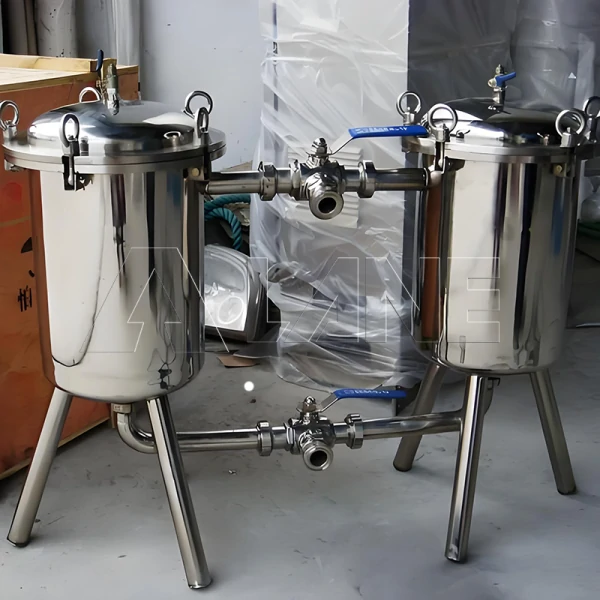
A high-stability production line from LANE Heavy Industry includes a Multi-Stage Filtration Unit. The liquid first passes through a coarse bag filter to remove any large impurities, followed by a series of cartridge filters that refine the product down to 1 micron. This ensures that the final sugar alcohol chelated fertilizer is a crystal-clear liquid that will perform flawlessly in any modern agricultural equipment.
Chelation is a process that benefits from “maturation.” Once the heat-driven reaction in the reactor is complete, the liquid cannot be immediately bottled. Doing so can cause thermal shock, leading to crystallization as the liquid cools too rapidly in the packaging.
LANE Maturation Vessels
After filtration, the liquid fertilizer is sent to dedicated maturation tanks equipped with cooling coils and slow-speed agitation paddles. These tanks allow the sugar alcohol chelated fertilizer to cool gradually while maintaining gentle movement, preventing the formation of crystals. This maturation phase allows the chemical bonds to reach full thermodynamic equilibrium, which is the secret to producing a product that remains stable even when stored in cold warehouses.
Finally, a professional manufacturing setup requires a filling line that can handle high-value liquids without waste. Since sugar alcohol chelates are premium products, precision in filling is paramount for the manufacturer’s profit margins.
LANE Linear Filling Machinery
LANE’s automatic filling lines are built with corrosion-resistant components and anti-drip nozzles. The system can be quickly adjusted to fill everything from 1-liter retail bottles to 1,000-liter IBC tanks. Features like vacuum-back suction ensure that the bottle threads remain clean, preventing leaks during shipping, a common problem with concentrated liquid fertilizers.
Building a production line for sugar alcohol chelated fertilizer is an investment in quality. The production depends on precise engineering and advanced equipment integration. From crushing and mixing to chelation reaction and final packaging, each stage requires specialized machinery to ensure product stability and efficiency. LANE Heavy Industry, with its mature technology and rich experience, provides reliable equipment support for manufacturers, helping to produce high-quality sugar alcohol chelated fertilizer and promote the development of modern efficient agriculture.
What is Sugar alcohol chelated fertilizer?
It is a fertilizer that uses sugar alcohols as chelating agents to hold micronutrients in a more stable, plant-available form.
Why is stability important in production?
Stability helps prevent precipitation, sediment, and nozzle blockage, while improving shelf life and field performance.
What is the most important machine in the process?
The reactor is the core machine because it creates the controlled chelation environment, but the full line depends on dosing, pH control, filtration, and packaging equipment.
Can this fertilizer be used in drip irrigation?
Yes, sugar alcohol chelated trace element products are specifically described as suitable for spray and drip irrigation applications when properly formulated and filtered.
For more details, please feel free to contact us.
Henan Lane Heavy Industry Machinery Technology Co., Ltd.
Email: sales@lanesvc.com
Contact number: +86 13526470520
Whatsapp: +86 13526470520
Leave a Comment
Latest Posts
LANE has more than 500 successful cases and is committed to providing customers with first-class solutions, high-end machinery and equipment, and one-stop pre-sales, sales and after-sales comprehensive customer service.