
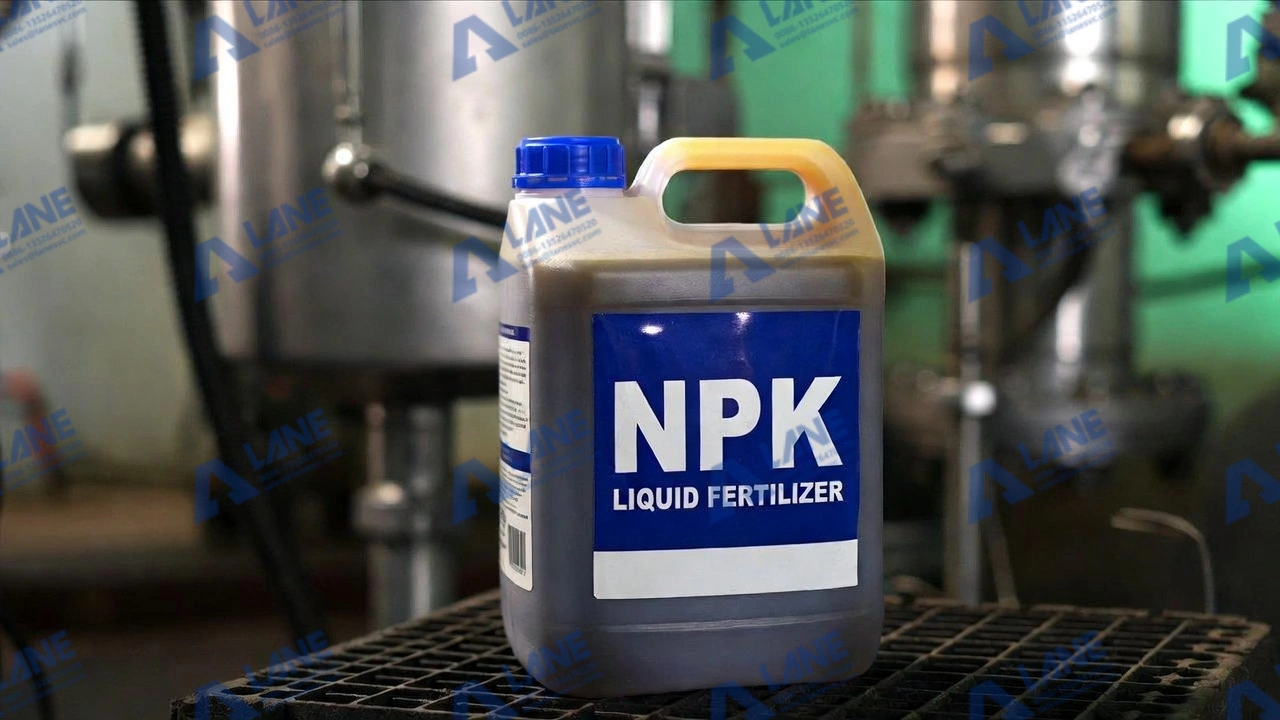
The Ultimate Guide to Slow-Release Liquid NPK Fertilizer
In the commercial agriculture, traditional nutrient management system is leaking money. Conventional granular fertilizer wash away before crops can utilize them, which cause both economic loss and environmental strain. Modern farms are using liquid fast acting fertilizer to provide nutrient to the crops but this type of fertilizer also leaks. Slow-release liquid fertilizer has become one of the most promising technologies for modern crop nutrition. It bridged the gap between instant crop nutrition and long-term soil sustainability. However, engineering a liquid formulation that releases macronutrients predictably over time requires extreme technical precision.
Manufacturers who want to capture this booming market, understanding how Slow-release liquid NPK fertilizer is manufactured is essential. With advance system provided by Henan LANE Heavy Industry Machinery Technology Co., Ltd., manufacturers can build efficient and energy saving production line capable of capturing this booming market.
Slow-release liquid NPK fertilizer is a liquid solution which contains nitrogen, phosphorus, and potassium and has the capability of delivering the nutrient slowly rather than all at once. This liquid fertilizer is engineered to reduce nutrient loss, improve uptake efficiency and support longer feeding intervals. Grower who wants more control over their nutrition management can use this fertilizer to maintain steadier crop nutrition with fewer applications.
Slow-release liquid NPK fertilizer is especially useful where nutrient leaching, runoff, or rapid depletion is a concern. It is also attractive in precision agriculture because it can be dosed through irrigation system with controlled timing and concentration.
The main advantage of slow-release liquid NPK fertilizer is balance. plants receive nutrients when they need them, while the producer or grower reduces waste. The NPK formulation of the liquid fertilizer improves root development, vegetative growth, flowering, and fruit filling. It is also suited to crops that respond poorly to nutrient spikes.
From a manufacturing perspective, slow-release liquid system can open premium product categories. They support premium agronomy positioning, custom blending, and branding for specialty crop markets. We can also align sustainability goals by reducing losses to the environment.
Slow release fertilize is made by several formulation strategy. You can implement chelated nutrients, polymer-modified carriers, or viscous matrices that offer nutrient availability after application. The exact method depends on the target crop, climate, irrigation method, and shelf-life requirements.
A well-designed slow-release liquid NPK fertilizer should remain stable in storage, pump easily in equipment, and deliver predictable nutrient release in the field. For manufacturers, this means the production line must control viscosity, pH, miscibility, filtration, and raw material compatibility with precision.
Slow-release liquid NPK fertilizer offers advantages for large-scale agricultural operations, turf management, and commercial landscaping:
Traditional nitrogen fertilizers lose up to 50% of their efficacy to volatilization and leaching. Because slow-release liquid NPK fertilizer releases nutrients at a pace that matches the crop’s biological growth curve.
The nutrient is persisted in the soil for long time. Growers can reduce the frequency of fertilizer applications. Fewer passes across the field mean lower fuel consumption, less soil compaction, and reduced labor costs.
Premium slow-release liquid NPK fertilizer features a low salt index. This saves the crops from fertilizer burn. This safety profile allows for precise, close-to-seed applications or foliar spraying without the risk of scorching valuable crops.
Excess agricultural runoff causes chemical contamination in local waterways and causes toxic algae blooms. By binding nutrients in a slow-release liquid matrix, farms can meet stringent ecological standards while maintaining high-yield outputs.
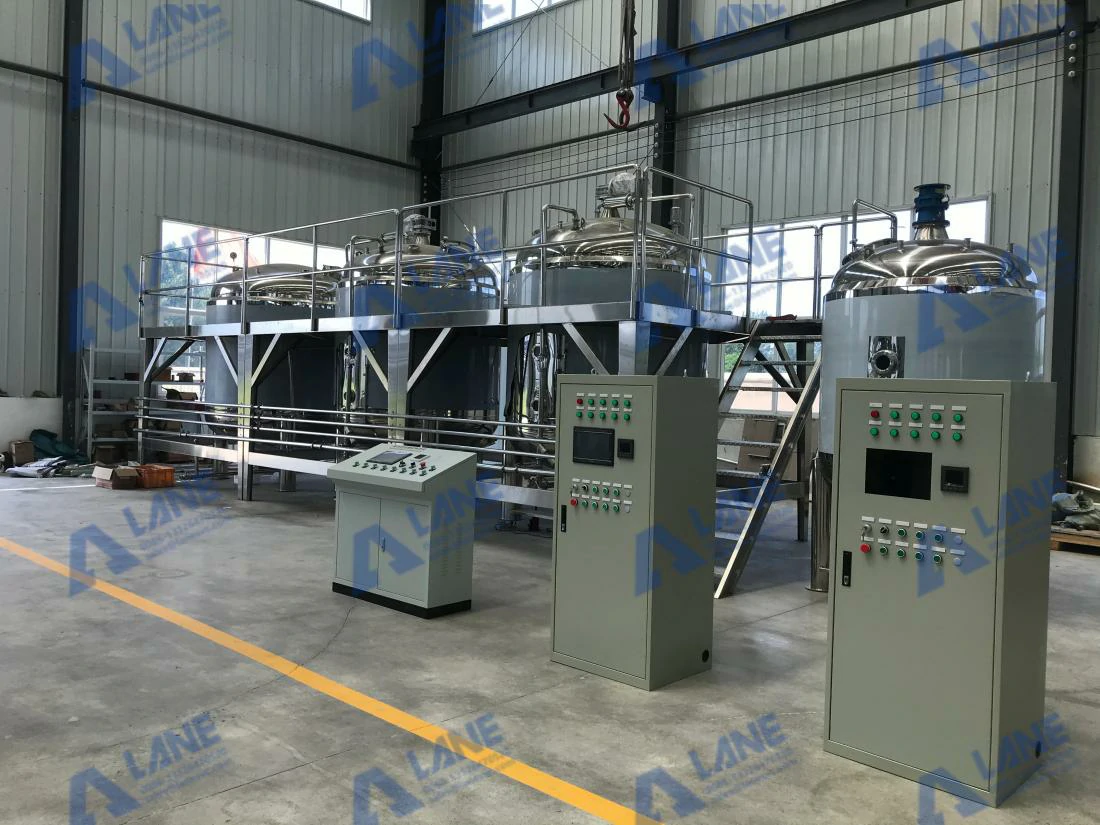
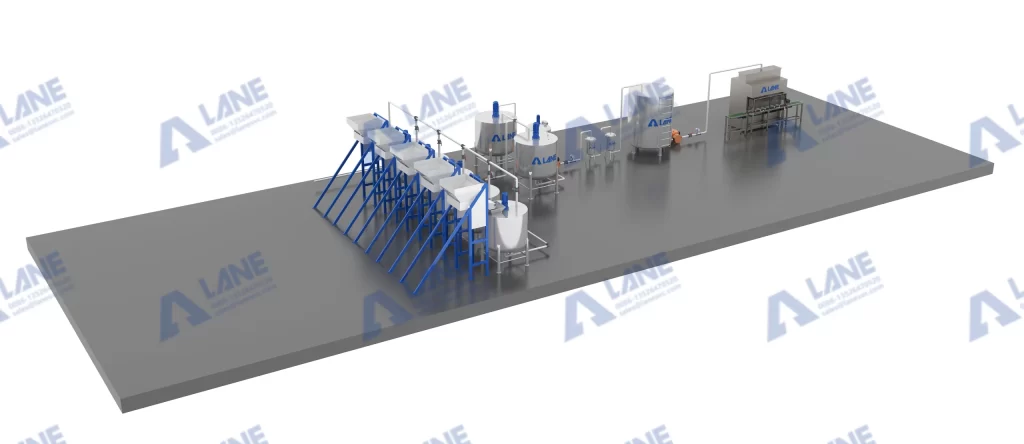
The manufacturing of Slow-release liquid NPK fertilizer requires machinery capable of precise formulation, stable chemical control, and efficient industrial equipment. A complete production line integrates raw material handling, dissolution, reaction, filtration, aging, and packaging into a continuous and automated system. With advanced machinery from Henan LANE Heavy Industry Machinery Technology Co., Ltd., producers can achieve consistent quality and large-scale output of Slow-release liquid NPK fertilizer.
The production begins with selecting high-quality nitrogen, phosphate, and potassium sources as raw material. They are first screened for impurities and solids are crushed. Then they are measured to ensure nutrient balance and product stability.
An automatic batching system precisely weighs and feeds raw materials according to the formula. It reduces human error and ensures that every batch of Slow-release liquid NPK fertilizer maintain consistent nutrient composition.
Once the raw materials are prepared, they are transferred into mixing tanks where they are dissolved in water. This step ensures the nutrients are fully dispersed and form a uniform liquid base.
The high-efficiency mixing tanks provided by LANE Heavy Industry are designed for rapid blending and stable circulation. This guarantees that the solution used for Slow-release liquid NPK fertilizer production remains homogeneous. This is essential for downstream chemical reactions.
After dissolution, the solution enters the controlled reaction stage. Here, chemical reactions occur under carefully regulated temperature and pH conditions. This step is critical in determining the slow-release performance of Slow-release liquid NPK fertilizer.
The industrial reaction kettle by LANE ensures that the reaction environment remains stable and controllable. These systems allow operators to tune parameters such as temperature, mixing speed, and acidity.
Once the reaction is complete, the mixture is sent to the dual filtration unit. The solution sometimes contains insoluble particles or impurities even after taking all the step correctly. The duplex filtration unit removes unwanted solids and stabilizes the liquid structure. This stage is essential to prevent sedimentation and guarantee that the final Slow-release liquid NPK fertilizer remains clear, stable, and easy to store or apply in agricultural systems.
After filtration, the solution is transferred to aging tanks for further stabilization. During this stage, chemical components continue to equilibrate, improving long-term stability and performance.
What is slow-release liquid NPK fertilizer?
It is a liquid fertilizer containing nitrogen, phosphorus, and potassium designed to release nutrients gradually rather than all at once.
Is it better than conventional liquid fertilizer?
It depends on the crop and application. It is usually better when the goal is steadier feeding, reduced leaching, and fewer applications.
Can it be used in fertigation?
Yes, many formulations are designed for fertigation, but filtration and solubility must be carefully controlled.
What machinery is needed to produce it?
Typical equipment includes storage tanks, dosing units, mixing reactors, pumps, filtration systems, control panels, and filling machines.
For more details, please feel free to contact us.
Henan Lane Heavy Industry Machinery Technology Co., Ltd.
Email: sales@lanesvc.com
Contact number: +86 13526470520
Whatsapp: +86 13526470520
Leave a Comment
Latest Posts
LANE has more than 500 successful cases and is committed to providing customers with first-class solutions, high-end machinery and equipment, and one-stop pre-sales, sales and after-sales comprehensive customer service.