
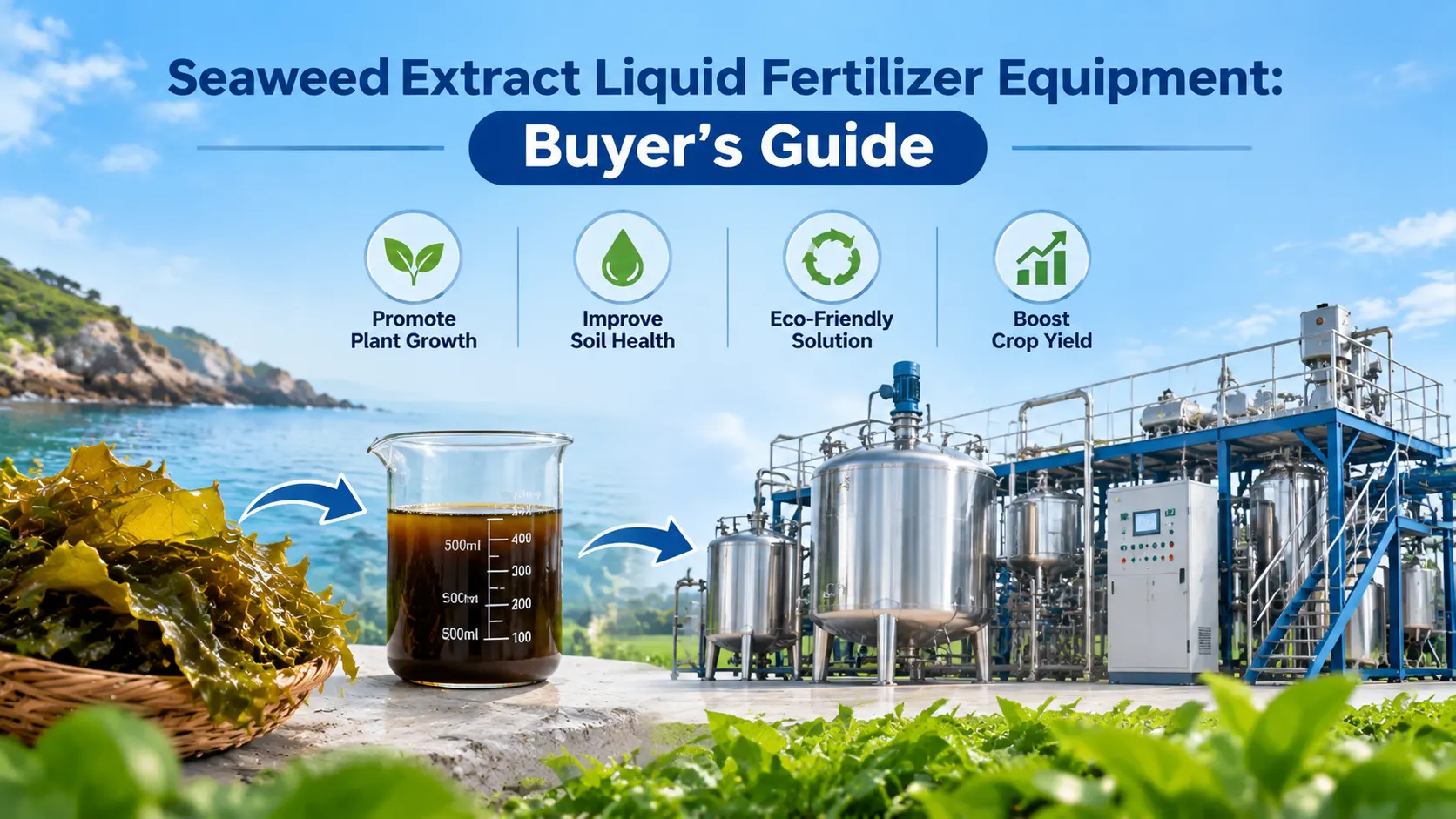
Seaweed Extract Liquid Fertilizer Equipment: Buyer’s Guide
Seaweed extract liquid fertilizer equipment is not simply a mixing tank connected to a filling machine. A commercial plant must handle wet or dried seaweed, remove sand and salt, release soluble compounds from the biomass, separate fibrous residues, and produce a liquid with consistent solids content and storage stability.
For fertilizer manufacturers, the main purchasing risk is choosing equipment by nominal capacity before confirming the extraction method. A line designed for a thin water extract may not handle a viscous hydrolysate or a suspension containing fine seaweed particles. The result can be unstable throughput, frequent filter blockage, excessive cleaning, and inconsistent batches.
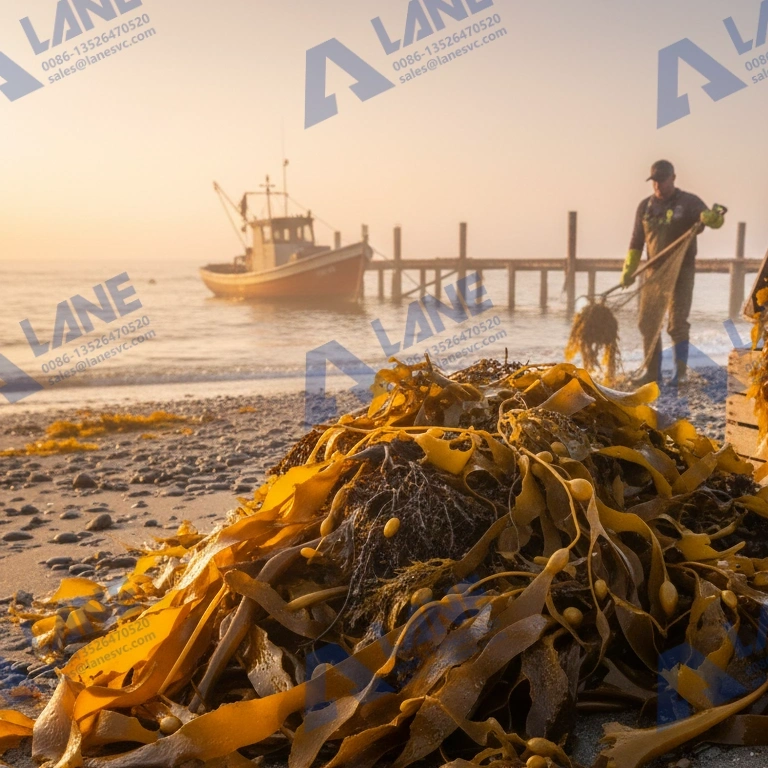
The correct seaweed extract liquid fertilizer equipment configuration should therefore be based on four factors:
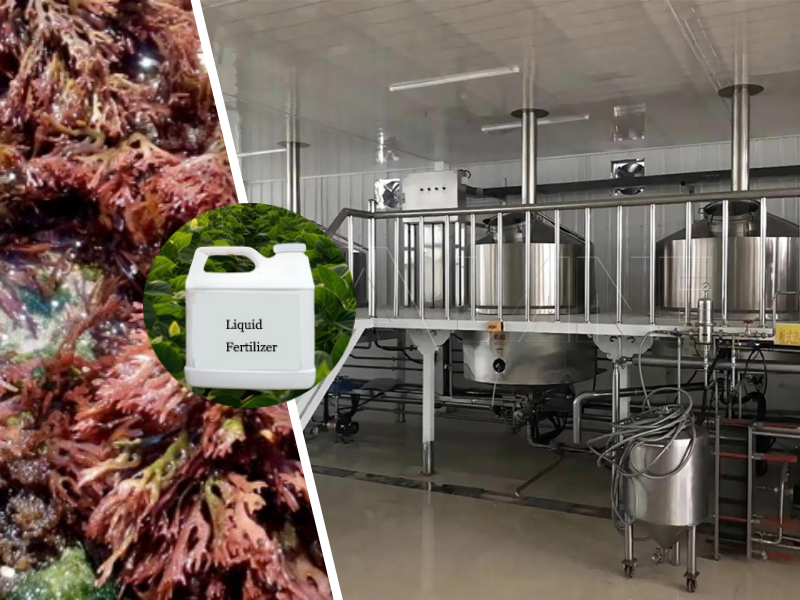
LANE’s seaweed liquid fertilizer production line covers the main stages from washing and crushing to extraction, filtration, formulation, sterilization, and packaging. The exact machine combination still needs to be confirmed against the buyer’s actual raw material and product specification.
There is no single extraction method suitable for every seaweed product. The extraction route determines the reactor design, heating arrangement, agitation duty, separation load, and downstream filtration requirements.
Common industrial approaches include:
Water extraction: Seaweed is mixed with water and processed under controlled heating and agitation. The method is relatively straightforward, but the extraction yield and final composition depend on the seaweed species, particle size, temperature, and residence time.
Alkaline extraction: An alkaline solution is used to break down seaweed biomass and release soluble components. This route requires controlled alkali dosing, pH monitoring, corrosion-compatible wetted parts, and a defined neutralization or formulation stage where required.
Enzymatic extraction: Enzymes help break down selected components under controlled process conditions. The plant needs accurate temperature and dosing control. Enzyme selection and reaction conditions should be established through formulation trials rather than copied from a generic equipment quotation.
Physical disruption or high-shear processing: Mechanical treatment breaks down the biomass and helps release intracellular material. A crusher or high-shear unit may be used, depending on the required particle size and product characteristics.
Published technical reviews describe alkaline, acid, enzymatic, fermentative, and physical extraction approaches. They also point out that extraction conditions can change the composition of the resulting seaweed extract. Buyers should therefore treat the extraction recipe as a product-development decision, not just a machine setting.
For a plant that has not finalized its formula, a pilot test using representative seaweed samples is more useful than immediately ordering a full-capacity reactor.
A practical production route normally follows the sequence below. Some plants may add concentration or fermentation, while others may omit these stages depending on the finished fertilizer specification.
Planning a fertilizer project? Contact LANE engineering team to get a free 3D plant layout drawing, motor power calculation, and factory-direct quote within 4 hours. Request 3D Layout & Budget Estimate →
The process sequence is only a starting point. For example, a product containing fine suspended seaweed particles may need a different separation strategy from a clear liquid extract. Installing an unnecessarily fine filter can increase pressure drop and cleaning frequency without improving the product’s actual performance.
The following equipment options are listed on LANE’s liquid fertilizer equipment pages. They provide a useful starting point for preliminary selection, but the figures are individual machine ranges—not a guaranteed output for a complete seaweed processing line.
| Equipment | Published specification or configuration | What buyers should verify |
|---|---|---|
| Liquid fertilizer mixing tank | 500–50,000 L; SS304/SS316L options; variable-speed agitation and jacket heating/cooling | Working volume, viscosity, heating duty, agitator type, and wetted material |
| Homogenizer emulsifier | 1–20 m³/h; high-shear rotor-stator; batch or inline configuration | Particle size target, viscosity, temperature rise, and required processing passes |
| Centrifugal separator | 5–25 m³/h; SS304/SS316L contact parts | Feed solids, particle size, liquid viscosity, and separation target |
| Stainless steel duplex filter | 2–10 m³/h; 60–400 mesh options | Required filtration grade, filter area, pressure drop, and cleaning frequency |
| Plate and frame filter press | 1–200 m² filter area; PP or SS316L plate options | Slurry characteristics, filter cloth, cake discharge, and cycle time |
| Liquid storage tank | Select according to batch volume and finished-product inventory | Working capacity, material compatibility, venting, drainage, and cleaning access |
The specifications above are drawn from the relevant LANE equipment listings. The mixing tank page describes 500–50,000 L vessels, while the homogenizer, centrifugal separator, and duplex filter pages publish their respective flow ranges.
These values should not be added together or treated as the capacity of one integrated production line. Actual throughput depends on the feedstock, extraction time, solids loading, filtration resistance, and batch cycle.
The extraction reactor is the process-critical vessel. It must provide enough working volume, effective agitation, and temperature control for the selected extraction method.
A reactor quotation should specify:
LANE’s liquid fertilizer mixing tank page describes SS304/SS316L construction, variable-speed agitators, jacket heating and cooling, load-cell batching options, and PLC/HMI control. These are relevant design options for formulation and blending. They do not automatically define the correct extraction reactor configuration; the extraction duty must be reviewed separately.
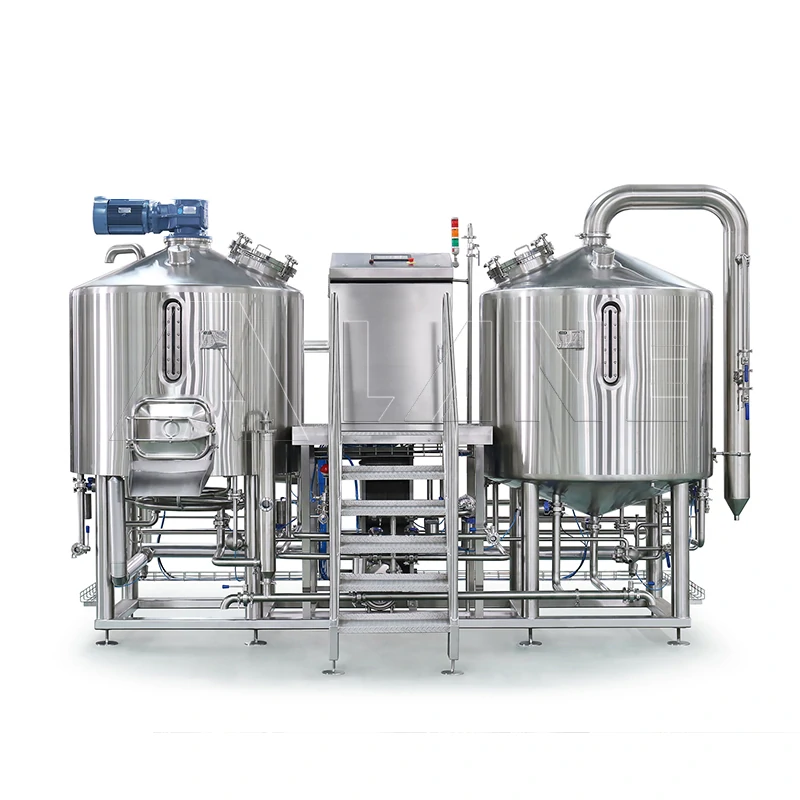
A homogenizer should also not be specified simply because the product is called seaweed extract. It is useful when the formulation needs particle dispersion or a more uniform suspension. If the finished product is a clarified extract, the priority may instead be effective solid-liquid separation and filtration.
Filtration problems often originate upstream. If the seaweed is not washed properly, sand and shells can accelerate wear or block screens. If crushing is inconsistent, long fibers may wrap around rotating parts or accumulate in filter chambers. If extraction conditions vary from batch to batch, the downstream solids load can change substantially.
A sensible separation arrangement may use more than one stage:
LANE lists a centrifugal separator with a published range of 5–25 m³/h, and a stainless steel duplex filter with 2–10 m³/h capacity and 60–400 mesh options. These machines perform different duties. A centrifuge is not a direct replacement for a fine filter, and a fine filter should not be expected to handle an uncontrolled load of coarse fibrous residue.

For higher-solids streams, a plate and frame filter press may be considered. Its suitability depends on slurry behavior, filter cloth selection, and whether the plant can handle periodic cake discharge.
Before ordering, ask the supplier to test a representative extraction sample. Record feed solids, particle size, viscosity, temperature, flow rate, filtrate clarity, and filter pressure drop. A sample test gives a much more useful basis for equipment selection than a generic statement that a machine can process organic liquid fertilizer.
After filtration and formulation, the liquid needs a controlled holding stage before packaging. Storage tank sizing should be linked to batch output, filling speed, and the time required for quality checks.
For seaweed products, buyers should pay attention to:
LANE’s liquid equipment category also lists UV sterilization, vacuum degassing, automatic capping, and other downstream equipment. A UV sterilizer may be considered where the product and process are compatible with UV treatment. However, UV treatment is not automatically suitable for every opaque or particle-rich seaweed suspension: suspended solids and product color can affect UV transmission. The sterilization method should be validated against the actual formulation and required microbial specification.
For filling, define the package sizes before selecting the machine. Bottles, jerry cans, drums, and IBC containers require different filling ranges, nozzle arrangements, transfer pumps, and handling systems. The supplier should confirm the filling accuracy and output using the actual product viscosity and package format.
A quotation should describe the process, not just list machine names. Two suppliers may both quote a reactor, separator, filter, and tank, but the actual scope can differ considerably.
| Quotation item | Information to request |
|---|---|
| Raw material basis | Seaweed species, fresh/dried condition, moisture, contamination, and feed size |
| Process design | Extraction method, process flow diagram, batch or continuous operation |
| Reactor | Working volume, material grade, agitator, heating/cooling duty, instruments |
| Separation and filtration | Equipment type, design flow, filter grade, expected solids removal |
| Finished product | Target pH, viscosity, solids content, clarity, and microbial requirements |
| Automation | PLC scope, recipe control, alarms, data logging, and operator interface |
| Installation | Foundation requirements, utility list, piping scope, commissioning, and training |
| Commercial terms | Delivery schedule, packing method, spare parts, warranty, and payment terms |
For overseas projects, do not accept a delivery estimate without a defined scope. Ask whether the quoted lead time starts after drawing approval, deposit receipt, or final technical confirmation. Also clarify whether the supplier includes export packing, container loading, installation supervision, commissioning, and operator training.
Yes, a suitably designed line can process both, but the feeding and pretreatment arrangements may differ. Fresh seaweed carries more moisture and may contain sand, shells, and salt. Dried seaweed usually needs controlled wetting or slurry preparation before extraction. The supplier should size the washing, crushing, and extraction stages for the actual feed condition.
Choose capacity from the required finished-product output and the actual batch cycle, not from reactor volume alone. Extraction time, solid-liquid separation, filtration, cleaning, and filling can all become bottlenecks. Ask the supplier to provide a process balance showing raw material input, liquid yield, residue output, and finished-product output per shift.
Not in every application; the required grade depends on the process chemistry. SS304 may be suitable for some neutral formulations, while SS316L may be preferred for chloride-containing or more aggressive acidic or alkaline service. Confirm the pH range, chloride concentration, operating temperature, and cleaning chemicals before approving the wetted material.
Maintenance frequency depends on solids loading, operating hours, and the cleaning method. Operators should inspect filter differential pressure, filter media, pump seals, agitator seals, valves, and discharge points during routine operation. Ask the manufacturer for a maintenance schedule based on the actual seaweed feedstock rather than relying on a generic interval.
Yes, LANE lists layout design, installation guidance, commissioning support, and operator training among its turnkey project services. The purchase contract should state whether support is provided on site or remotely, who handles local lifting and piping work, and what utilities and civil works must be ready before commissioning.
Before purchasing seaweed processing equipment, make sure the supplier can answer three technical questions clearly:
A reliable project starts with a defined raw-material and product specification. Once those details are clear, LANE can match the reactor, separation equipment, filtration system, mixing tank, storage vessels, and packaging equipment to the actual production duty.
For more details, please feel free to contact us.
Henan Lane Heavy Industry Machinery Technology Co., Ltd.
Website: LANE Liquid Fertilizer Equipment | LANE Machinery | Fertilizer Industry Leader
Leave a Comment
Latest Posts
LANE has more than 500 successful cases and is committed to providing customers with first-class solutions, high-end machinery and equipment, and one-stop pre-sales, sales and after-sales comprehensive customer service.