
Liquid Fertilizer Filling System: A Buyer’s Guide
A liquid fertilizer filling system must do more than transfer finished product into a package. It needs to deliver a repeatable filling quantity, maintain a stable material supply, seal each package properly and keep pace with the upstream production process. For fertilizer manufacturers, poor filling performance means product loss, leaking packages, inconsistent net weight and unnecessary downtime.
The right configuration depends on the fertilizer formulation and the package being used. A low-viscosity liquid, a suspension containing fine particles and a product that tends to foam will not necessarily work well with the same metering and filling arrangement. Package size also affects the weighing range, filling head, sealing mechanism and conveying equipment.
This guide is written for fertilizer plant owners, production managers and purchasing teams who need to evaluate the packaging section as part of a complete production line—not simply compare machines by their advertised speed.
A complete filling section normally contains several connected functions. The exact configuration depends on whether the plant fills bags, bottles, jerry cans or drums.
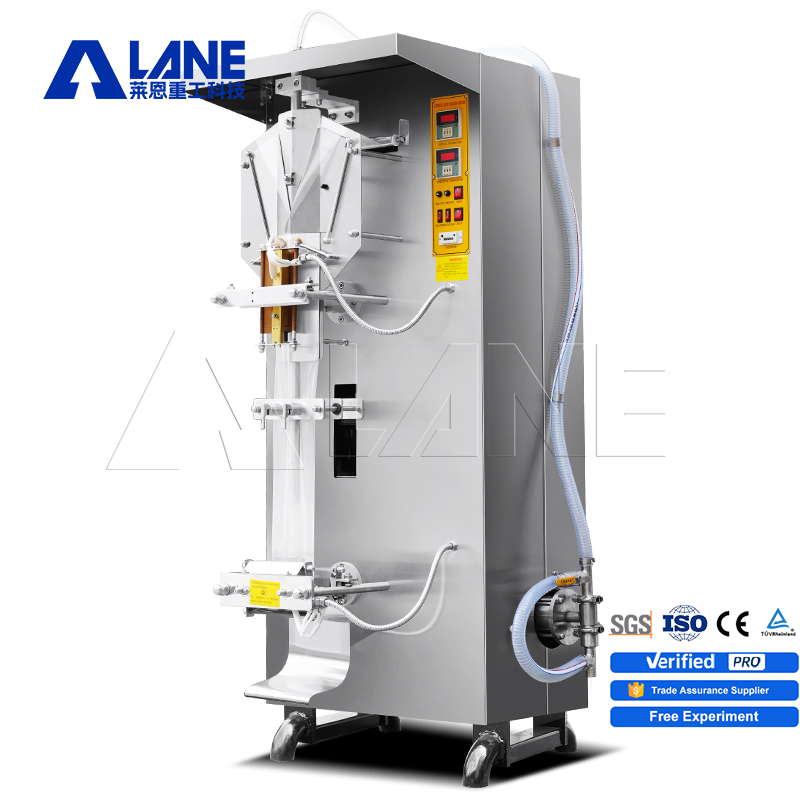
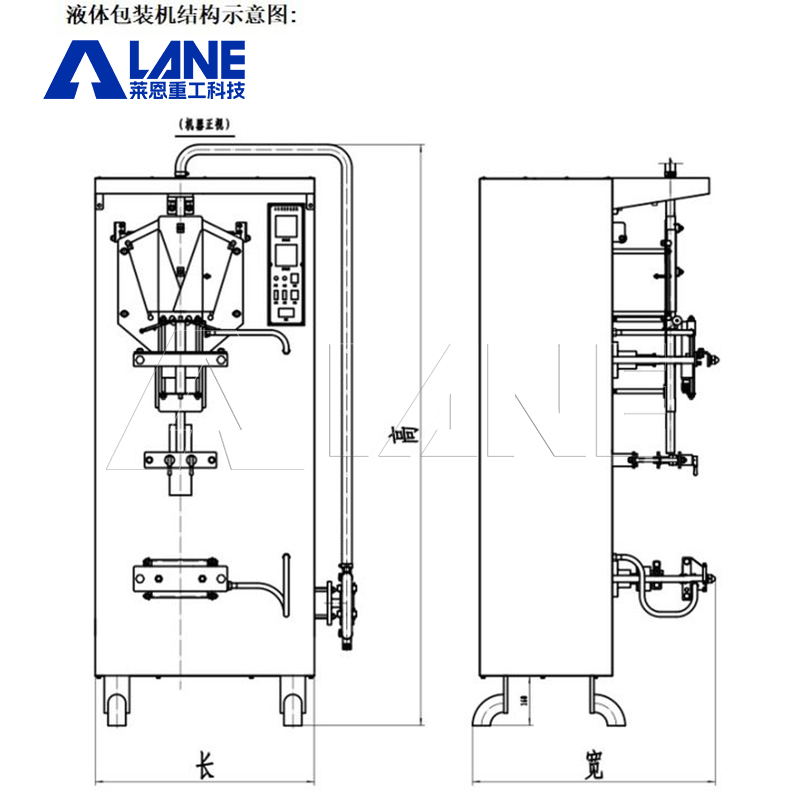
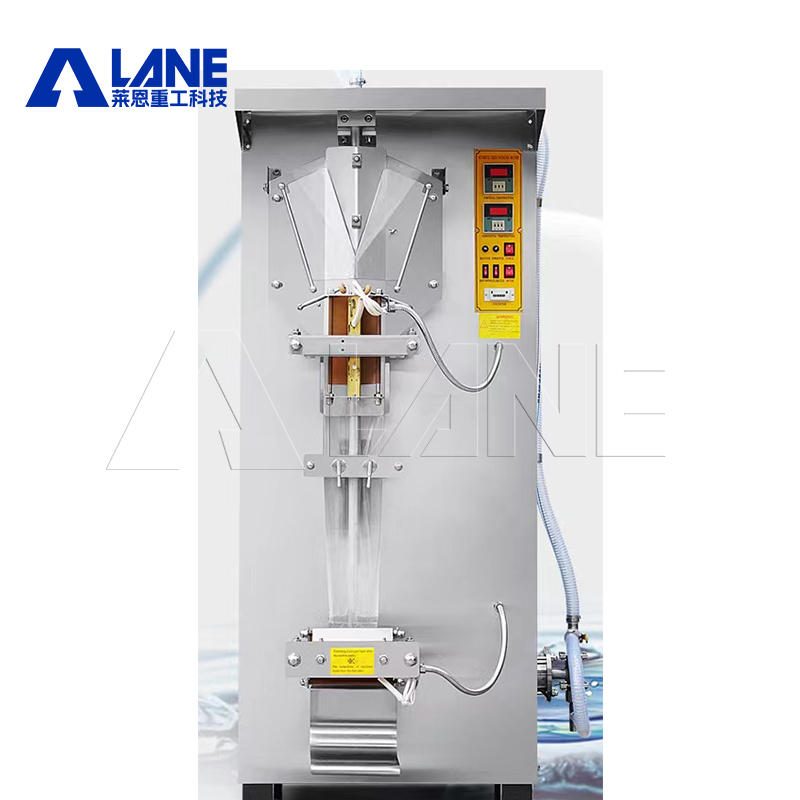
LANE’s specified Liquid Packaging Machine page describes a system with the following main components:
These components should be quoted as a coordinated package. Buying a filling unit without confirming the upstream feed arrangement or downstream sealing and conveying capacity can leave the plant with a machine that performs well in isolation but cannot maintain the required line output.
One important distinction: the specified LANE product page lists a weighing range of 10–100 kg and a packing speed of 3–5 bags per minute. It should therefore be evaluated against the package format and operating duty stated in the quotation, rather than automatically treated as a small-bottle filling line.
The metering method is one of the most important purchasing decisions. It affects filling repeatability, product compatibility, cleaning requirements and maintenance.
Before choosing a machine, identify the product’s viscosity, suspended solids, foaming tendency and required package quantity.
A metering pump supplies a controlled quantity of liquid to the filling head. The pump type and wetted materials must match the product.
For fertilizer formulations containing suspended particles, ask whether the selected pump can pass the actual particle size without frequent blockage or excessive wear. Also confirm the seal material and whether the pump can be dismantled for cleaning.
A weighing arrangement measures the actual mass delivered into the package. It is worth considering when the commercial requirement is based on net weight, particularly for larger packages.
The weighing range must match the intended package weight. A machine designed around 10–100 kg should not be assumed to provide accurate filling for small retail bottles.
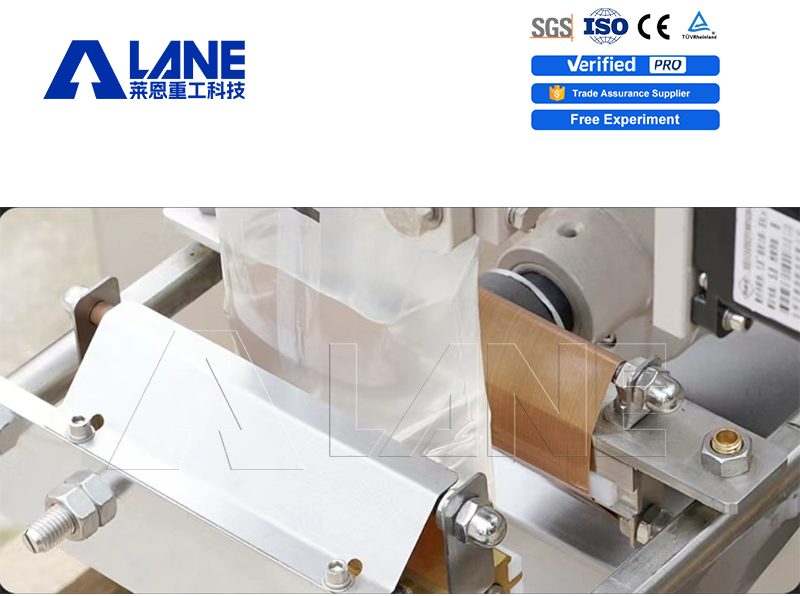
The filling head must be positioned correctly over the package opening, with enough clearance for loading and removal. The sealing unit must also match the package material and construction.
For liquid products, sealing quality is a direct transport issue. A small amount of leakage can damage labels, cartons and other packages during container handling.
Engineering judgment: Select the metering method and sealing arrangement together. A filling unit that achieves the target quantity but cannot close the package reliably is not a complete packaging solution.
Planning a fertilizer project? Contact LANE engineering team to get a free 3D plant layout drawing, motor power calculation, and factory-direct quote within 4 hours.
Request 3D Layout & Budget Estimate →
The specified LANE product page provides a limited set of headline parameters. They are useful for an initial equipment review, but they do not replace a detailed technical proposal.
| Parameter | Published specification | Purchasing check |
|---|---|---|
| Application | Packaging of liquid fertilizer products | Confirm the actual fertilizer formulation and package type |
| Weighing range | 10–100 kg | Confirm whether the required net package weight falls within this range |
| Packing speed | 3–5 bags/min | Request a test under the intended package weight and product conditions |
| Control system | PLC programming with touch-screen interface | Confirm recipe settings, alarms and operating functions |
| Filling components | Metering pump, filling valve body and filling head | Confirm pump type, wetted materials and maintenance access |
| Sealing | Vacuum sealer or heat sealer described in the product information | Confirm the actual sealing method and compatible packaging material |
| Warranty | 1 year | Confirm coverage, exclusions and spare-parts support |
Parameter note: The product page does not publish motor power, filling accuracy, package dimensions, detailed material grades or a complete model-by-model specification. These figures should be requested from LANE for the exact configuration. The listed 3–5 bags/min is the published packing speed; it should not be converted into a guaranteed hourly tonnage without knowing the package weight and operating conditions.
A machine’s stated packages-per-minute figure is only one part of production capacity. The actual output depends on the package weight, product flow behavior, filling cycle, sealing time and material supply.
LANE lists a packing speed of 3–5 bags per minute. At that rate, the theoretical number of packages over a 60-minute period would be 180–300 bags. This is a mathematical conversion of the published speed, not a guaranteed hourly production result. Actual output will depend on operating conditions, stoppages and package changes.
For a plant manager, the more useful calculation is:
Hourly product throughput = packages per hour × net product weight per package.
For example, a line filling 50 kg packages at 3 bags per minute would have a theoretical product throughput of 9,000 kg per hour. At 5 bags per minute, the theoretical figure would be 15,000 kg per hour. These figures are illustrative calculations only; they assume the machine maintains the stated speed continuously at that package weight.
Before accepting a capacity claim, ask the supplier to confirm:
A filling machine cannot maintain its rated speed if the supply tank runs low, the transfer pump cannot keep up or the product feed fluctuates. For this reason, the filling section should be reviewed together with the LANE liquid fertilizer production equipment.
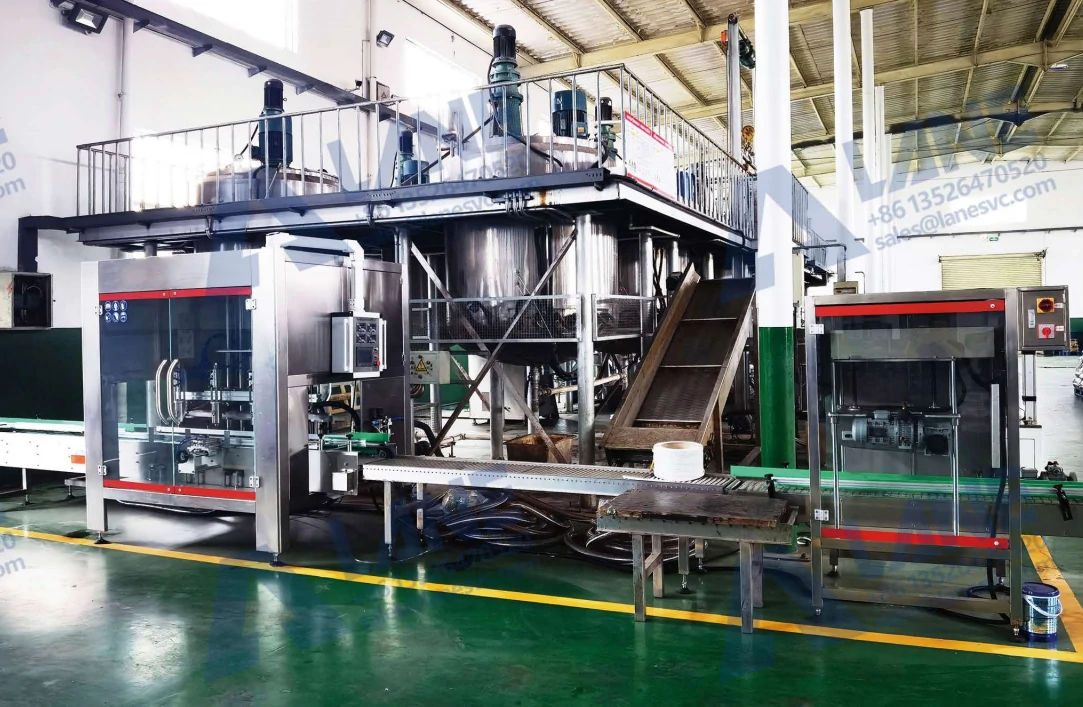
The filling section normally receives finished product from a storage or buffer tank. The supply arrangement should maintain a stable feed while allowing the filling machine to stop or restart without disrupting the entire production process.
For a typical installation, buyers should review these interfaces:
A buffer tank can help separate upstream production from packaging interruptions. If the filling machine stops briefly for package replacement or sealing adjustment, the mixing or production section does not necessarily need to stop at the same moment.
However, the buffer volume should be calculated from actual batch size and filling demand. An oversized tank adds capital cost and may increase the time product remains in storage. If the formulation contains suspended solids, the storage arrangement may also need agitation to prevent settling.
Do not approve a quotation based only on a photograph of the machine. The supplier needs to know the package construction and the fertilizer’s physical and chemical properties.
For the package, provide:
For the fertilizer, provide:
The wetted parts—including pump, valves, filling head, seals and pipeline—must be compatible with the formulation. The product page does not specify detailed contact-material grades, so request the material list in writing rather than assuming that all components are stainless steel or suitable for every fertilizer.
Packaging equipment should leave enough room in the process for the product label and batch identification to be applied consistently.
For manufacturers selling EU fertilising products, Regulation (EU) 2019/1009 includes requirements for product information and labeling. It also requires packaged products to carry a type number, batch number or another element that allows identification. The regulation specifies that required information must appear on the package label, subject to the provisions for small packages and accompanying leaflets. See the official Regulation (EU) 2019/1009 on EUR-Lex.
The packaging line should therefore be planned around the actual label size, package surface and coding method. Confirm whether the labeling and coding units are included in the supplier’s scope or need to be purchased separately.
The machine itself does not establish fertilizer product conformity. The manufacturer remains responsible for checking the product’s applicable market requirements and ensuring that the correct information is printed or attached.
A factory acceptance test should use the intended package and, where practical, a representative product or a test liquid with agreed operating characteristics.
Do not rely only on an empty-machine demonstration. The test should cover the functions that determine commercial performance:
The acceptance document should state the package weight, test material, operating speed, measurement method and allowable filling tolerance. If accuracy is not published for the selected model, it must be agreed and tested rather than assumed.
For overseas installation, confirm the foundation or support requirements, electrical supply, compressed-air requirements if applicable, connection drawings, packing dimensions and unloading arrangements. Also establish whether commissioning is remote or on-site and who is responsible for operator training.
Yes, if the metering components and wetted materials are suitable for each formulation. Differences in viscosity, suspended solids, foaming behavior and chemical composition can affect filling performance. Confirm the product range with the supplier and test the most difficult formulation before final acceptance.
LANE lists 3–5 bags per minute. This is the published packing speed, not a guaranteed output for every package weight or fertilizer. Ask for a test using your actual package and target net weight.
The published weighing range is 10–100 kg. Confirm the intended package weight and required tolerance before ordering. The page does not provide a published filling-accuracy figure.
Maintenance frequency depends on operating hours, product characteristics and the selected pump and sealing components. Operators should inspect pumps, seals, valves, filling heads, sensors and conveyors according to the supplier’s maintenance schedule. Cleaning should be carried out after product changes and whenever residue could affect the next batch.
The delivery schedule and installation scope must be confirmed in the project quotation. Ask for the manufacturing lead time, packing dimensions, gross weight, loading method, electrical requirements, installation drawings and commissioning arrangements. Confirm whether on-site support, remote guidance and operator training are included or quoted separately.
A suitable filling line is one that matches the product, package and upstream production rate. Before signing the purchase contract, focus on three technical points:
These checks are more useful than comparing machines by speed alone. They establish what the supplier is expected to deliver and give the buyer measurable acceptance criteria.
For a project-specific proposal, prepare your fertilizer properties, package type, target net weight and required output. LANE can then review the filling equipment and its connection with the wider production line.
For more details, please feel free to contact us.
Henan Lane Heavy Industry Machinery Technology Co., Ltd.
Website: LANE Liquid Fertilizer Equipment | Fertilizer Industry Leader | LANE Machinery
Leave a Comment
Latest Posts
LANE has more than 500 successful cases and is committed to providing customers with first-class solutions, high-end machinery and equipment, and one-stop pre-sales, sales and after-sales comprehensive customer service.