
Odor Control in Liquid Fertilizer Production: Buyer’s Guide
Buying odor control in liquid fertilizer production is a permitting and community decision, not an accessory purchase.
The equipment that makes a liquid fertilizer line—fermentation tanks, mixing tanks, storage and filling—also generates ammonia, hydrogen sulfide and organic volatiles.
When those gases escape, a plant faces neighbor complaints, permit violations, worker exposure and stalled expansion.
This guide is for liquid fertilizer plant owners, process engineers and project buyers who need odor control in liquid fertilizer production that actually passes inspection and keeps the community quiet.
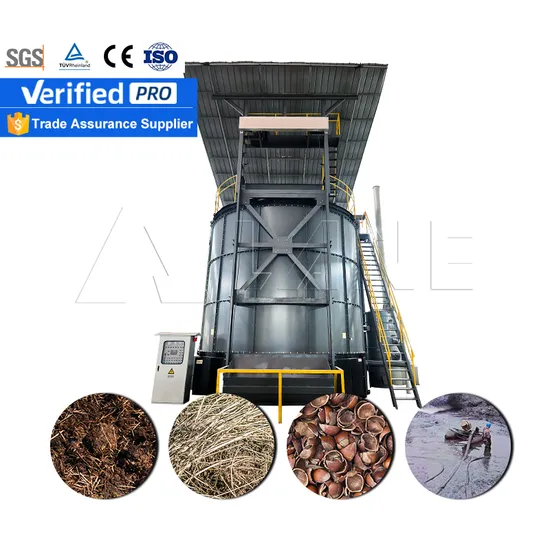
The smell rarely comes from a single point. In a bio-liquid fertilizer line, fermentation releases ammonia and hydrogen sulfide as organic matter breaks down. Mixing and transfer open the tank surface, and warm product in storage keeps emitting volatiles even after production stops. Humidity, high pH and rising temperature push more gas out of solution.
Odor control in liquid fertilizer production therefore has to start at the source—sealed vessels and controlled vents—before any treatment equipment can do its job.
Well-designed odor control in liquid fertilizer production does more than suppress a smell. It keeps the plant inside its permit limits, which is often the difference between operating and being shut down after a single complaint.
It protects the people who work beside reactors and filling lines, and it stabilizes the product by keeping moisture and acidity inside the tank instead of letting them escape as gas.
When buyers compare quotes, they should judge odor control in liquid fertilizer production by capture rate and filter life, not by the sticker price of one scrubber.
The practical benefits add up quickly: fewer complaints, easier permitting, lower insurance and audit risk, and a cleaner site that is easier to expand. In greenhouses and residential-adjacent sites these are not optional upgrades; they are the condition for operating at all.
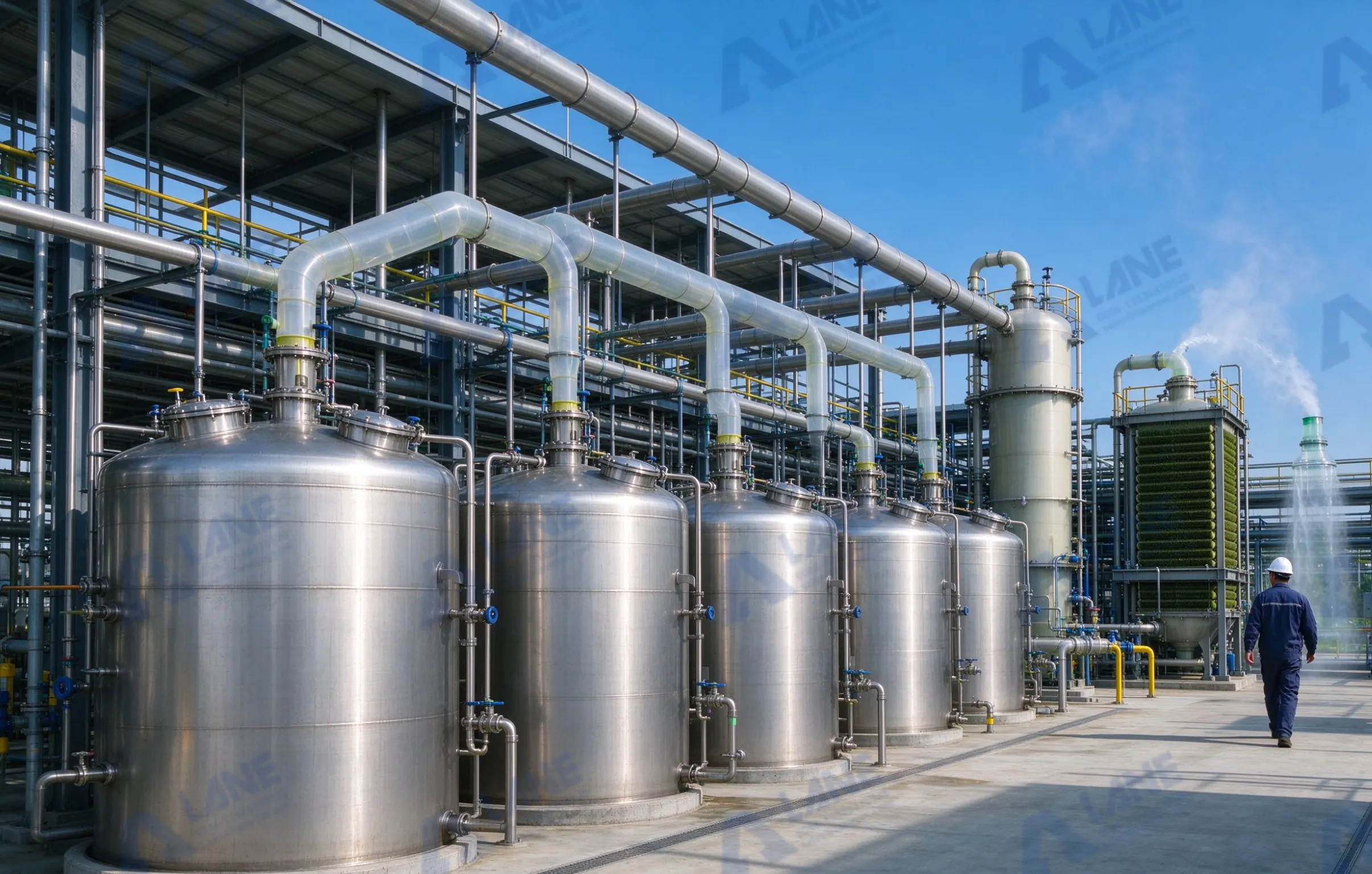
The cheapest odor is the one that never leaves the tank. A sealed stainless mixing or fermentation tank with a breathing line, level-monitored vents and negative-pressure collection is the backbone of odor control in liquid fertilizer production.
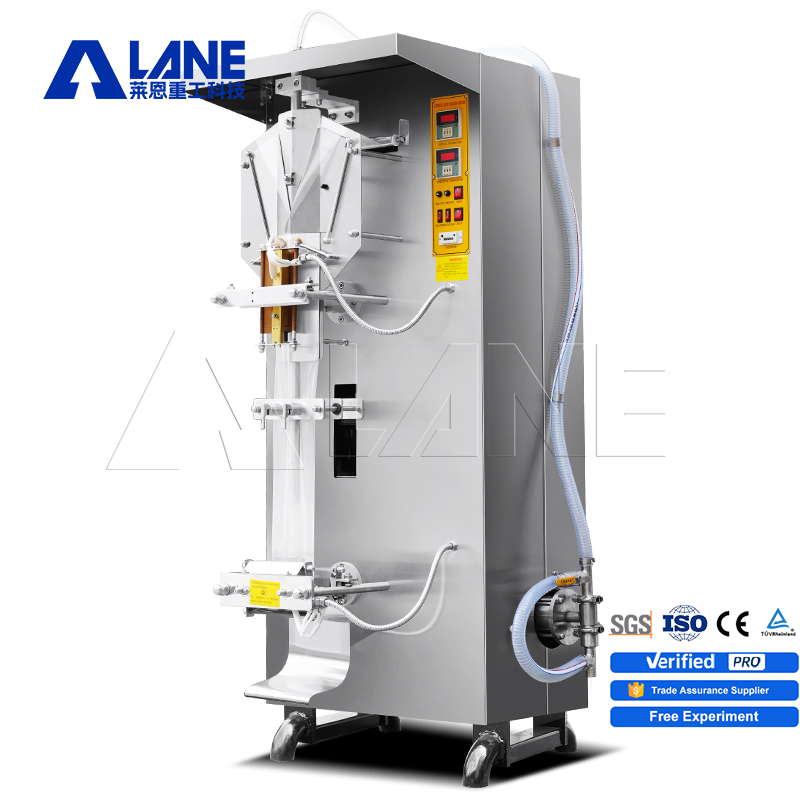
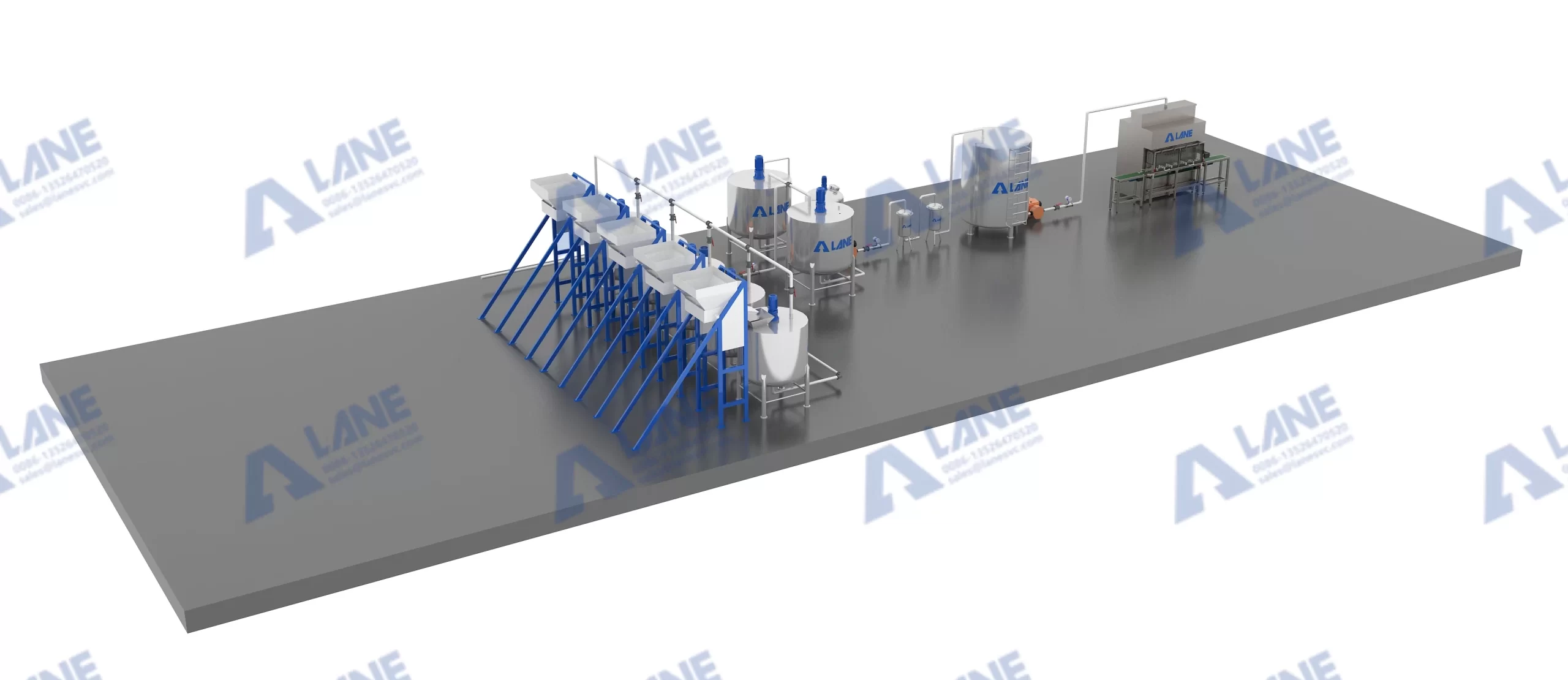
LANE builds these as part of a complete liquid fertilizer line—sealed mixing tanks, fermentation vessels, transfer piping and filling stations designed so every vent connects to one collection header.
A useful sizing rule is two to four air changes per hour of the tank volume, sized for the hottest batch of the day.
Capture airflow is where most under-built systems fail: the scrubber is expensive and capable, but the collection header is too small or vents are left open.
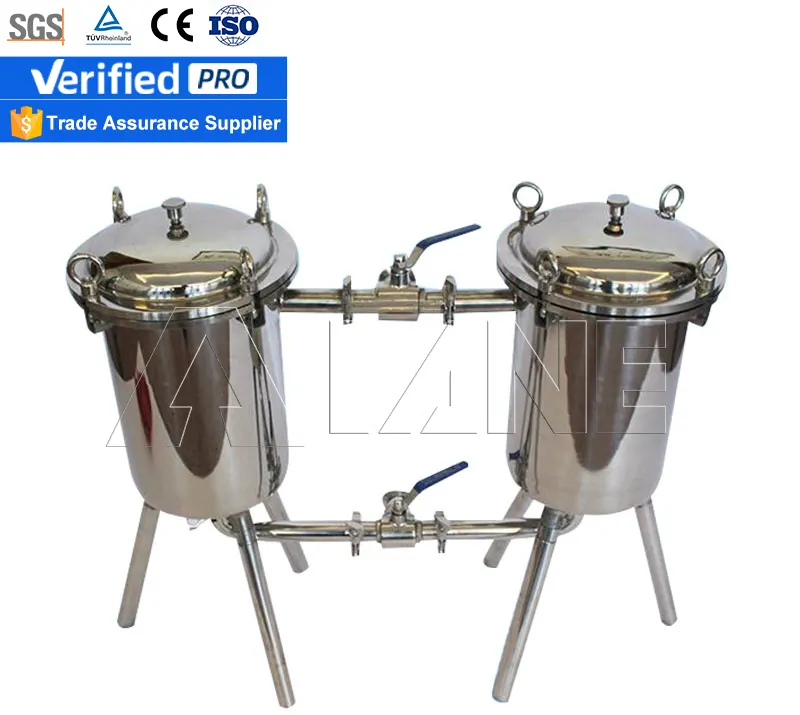
The end-of-pipe choice depends on the gas chemistry, not on the largest box. Ammonia is water-soluble, so an acid scrubber removes it efficiently; hydrogen sulfide and volatile organics often suit a biofilter or an activated carbon bed.
Many plants combine a wet scrubber with a biofilter for different loads. The point of odor control in liquid fertilizer production is matching the technology to an actual gas analysis, and asking the supplier to confirm removal on your feed before you commit.
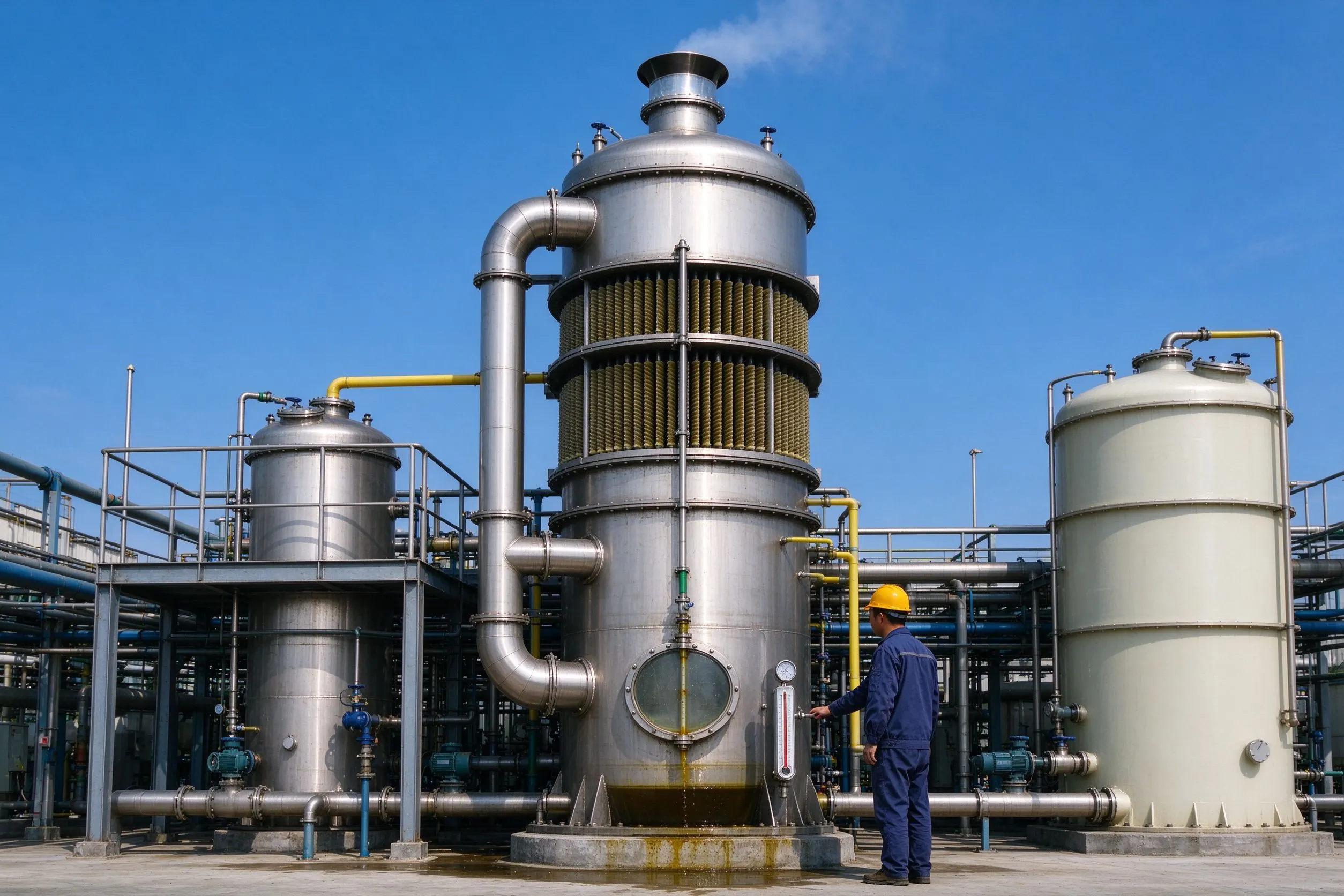
Judging a quote needs numbers, not adjectives. Compare capture airflow, contact time in the scrubber or biofilter, media type and replacement interval, and measured removal efficiency for ammonia and hydrogen sulfide. For a mid-size line, a well-sized acid scrubber is typically expected to remove most of the ammonia load, while biofilter residence time and media determine how well it degrades organics. These are the parameters that separate working odor control in liquid fertilizer production from an expensive fan attached to a pipe.
|
Parameter |
Typical range | Why it matters |
| Capture airflow (air changes/h) | 2–4 |
Controls whether gas stays contained |
|
Ammonia removal (acid scrubber) |
>90% (verified) | Defines permit compliance on NH3 |
| Biofilter media residence time | Depends on media/load |
Drives organic odor degradation |
|
Media or reagent replacement |
Per vendor schedule |
Main operating cost over life |
Odor control in liquid fertilizer production applies everywhere the liquid touches air: fermentation, mixing, storage, transfer and filling.
In greenhouses and urban-adjacent sites it is usually required before a permit is granted. On large industrial estates it protects workers across the whole site.
A packaging line needs only a local extraction hood over the filler plus a small carbon or scrubber unit; fermentation needs sealed vessels and a biological step. Matching the control level to each stage is what keeps cost sane.
Cost is more than the scrubber price. It includes ductwork, fans, media or reagent, energy, monitoring and labor. The usual omissions in an odor-control estimate are the collection header, stack testing and the media replacement schedule—all of which quietly push up lifetime cost.
Build a cost per handled cubic meter of air, run it at several utilization rates, and compare installed cost plus guaranteed consumption across vendors, in the same way you would compare odor control in liquid fertilizer production for any other part of the line.
Ask for a mass balance at your actual feed, a process diagram showing every vent connected, and a performance guarantee with a test protocol. Check references from plants with a similar process and climate.
A supplier that offers sealed tanks, engineered collection and end-of-pipe treatment as one package—as LANE does with its liquid fertilizer line—makes integration simpler than patching three vendors together. Certification such as ISO 9001 supports the review but does not replace a working plant reference.
Where does the smell in liquid fertilizer production come from?
Mostly ammonia and hydrogen sulfide from fermentation, plus volatiles from warm storage and open mixing. It depends on feed, temperature and pH, so a gas analysis comes before any design choice.
Do I need a biofilter or a scrubber?
It depends on the gas. Ammonia is best handled by an acid scrubber; hydrogen sulfide and organics often suit a biofilter or carbon. Many plants run both for different loads.
How much capture airflow do I need?
Size airflow to the tank volume and the hottest batch, typically two to four air changes per hour, then verify it against your actual vessel and production pattern.
Can I retrofit odor control into an existing line?
Usually yes, if tanks can be sealed and a collection header added. Storage and filling retrofits are the easiest; fermentation is the most involved and may need vessel modification.
What should I ask a supplier to provide?
A gas analysis, a process diagram of every vent, a performance guarantee with a test protocol, and references from a plant with a similar process.
Odor control in liquid fertilizer production is a design decision that runs through the whole line—sealed vessels, one collection header, the right treatment step, and a test that proves it.
Get the gas analysis first, compare quotes on capture and guaranteed removal, and ask the supplier to stand behind the numbers with a plant reference. When the system is built as one integrated package, it protects your permit, your workers and your community—and it is far cheaper to get right the first time.
If you are planning a line engineered around odor control in liquid fertilizer production, LANE’s liquid fertilizer equipment team can review your process and return a design and quote.
Contact sales@lanesvc.com or +86 13526470520 for a project-specific proposal.
Leave a Comment
LANE has more than 500 successful cases and is committed to providing customers with first-class solutions, high-end machinery and equipment, and one-stop pre-sales, sales and after-sales comprehensive customer service.