
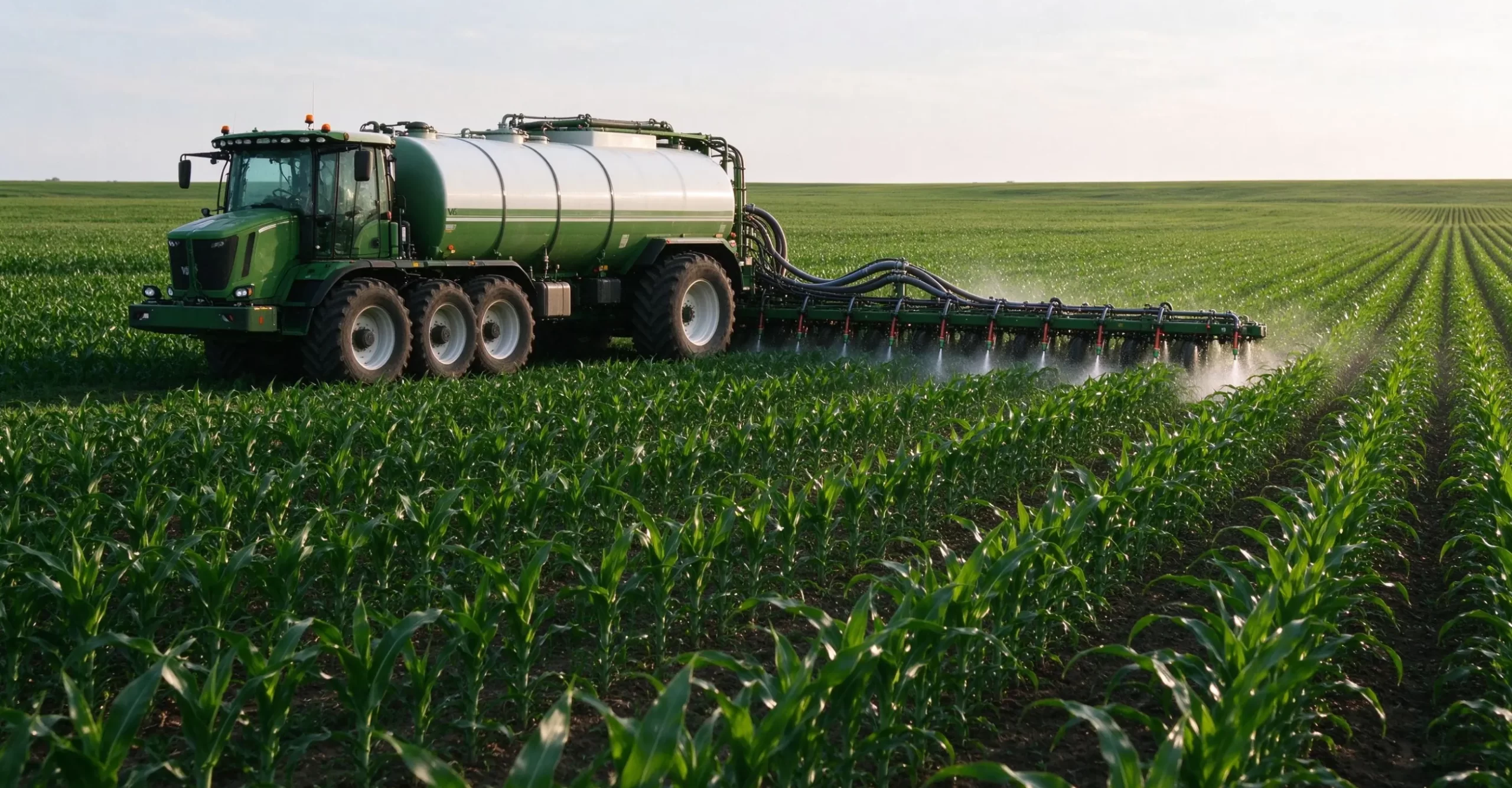
Liquid Fertilizer for Corn: A Buyer’s Guide
Liquid fertilizer for corn is not one product — it is a lineup of grades that each do a different job in the season. The buyer’s mistake is treating it as “nitrogen in a bottle” and shopping by price per gallon; the real cost is choosing the wrong grade for the placement method, then watching half the nitrogen volatilize off the surface before the rain comes.
This guide is written for liquid fertilizer producers, blenders and importers who supply corn belts in the US, Southeast Asia and Latin America, and who need to decide which grades to make, which equipment justifies the capital, and what to put in writing when a supplier quotes.
The risk here is not the gallon price. It is building a product line around the cheapest grade, then losing the account the first side-dress season when the field contact compares your spec sheet against the co-op’s.
Walk any corn-belt retailer aisle and you will find the same five products. They are not interchangeable, and the supplier that only quotes UAN leaves half the program on the table.
| Grade | N-P2O5-K2O | Typical job in a corn program | Buyer note |
|---|---|---|---|
| UAN 32-0-0 | 32-0-0 | Side-dress, fertigation, broadcast N | ~11.05 lb/gal; ~25% ammonium-N, 25% nitrate-N, 50% urea-N |
| UAN 28-0-0 | 28-0-0 | Cold-climate side-dress (lower freeze point) | ~10.66 lb/gal |
| 10-34-0 (ammonium polyphosphate) | 10-34-0 | In-furrow / 2×2 starter phosphorus | Clear solution, chelates micronutrients well |
| AMS 12-0-0-26S | 12-0-0-26S | Sulfur partner applied with N | Ammonium thiosulfate; watch compatibility with calcium |
| Suspension NPK (e.g. 20-10-10) | per grade | Strip-till and custom blended starters | Cloudy; needs a thixotropic clay stabilizer |
The classic starter question — how much 10-34-0 to run in-furrow, and how close to the seed row is safe — is covered in our dedicated post on liquid starter fertilizer for corn and soybeans, so we will not repeat it here. The point for product planning: a plant that only can make UAN is a one-season product line; a plant that can also run APP-based starters and suspension NPK sells into the whole program.
University extension numbers are the honest anchor: Mississippi State’s standard is roughly 1.3 lb of actual N per bushel of yield goal (a 200-bu/acre target implies about 260 lb N/acre before credits), and split applications are standard — starter N of 10–60 lb N/acre at planting, with the rest sidedressed around the V5–V7 stage. LSU’s 200-bu guidance splits 30–45 lb at planting and the remainder at V5–V6.
Translated into gallons: UAN 32 at 11.05 lb/gal carries about 3.54 lb of N per gallon. A 200-bu side-dress pass of ~180 lb N/acre is therefore roughly 50 gallons of UAN 32 per acre — plus whatever the grower used at planting. That math matters for packaging: a customer buying in bulk totes needs a different spec sheet than one buying 1,000 L IBCs. It also tells you which grades must carry a guaranteed analysis printout at fill-out.
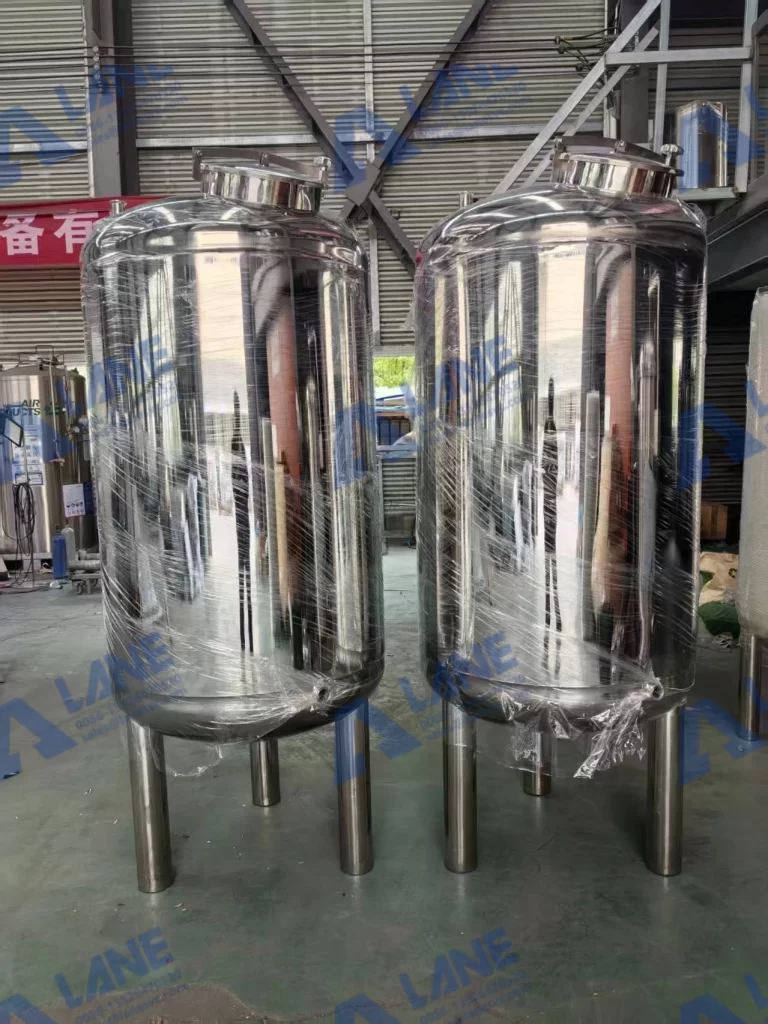
This is where producers over- or under-buy equipment. Clear solutions (UAN, 10-34-0, AMS) are physically simple: dissolve, filter, fill. Suspensions (high-analysis NPK with solids held up by attapulgite clay) look similar in a tote but demand high-shear mixing, ongoing agitation and re-mixing before loading.
| Clear solution (UAN / 10-34-0) | Suspension NPK | |
|---|---|---|
| Appearance | Transparent | Cloudy, solids settle on standing |
| Analysis ceiling | Limited by solubility | Higher grades possible |
| Key equipment | Mixing tank, cartridge filtration, filling line | High-shear emulsifying tank + agitation throughout storage |
| Storage behaviour | Stable, no settling | Needs re-agitation before truck loading |
| Best corn use | Side-dress N, starter P, fertigation | Strip-till custom blends |
Our recommendation, stated plainly: if your target is the corn side-dress season, start with clear-solution capability and a UAN blending line — it is the highest-frequency order you will take. Add suspension capacity only when customers actually ask for custom high-analysis NPK; building suspension tanks speculatively is a common and expensive beginner mistake. The mechanical side of this is detailed in our suspension fertilizer manufacturing equipment and clear solution manufacturing equipment guides.
Here is the industry insight that separates serious blenders from traders. Roughly half of UAN’s nitrogen is urea-N. Surface-broadcast UAN on warm, moist residue-covered soil — exactly the no-till corn situation — loses real nitrogen to ammonia volatilization within days unless it is incorporated, irrigated in, or treated with a urease inhibitor such as NBPT. A grower who applies 50 gal/acre and waits a week for rain has already taught themselves not to buy unamended UAN again.
The buyer-facing fix is product, not apology: offer a stabilized UAN grade as your premium SKU, and print the inhibitor rate on the COA. Second, watch salt injury on starter: more than roughly 10 lb N/acre placed directly with the seed, or calcium-bearing products mixed with sulfate/thiosulfate in the same line, is how lawsuits season starts. Compatibility testing before a blended SKU goes on a truck is non-negotiable.
For a corn-grade liquid range, the minimum defensible line is: a mixing tank with agitation, metered water and urea/AN dissolution, filtration before the filling stage, corrosion-compatible piping (UAN and acid-based products are hard on carbon steel), and a filling system that logs batch analysis.
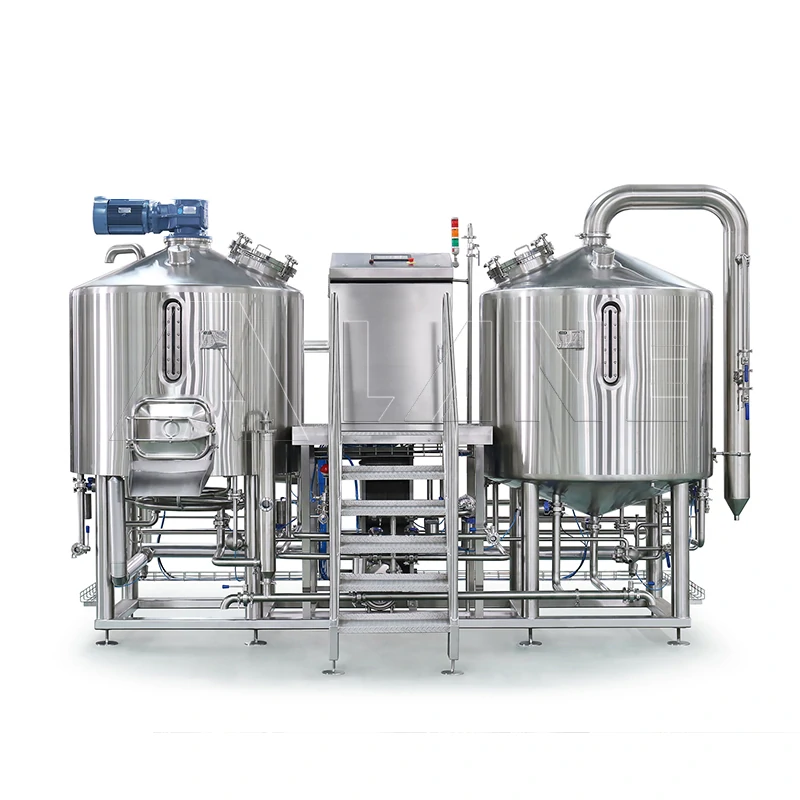
If you plan to offer stabilized or chelated products later, the high-shear emulsifying tank is the component to size for that future now — retrofitting shear into an old tank always costs more.
Q: Is liquid fertilizer better than granular for corn? A: It is the better fit for side-dress and fertigation timing — liquid N can be flown, injected or pivot-applied exactly at V5–V7; granular wins on low-cost pre-plant broadcasting. Choose by placement method, not by fashion.
Q: How much nitrogen does corn need per acre? A: Plan from yield goal: roughly 1.3 lb of N per bushel (200 bu ≈ 260 lb N/acre minus soil and legume credits), split into a 10–60 lb/acre starter and a V5–V7 side-dress. Verify against your local extension guide.
Q: When do you side-dress corn with UAN? A: Around the V5–V7 leaf stage, before canopy closes. That window is when corn takes up most of its nitrogen, and it is the peak season for your UAN line.
Q: Will UAN burn corn leaves? A: Broadcast UAN on warm foliage can cause contact burn; dribble bands or spoke/injection systems avoid it. Tell customers the application method, because they will blame the product either way.
Q: Do I need a urease inhibitor? A: For surface-applied UAN on residue-covered or warm soils, yes — otherwise expect measurable ammonia loss within days. For injected or immediately watered-in UAN, the benefit is smaller.
Q: Clear solution or suspension for corn? A: Start with clear solution for UAN and 10-34-0 starters; add suspension only when customers demand high-analysis custom NPK blends for strip-till.
Q: Can UAN go through a center pivot? A: Yes — UAN and AMS are standard fertigation inputs; just size the injection pump and check injector compatibility, since UAN is mildly corrosive.
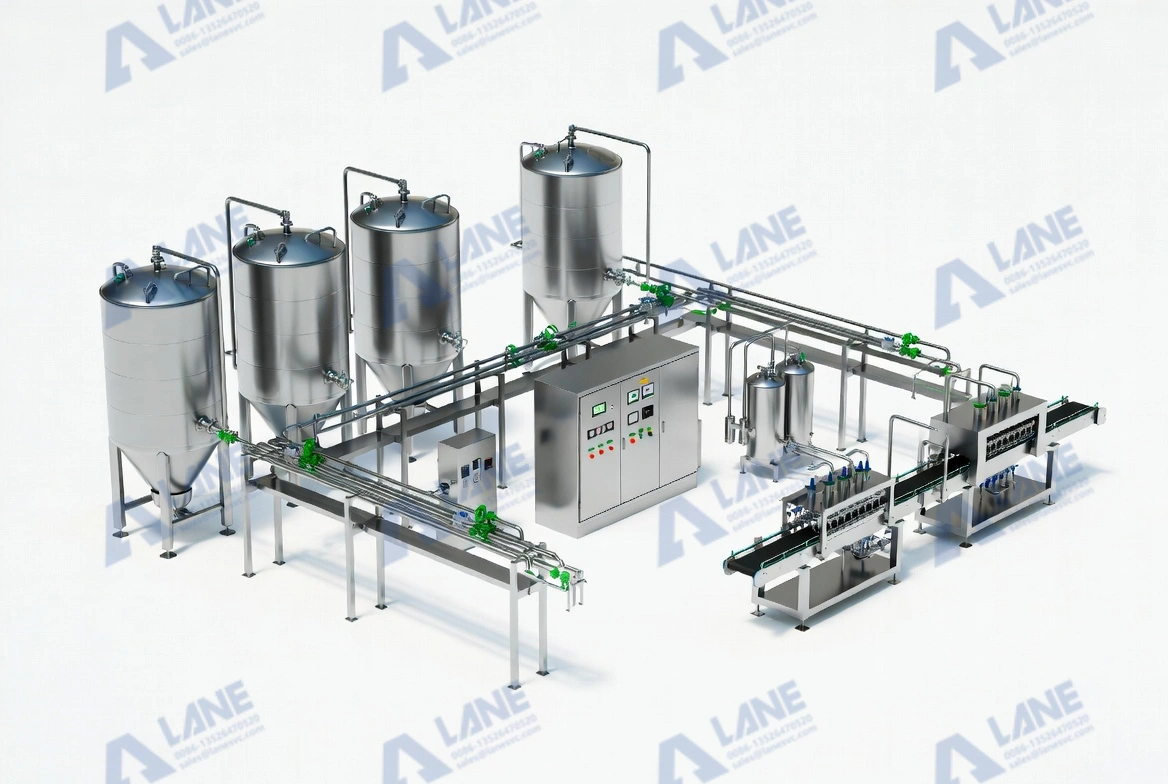
Q: What must my blending line have for corn-grade liquids? A: Agitated mixing, dissolution capacity for urea/AN, post-mix filtration, corrosion-rated piping, batch logging at filling — plus high-shear capability if you will later run suspension or chelated SKUs.
Three things decide a corn liquid program:
first, grade range — UAN plus an APP starter plus (optionally) suspension NPK, not a one-SKU line;
second, nitrogen honesty — publish the N split, density and inhibitor status on every COA, because volatilization is the risk your customer actually feels;
third, equipment fit — match the mixing/shear capacity to the grades you intend to sell next season, not the ones you sold last year.
If you are planning or expanding a liquid fertilizer line for corn markets, send your target grades, monthly tonnage and main export region.
We will come back with the tank, shear and filling configuration and a realistic lead time
Leave a Comment
Latest Posts
LANE has more than 500 successful cases and is committed to providing customers with first-class solutions, high-end machinery and equipment, and one-stop pre-sales, sales and after-sales comprehensive customer service.