
Liquid Calcium Nitrate vs Calcium Chloride: The Ultimate Comparison Guide
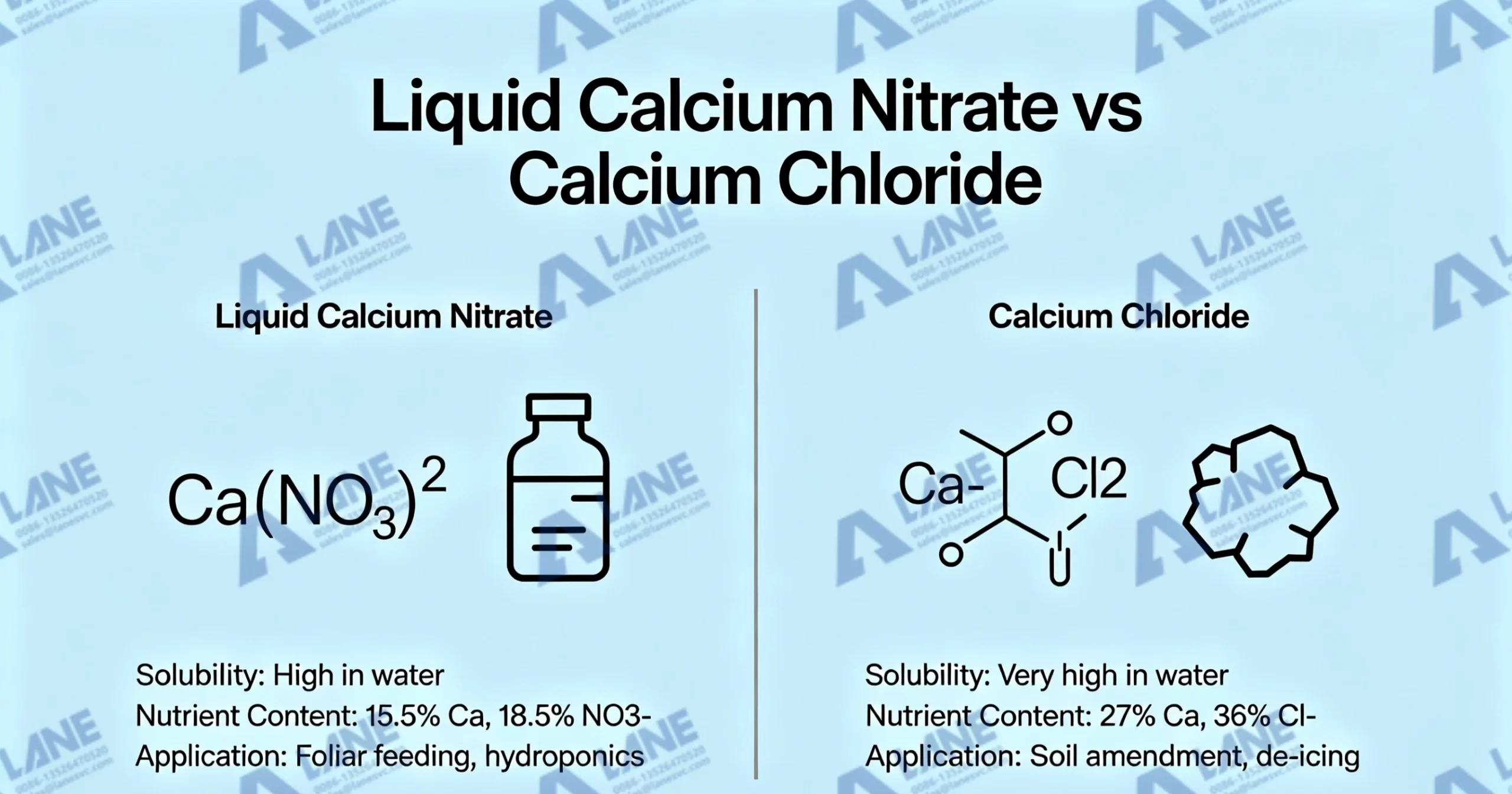
Calcium is a fundamental nutrient and one of the most used secondary nutrients for crop growth. Maintaining firm cell-wall structure of the crop requires abundance of absorbable calcium. When selecting calcium sources for crop growth, producers face a critical choice: liquid calcium nitrate vs calcium chloride. One offers premium, low-salt nutrient synergy, the other provides a cost-effective but corrosive alternative. Even though they both supply calcium to the plants they have different nutrient composition, benefits, applications, and production methods.
Investors who are interested in producing calcium fertilizer understanding the difference between liquid calcium nitrate vs calcium chloride will help them make batter decision. This guide compares Liquid Calcium Nitrate vs Calcium Chloride across all critical dimensions, with special attention to the machinery solutions from LANE Heavy Industry.
The most fundamental difference between liquid calcium nitrate vs calcium chloride lies in their chemical composition. Liquid calcium nitrate contains 54-56% calcium nitrate in aqueous solution and Liquid calcium chloride contains 34-36% calcium chloride.
Liquid calcium nitrate is produced by neutralization between nitric acid and calcium carbonate. while Calcium chloride is a simple calcium salt with no nitrogen content. It is produced from neutralization between hydrochloric acid and calcium carbonate. When evaluating Liquid Calcium Nitrate vs Calcium Chloride for your crop, consider the if your crop needs secondary nitrogen.
| Performance Metric | Liquid Calcium Chloride (CaCl2) | Liquid Calcium Nitrate (Ca(NO3)2) |
| Primary Industrial Use | Dust control, de-icing, oil drilling brines | Wastewater treatment, concrete acceleration, agriculture |
| Corrosion Profile | Highly corrosive to metals and concrete infrastructure | Non-corrosive; acts as an anodic corrosion inhibitor |
| Environmental Impact | High chloride runoff can damage soil structure and flora | Beneficial to soil; provides essential nitrogen nutrients |
| Hygroscopic Efficiency | Extremely high; ideal for arid dust suppression | High; effective dust binder without hazardous runoff |
| Machinery Wear & Tear | Requires specialized, expensive alloy components | Friendly to standard stainless steel and heavy plastics |
When comparing Liquid Calcium Nitrate vs Calcium Chloride formulations, farmers and agriculture professionals must look beyond the price tag and analyze how these chemicals behave in the soil and inside the plant.
The presence of nitrate in calcium nitrate carries a negative change which promotes the uptake of positively charged calcium, magnesium, and potassium. This increase the absorption rate of these nutrients and is necessary for fast correction of nutrient deficiency.
liquid calcium chloride on the other hand, provides no nitrogen. If your crops require a nitrogen boost alongside calcium, using calcium chloride means you mix or apply a separate nitrogen source. This increases your fertilizer costs.
This is the most critical difference between liquid calcium nitrate vs calcium chloride.
Calcium Nitrate: This has a relatively low salt index. Has a salt index of 53. It is relatively safe and delivers nutrition without escalating soil electrical conductivity (EC) to dangerous levels. This makes it safe for repeated applications even in sandy arid regions.
Calcium Chloride: This fertilizer contains high levels of chloride. Excess chloride accumulates in the root zone and cause osmotic stress (making it harder for plants to absorb water) and direct phytotoxicity.
Applying calcium chloride repeatedly will lead to chloride toxicity in the soil, which will negatively affect the beneficial soil microorganisms. Liquid calcium nitrate, on the other hand, leaves alkaline or neutral residual effect on soil pH, this helps counter the soil acidification caused by traditional ammonium-based fertilizer.
Head-to-Head Comparison
The following head-to-head comparison between liquid calcium nitrate vs calcium chloride will give producers data about these two fertilizers.
Agricultural Performance
| Feature | Liquid Calcium Nitrate | Calcium Chloride |
| Nutrient Delivery | Calcium + Nitrate Nitrogen | Calcium + Chloride |
| Salt Index | Low to Moderate | High |
| Risk of Crop Phytotoxicity | Very Low | High (due to Chloride accumulation) |
| Best Application Method | Drip Fertigation, Foliar Spraying | Foliar Spraying (highly diluted, crop-specific) |
| Soil Structure Effect | Improves soil aggregation, counteracts sodium | Increases salinity if over-applied |
Chemical Comparison
| Property | Liquid Calcium Nitrate | Calcium Chloride |
| Calcium Content | Medium | High |
| Nitrogen Content | Yes | No |
| Chloride Content | None | High |
| Water Solubility | Excellent | Excellent |
| Crop Safety | Very High | Moderate |
| Hydroponic Use | Excellent | Limited |
| Fertigation Use | Excellent | Limited |
| Foliar Application | Good | Good |
| Soil Salinity Risk | Low | Higher |
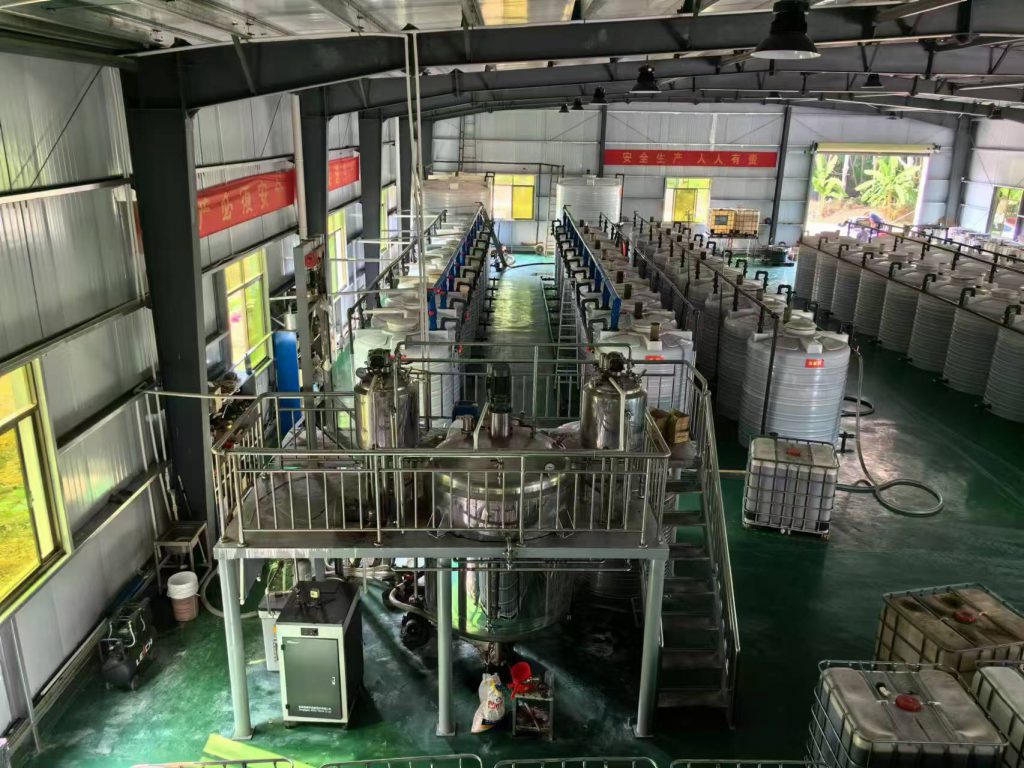
For manufacturers producing liquid calcium nitrate or calcium chloride, selecting the proper machinery is essential. Both the fertilizer follows a similar industrial process but they both utilize different raw materials and reaction chemistry. The process starts with the feeding of raw materials such as hydrochloric acid, limestone, or industrial calcium sources into the production system.
When the raw material is inside the reactor, producer can use temperature to control chemical reactions to convert the calcium source into calcium chloride solution. LANE use automated process control to ensure stable operation, consistent product quality, and raw material utilization.
After reaction stage, the solution passes through the filtration to remove unwanted contaminates. LANE manufactured dual filtration equipment which filters the unwanted contaminants and improves product quality. It is important for production which requires higher purity levels.
The purified solution then moved to evaporation system to concentrate the liquid fertilizer until it reaches the required calcium chloride content.

The cost comparison between Liquid Calcium Nitrate vs Calcium Chloride varies by the regions and purity. Calcium nitrates’ dual nutrient provides better economic value per unit of nutritional benefit in agriculture. Calcium chloride’s lower production costs make it attractive for applications where nitrogen is unnecessary.
The fertilizer industry prefers sustainable, chloride-free options like calcium nitrate as the environmental regulations tighten around the globe. LANE Heavy Industry’s intelligent control system reduces operational costs though automation, optimization, and saving energy. This makes the production more cost effective and higher quality.
The main difference is that liquid calcium nitrate contains both calcium and nitrogen (~15.5% N), while calcium chloride provides only calcium with high chloride content. Calcium nitrate is chloride-free, making it safer for reinforced concrete.
Liquid calcium nitrate is generally better for agriculture because it provides dual nutrients (calcium + nitrogen), improves fruit quality, and prevents deficiencies without increasing soil salinity. Calcium chloride is useful for specific deficiency prevention but risks soil salinity buildup.
Liquid calcium nitrate is safer for reinforced concrete because it’s chloride-free and inhibits steel corrosion. Calcium chloride accelerates setting but induces rebar corrosion due to chloride ions.
For more details, please feel free to contact us.
Henan Lane Heavy Industry Machinery Technology Co., Ltd.
Email: sales@lanesvc.com
Contact number: +86 13526470520
Whatsapp: +86 13526470520
Leave a Comment
Latest Posts
LANE has more than 500 successful cases and is committed to providing customers with first-class solutions, high-end machinery and equipment, and one-stop pre-sales, sales and after-sales comprehensive customer service.