
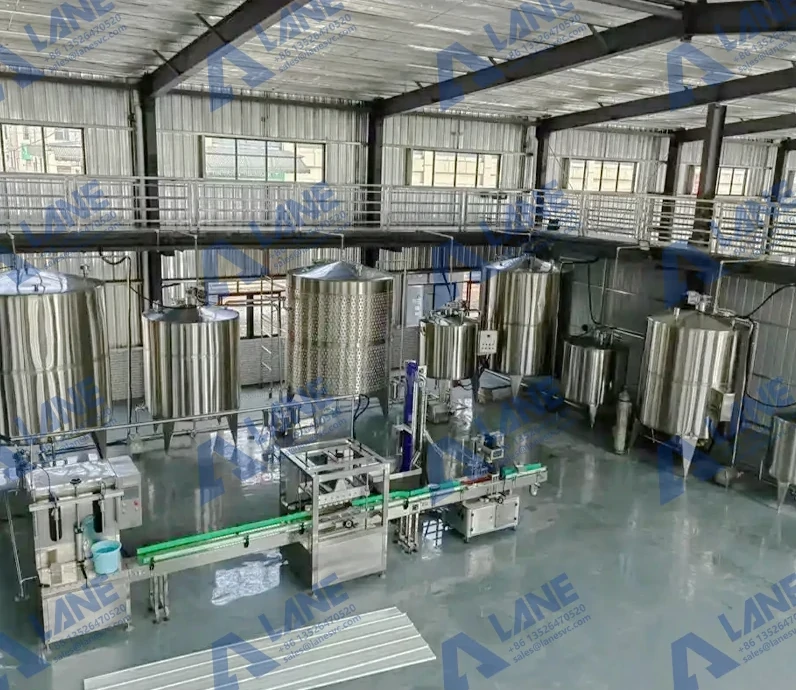
AI-Controlled Liquid Fertilizer Production Line: Smart Technology for Precision Agriculture
Technology is changing how we approach the agriculture industry. Technology is improving how crop nutrients are applied and how fertilizers are made. Traditional broadcasting of solid fertilizers has low utilization rates and environmental runoff. Liquid fertilizer, on the other hand, offers absorption rates exceeding 80% and delivers nutrition directly to plants. But it needs precision technology to create premium grade liquid fertilizers. An AI-controlled liquid fertilizer production line is a new liquid fertilizer production system that integrates automation, real-time data processing, and intelligent control to deliver unmatched accuracy and efficiency.
The AI-controlled liquid fertilizer production line combines advanced chemical engineering with artificial intelligence, Internet of Things (IoT) sensors, and automated feedback loops. Unlike traditional systems where manufacturers had to rely on manual control and fixed formulas, an AI-driven system continuously adjusts production parameters based on raw material conditions, nutrient requirements, and environmental factors. With advanced equipment from LANE Heavy Industry, manufacturers can now achieve higher productivity, consistent product quality, and optimized resource utilization.
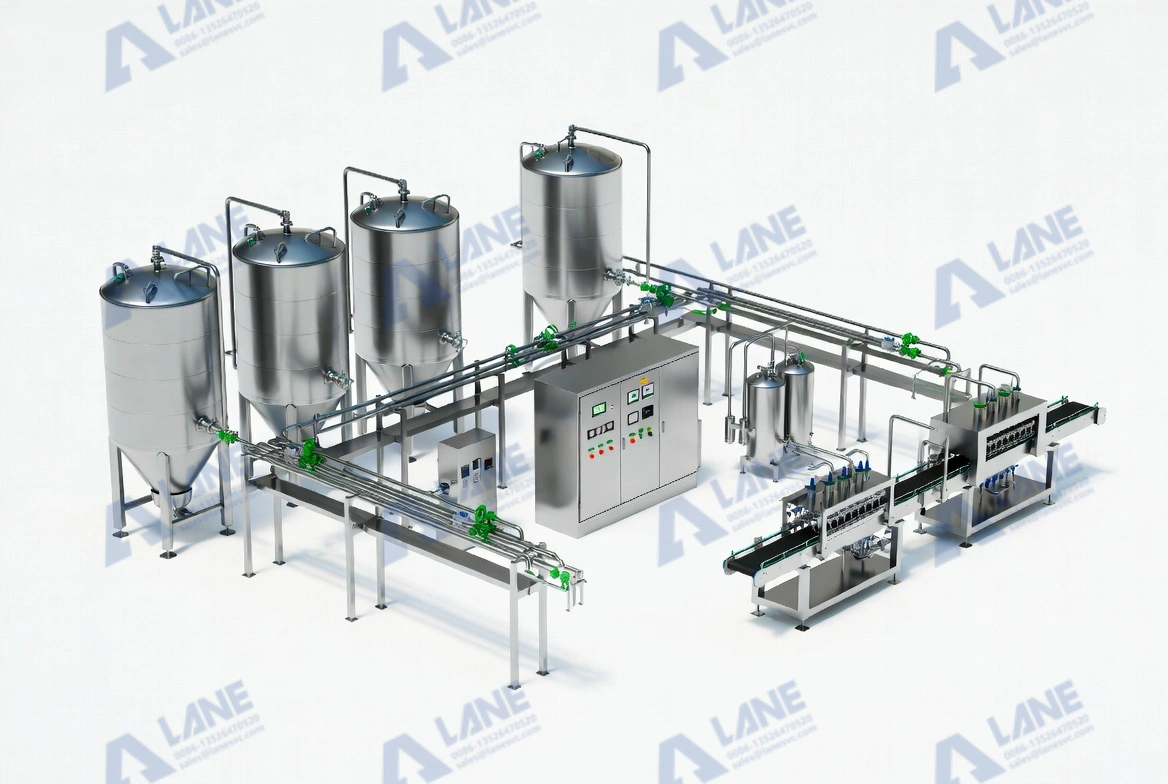
Precision agriculture relies on delivering the right input, at the right location, at the right time. Traditional solid fertilizers suffer from uneven field distribution, slow release alignment, and substantial nitrogen volatilization. Liquid formulations are made to solve these issues. From clear solutions to high-density suspensions and chelated micronutrients, they provide instant bioavailability and compatibility with advanced fertigation systems.
Producing high-stability liquid fertilizers is technically demanding. Factors such as chemical solubility limits, temperature-dependent crystallization, and precise pH balancing dictate the quality of the final blend. The implementation of an AI-controlled liquid fertilizer production line bridges the gap between industrial output and site-specific crop demands. By managing raw materials, chemical reactions, and packaging through an intelligent digital architecture, manufacturers can prevent sedimentation, guarantee shelf-life stability, and deliver optimal macro- and micro-nutrient ratios for target crop phenotypes.
Smart manufacturing elevates fertilizer processing from a labor-intensive sequence to an optimized, self-correcting ecosystem. A key component of a modern AI-controlled liquid fertilizer production line is its automated real-time data feedback loop. Traditional production lines rely on manual sampling and delayed laboratory testing, which can result in entire defective batches if an error occurs early in the mixing phase.
An AI-controlled liquid fertilizer production line relies on IoT sensors to track temperature, pressure, and chemical reactions continuously. If the pH level of an amino acid or humic acid mixture drifts beyond the optimized threshold, the system automatically adjusts the alkaline or acid dosing using pumps in real time.
Key architectural components of this smart system include:
A modern AI-controlled liquid fertilizer production line from LANE Heavy Industry is composed of several high-tech units working together seamlessly:
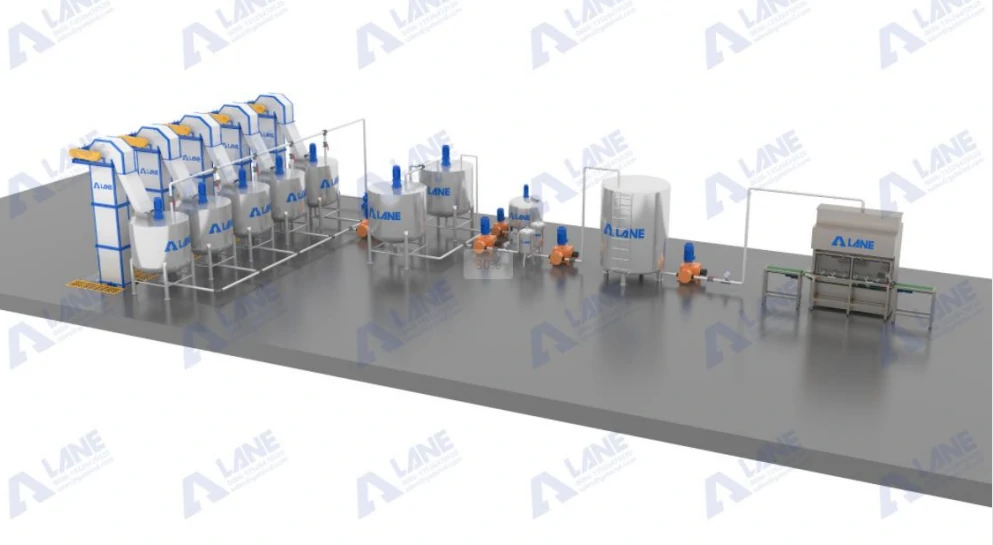
The introduction of the AI-controlled liquid fertilizer production line brings several technological advantages:
Economic and Environmental Impacts
Investing in an AI-controlled liquid fertilizer production line minimizes manual labor and reduces operational errors. The entire process from raw chemical dissolution to bottling is monitored by a centralized SCADA system. Labor requirements are restricted to supervisory oversight and warehouse management. This automation reduces labor costs and increases workplace safety.
Additionally, resource recycling and environmental sustainability are improved by using a closed-loop AI-controlled liquid fertilizer production line. LANE Heavy Industry’s designs feature automated Clean-In-Place (CIP) systems. Instead of discharging chemical wash-water into the environment, the smart system captures, filters, and recycles the rinse water back into the initial batching phases of the next production cycle. This eliminates chemical discharge, slashes water footprint, and aligns manufacturing facilities with global environmental mandates.
While the AI-controlled liquid fertilizer production line offers many benefits, there are some challenges:
However, these challenges are often outweighed by long-term gains in productivity and efficiency.
As the agriculture industry continues to embrace digital transformation, the role of the AI-controlled liquid fertilizer production line will only expand. Future developments may include:
Manufacturers who invest in these technologies today will be better positioned to compete in a rapidly changing industry.
It is an automated production system that uses artificial intelligence to control and optimize the manufacturing of liquid fertilizers, ensuring precision, efficiency, and consistency.
AI analyzes real-time data from sensors and adjusts process parameters such as dosing, mixing, and temperature to maintain optimal conditions and reduce errors.
liquid fertilizer production line can produce NPK solutions, micronutrient fertilizers, organic liquid fertilizers, and customized nutrient blends.
Yes, LANE Heavy Industry offers scalable solutions, allowing both small and large manufacturers to implement an AI-controlled liquid fertilizer production line.
For more details, please feel free to contact us.
Henan Lane Heavy Industry Machinery Technology Co., Ltd.
Email: sales@lanesvc.com
Contact number: +86 13526470520
Whatsapp: +86 13526470520
Leave a Comment
Latest Posts
LANE has more than 500 successful cases and is committed to providing customers with first-class solutions, high-end machinery and equipment, and one-stop pre-sales, sales and after-sales comprehensive customer service.