
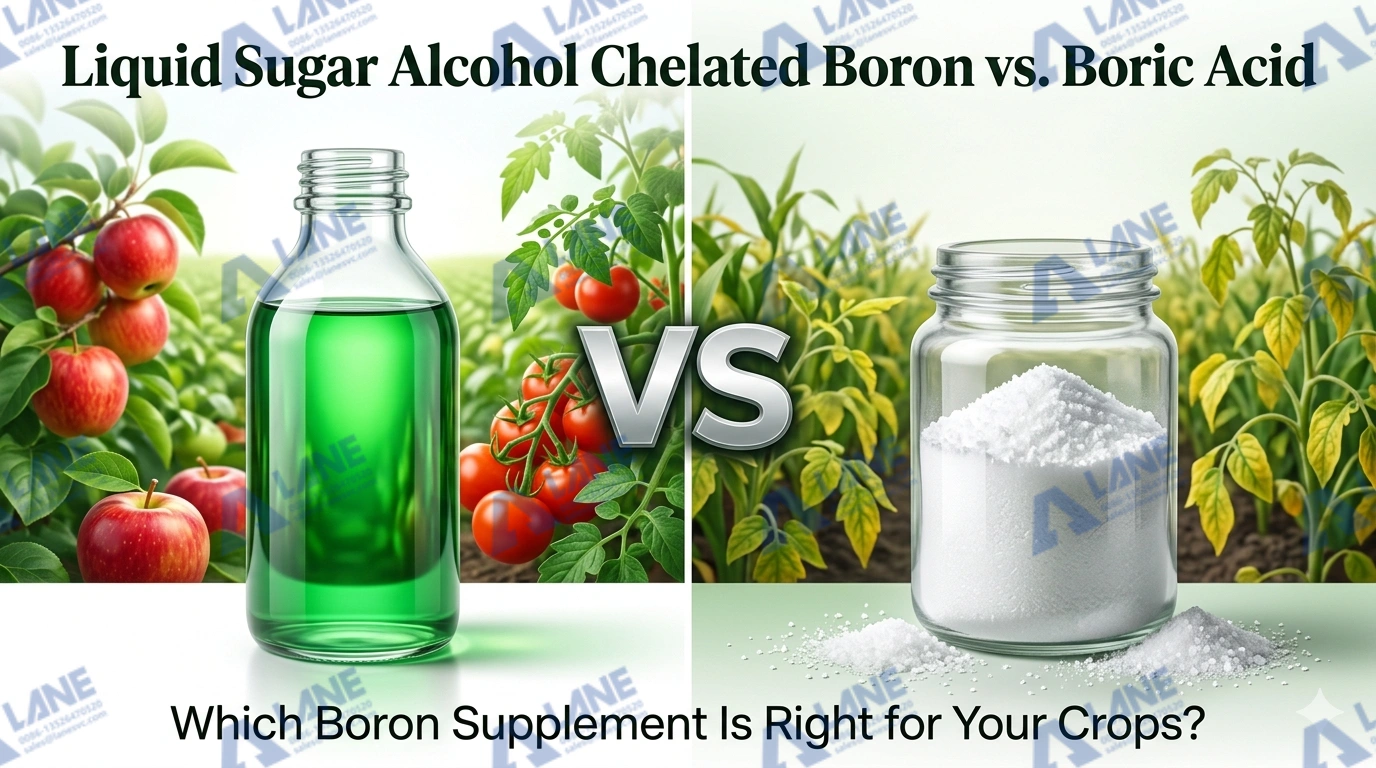
Liquid Sugar Alcohol Chelated Boron vs. Boric Acid: Which Boron Supplement Is Right for You
Boron is one of the most important micronutrients for plant growth, and the importance of boron is often overlooked. It plays a critical role in cell wall formation, sugar transportation, flowering, fruit setting, and root development. Two popular boron sources in modern agriculture are boric acid and liquid sugar alcohol chelated boron. For commercial growers and fertilizer manufacturers, the challenge of boron application is about bioavailability and mobility.
As the agriculture industry shifts toward precision nutrition, the debate between traditional cost-effective boric acid and technologically advanced liquid sugar alcohol chelated boron is intensifying. Boric acid has been used for decades, but advanced formulations such as liquid sugar alcohol chelated boron are becoming popular due to higher bioavailability and improved nutrient transport. In this article, we compare them with the help of LANE Heavy Industry’s machinery solutions.
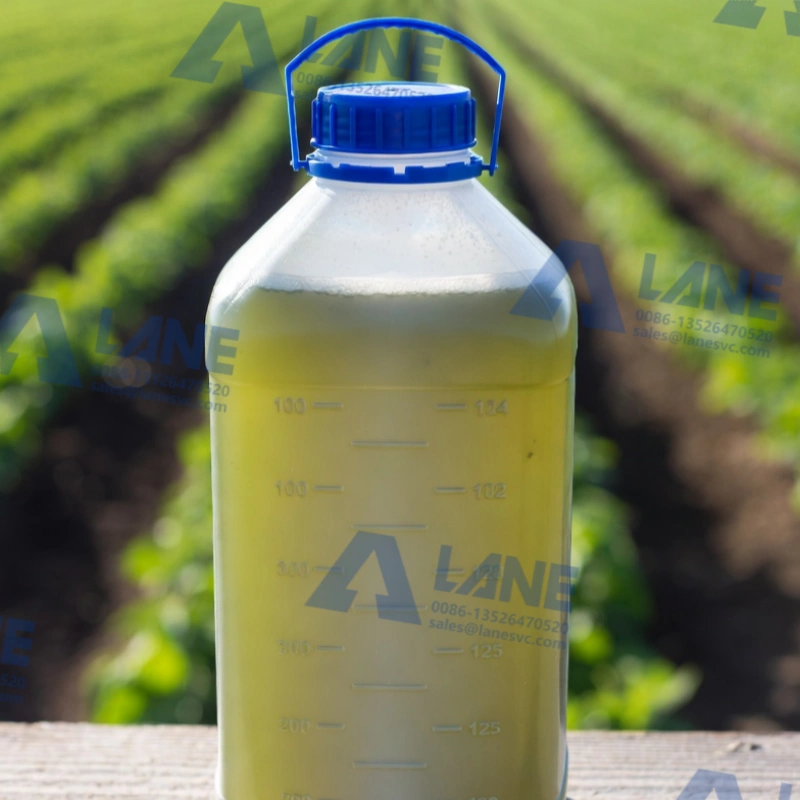
What is Boric Acid?
Boric acid (H₃BO₃) has been the global standard for boron supplementation for decades. This white, crystalline powder is water-soluble. In soil applications, it provides a direct source of inorganic boron. This fertilizer is inexpensive but effective. It has two major drawbacks: phloem immobility and a narrow safety margin. If the concentration is slightly high, boric acid can become phytotoxic and scorch leaves and damage the roots.
What is Liquid Sugar Alcohol Chelated Boron?
Liquid sugar alcohol chelated boron represents the advancement of micronutrient technology. By using sugar alcohols (such as sorbitol, mannitol, or xylitol) as chelating agents, the boron molecule is wrapped in a complex that plants recognize as a natural carbohydrate.
This chelation process changes the fundamental behavior of the nutrient. Sugar alcohols are the primary transport molecules in the phloem of many plants. Because of that, boron becomes mobile and moves from the leaves to the roots and fruits where it is needed most.
To decide which is right for your operation, we must look at how these two substances perform under field conditions.
In most plant species, inorganic boron (like boric acid) is “immobile.” Once it reaches the leaves via the xylem, it stays there. This is why boron deficiency often shows up in new growth (the “growing points”) while old leaves remain green.
Liquid sugar alcohol chelated boron solves this. The sugar alcohol mimics the plant’s own photosynthates. This allows the boron to be translocated through the phloem. For fruit trees and flowering crops, this means boron can move directly to the blossoms and developing fruit even during periods of low transpiration.
Boric acid has a relatively large molecular size and a high salt index. When sprayed on leaves, much of it crystallizes on the surface and remains unabsorbed. In contrast, liquid sugar alcohol chelated boron has an extremely low molecular weight and acts as a humectant. This keeps the leaf surface moist and allows for nearly 100% absorption within hours.
Boric acid is notorious for its narrow “window” of safety. A small overdose can lead to boron toxicity, characterized by yellowing leaf margins and stunted growth. Because the boron in a sugar alcohol complex is “masked,” it is significantly gentler on delicate tissues, making it the preferred choice for high-value horticultural crops.
Performance Comparison in Key Agricultural Indicators
| Indicator | Liquid Sugar Alcohol Chelated Boron | Boric Acid |
| Absorption Speed | Ultra-fast (50%+ in 3 minutes) | Slow (depends on transpiration) |
| Plant Mobility | Dual-channel, bidirectional transport | One-way, almost no phloem movement |
| Utilization Rate | 70%–90% | 30%–50% |
| Soil Compatibility | Resists fixation/leaching, suitable for all pH | Easily fixed in alkaline, leached in acidic |
| Application Safety | High, no leaf burn at recommended doses | Low, risk of phytotoxicity |
| Crop Suitability | All crops, especially high-value fruits/vegetables | Field crops, base fertilization only |
| Production Stability | Stable chelate structure, long shelf life | Simple inorganic salt, prone to crystallization |
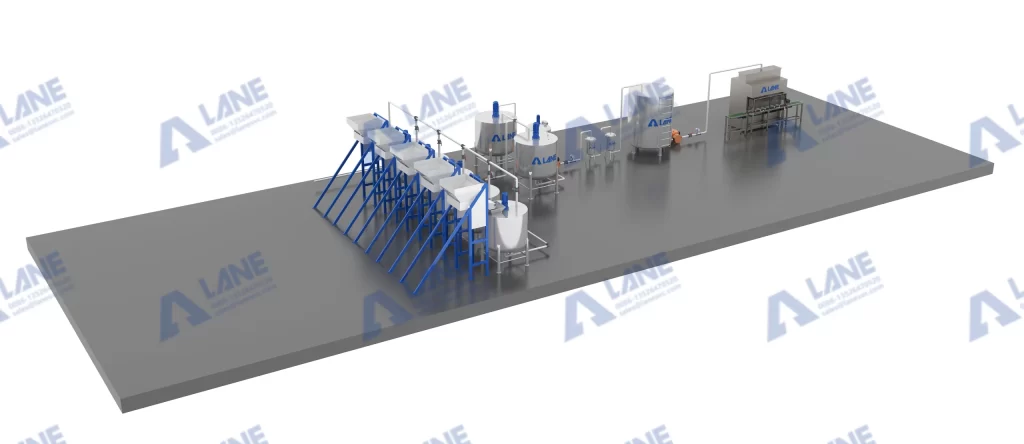
The transition from producing simple powder fertilizers to high-stability liquid sugar alcohol chelated boron requires a specialized manufacturing setup. You cannot simply stir these ingredients in a bucket; the chelation process requires precise temperature control, high-shear mixing, and specialized reaction vessels.
Henan LANE Heavy Industry provides the industrial backbone for this transition. With ISO9001-certified manufacturing processes, LANE’s machinery is designed to handle the complex chemical reactions involved in liquid fertilizer production.
Stainless Steel Reaction Vessels: Chelation is a chemical reaction. LANE’s Stainless-Steel Reactors are equipped with heating jackets and VFD agitators. These vessels allow manufacturers to maintain the exact temperature required for the sugar alcohols to bind with the boron source, ensuring a stable, clear liquid that won’t precipitate.
High-Shear Emulsifying Mixers: To ensure the liquid is homogeneous and free of undissolved crystals, high-shear mixing is essential. LANE’s mixers are designed to break down particles to the micron level, which is crucial for the liquid aspect of the fertilizer.
Liquid Filling and Packaging Lines: Once the liquid sugar alcohol chelated boron is synthesized, it must be bottled without contamination. LANE Heavy Industry offers automated liquid filling machines that handle high-viscosity liquids with precision. This ensures that the final B2B or B2C product meets professional standards.
Water Treatment Systems: Water contains calcium, magnesium, and many metals. To make a premium quality liquid fertilizer, the production line requires deionized or softened water to prevent reactions with the metals. LANE provides integrated water purification systems as part of their full-line liquid fertilizer projects.
Choose Boric Acid If:
Choose Liquid Sugar Alcohol Chelated Boron If:
Liquid sugar alcohol chelated boron is the optimal choice for high-value crops, precision farming, and crops in critical growth stages. It offers superior absorption, mobility, and safety. While boric acid serves the foundational needs of agriculture, the liquid chelated form gives superior results at lower dosage rates. For manufacturers looking to tap into this growing market, the right equipment is the first step. LANE Heavy Industry provides the technical expertise and the heavy machinery to produce premium quality chelated boron fertilizer.
Q1: Can I mix liquid sugar alcohol chelated boron with other pesticides?
A: Generally, yes. One of the advantages of the sugar alcohol chelate is its high compatibility. However, always perform a “jar test” first, as the pH of certain pesticides can affect stability.
Q2: How often should I apply boron to my crops?
A: This depends on the crop cycle. Most high-value crops benefit from 2-3 applications: once during the vegetative stage and once or twice during the budding and flowering stages.
Q3: Is Lane Heavy Industry’s machinery suitable for small-scale production?
A: Yes. Lane Heavy Industry offers modular production solutions, ranging from small-batch 500L reactors to fully automated 100-ton-per-hour production lines.
For more details, please feel free to contact us.
Henan Lane Heavy Industry Machinery Technology Co., Ltd.
Email: sales@lanesvc.com
Contact number: +86 13526470520
Whatsapp: +86 13526470520
Leave a Comment
Latest Posts
LANE has more than 500 successful cases and is committed to providing customers with first-class solutions, high-end machinery and equipment, and one-stop pre-sales, sales and after-sales comprehensive customer service.