

Centrifugal Extractor: A Buyer’s Selection Guide
A centrifugal extractor is designed to mix two immiscible liquid phases, promote mass transfer, and separate them rapidly through centrifugal force. For liquid fertilizer manufacturers and chemical processing plants, this equipment can reduce the space and settling time required by conventional liquid-liquid extraction systems.
However, buying one based only on its advertised flow rate is a common mistake. Phase behavior, density difference, solvent compatibility, and the required separation quality all affect actual performance. This guide helps plant owners, production managers, and purchasing teams evaluate the equipment before investing.
A centrifugal extractor combines liquid-liquid contacting and phase separation in a compact rotating unit. It is generally used when a target component needs to transfer from one liquid phase into another, or when two immiscible liquids must be separated after mixing.
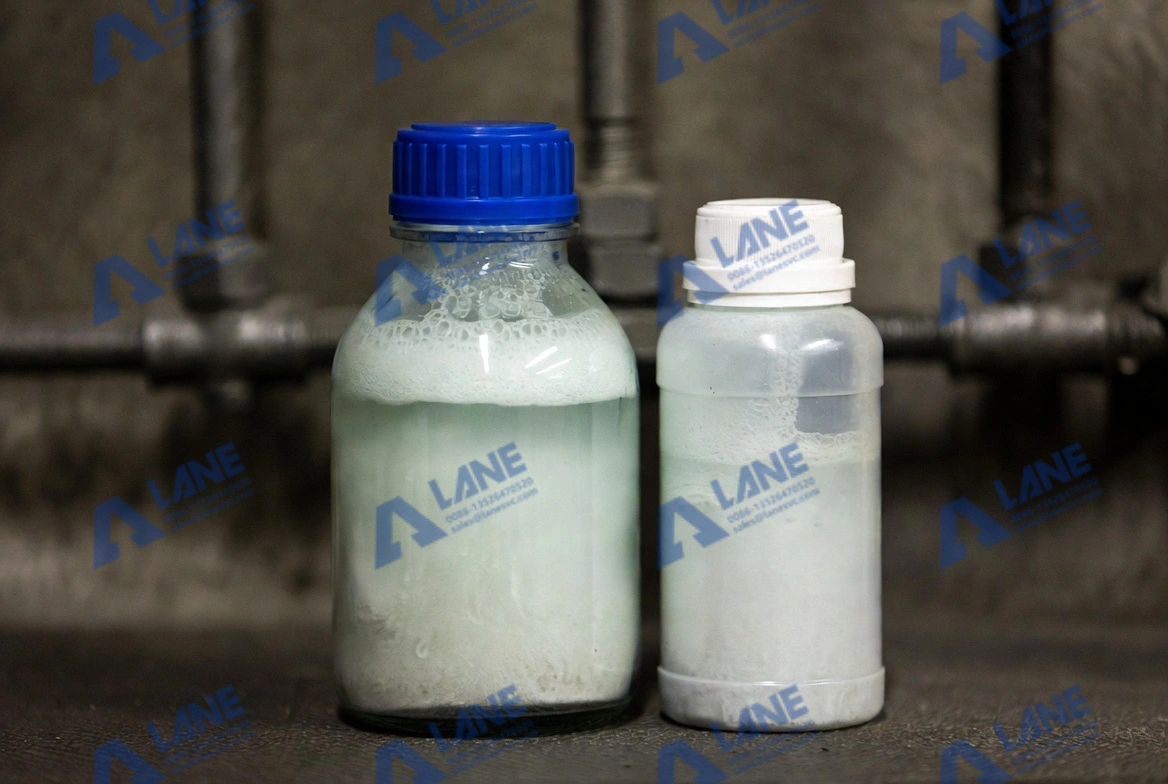
A typical extraction system contains two liquid phases:
When the two liquids contact each other, the target substance transfers between phases according to their chemical properties and equilibrium behavior. The equipment then separates the resulting liquid streams.
For liquid fertilizer production, this operation may be relevant to the purification of liquid extracts, recovery of selected compounds, and removal of unwanted substances when a suitable solvent-based process is used. It is not a universal replacement for ordinary mixing tanks, filters, or solid-liquid separators. Buyers should first establish whether their process actually requires liquid-liquid extraction.
The operating principle is based on two connected operations: mixing and centrifugal separation.
The feed liquid and extraction solvent enter the machine through separate inlet ports at a specified flow ratio. Inside the mixing area, a rotating drum, rotor, or mixing element creates shear and disperses one liquid into the other as droplets.
This dispersion increases the contact area between the two phases. The target component can then transfer from the feed phase into the solvent phase. The required contact intensity depends on the liquid properties, extraction chemistry, and process conditions.
After mixing, the dispersion enters the rotating separation chamber. Centrifugal force drives the denser liquid toward the outer region of the rotating chamber, while the lighter liquid moves closer to the center.
Separate collection passages and outlet arrangements discharge the two phases. Their interface must remain in the correct position to prevent excessive cross-contamination.

This is where equipment selection becomes important. A machine may mix the liquids effectively but still deliver an unsatisfactory result if the outlet arrangement, operating speed, or feed rate does not suit the liquid system.
The University of Michigan’s Extractors reference explains the general principle of centrifugal liquid-liquid extraction. A detailed review, Liquid-Liquid Centrifugal Extractors: Types and Recent Applications, also discusses different extractor designs, their operating principles, and industrial applications.
The main reason to consider a centrifugal extractor is its ability to intensify liquid-liquid contacting and separation within a relatively compact machine.
Shorter separation time. Gravity settling can require considerable time, especially when the liquids have a small density difference or form stable dispersions. Centrifugal force accelerates phase disengagement and can make continuous processing practical.
Compact installation. Combining contacting and separation in one unit can reduce the footprint compared with a process built around separate mixing and settling vessels. This is useful where plant space is limited.
Continuous operation. A properly designed system can feed and discharge liquids continuously. This helps stabilize production when feed composition and operating conditions remain within the agreed range.
Low liquid hold-up. Some centrifugal extractor designs retain relatively small liquid volumes inside the machine. This can be valuable when processing expensive solvents or materials that should not remain in the equipment for long periods.
Process flexibility. Different designs can handle different liquid systems and extraction duties. However, flexibility should never be assumed from the equipment name alone. The supplier must confirm compatibility through process data and, where necessary, testing.
These advantages do not mean that centrifugal equipment is automatically the lowest-cost option. Its rotating assembly, drive system, control requirements, and precision components may increase initial investment and maintenance demands. The correct comparison is total process cost, not purchase price alone.
A buyer should compare the complete operating range rather than selecting a model based on its largest advertised capacity.
LANE’s published product information lists three models and their principal specifications:
| Parameter | LA550-M | LA650-M | LA900-M |
|---|---|---|---|
| Bowl diameter | 550 mm | 650 mm | 900 mm |
| Applicable rotating speed | 576–720 | 460–576 | 460–540 |
| Maximum mixing flow | ≤30,000 L/h | ≤60,000 L/h | ≤120,000 L/h |
| Inlet/outlet pipe diameter | DN100 | DN150 | DN200 |
| Motor power | 4.0 kW | 5.5 kW | 7.5 kW |
| Unit dimensions | 1200 × 1200 × 1760 mm | 1380 × 1380 × 2250 mm | 1690 × 1690 × 2480 mm |
The figures above are the specifications published on the product page. The page’s general description also states a maximum mixing flow rate of 150,000 L/h, while its model table lists 120,000 L/h as the highest model capacity. Buyers should ask the supplier to confirm the guaranteed throughput of the proposed configuration in writing.
Important: The product page does not specify the speed unit alongside the listed rotating-speed figures. Buyers should confirm whether the values are expressed in r/min before using them for engineering calculations.
Beyond the listed specifications, buyers should evaluate the actual process conditions. The following factors help determine whether a centrifugal extractor is suitable for a particular liquid system.
| Selection factor | What buyers should confirm | Why it matters |
|---|---|---|
| Feed flow | Normal, peak, and minimum operating flow | Prevents oversizing or unstable operation at low loads |
| Phase density | Density of both liquids at operating temperature | Affects phase movement and interface control |
| Viscosity | Viscosity range and temperature variation | Influences mixing, flow resistance, and separation |
| Solvent compatibility | Chemical compatibility of all wetted materials | Reduces corrosion, swelling, and contamination risks |
| Separation target | Required recovery rate and outlet purity | Defines whether the proposed machine can meet the process target |
| Operating mode | Continuous or intermittent operation | Affects controls, feed stability, and plant integration |
Start with the actual process flow, not the expected annual production tonnage alone. A plant operating around the clock has different requirements from a facility running only during selected production campaigns.
Before choosing a model, calculate the combined liquid feed rate and establish the required phase ratio. For example, if the feed and solvent enter at different rates, the total mixing flow is not necessarily equal to the feed flow alone. The supplier needs both flow figures to assess the operating point.
Next, provide the physical properties of both phases. Density difference, viscosity, interfacial tension, and emulsion tendency can influence the machine’s ability to achieve stable separation. Two processes with identical flow rates may require different equipment configurations because their liquids behave differently.
A larger model is not automatically the safer choice. If a machine is oversized for the normal operating flow, it may run outside its preferred operating range. Ask the supplier to identify the recommended operating window, not just the maximum capacity.

Material selection should follow the actual chemical environment. LANE’s product page lists 304/316L stainless steel in its basic product information. Its feature description also mentions a perfluoropolymer construction for strong-acid resistance.
These statements should be clarified before ordering. They may refer to different configurations or different equipment components. Buyers should request a material list that identifies the bowl, rotor, casing, feed passages, seals, and other wetted parts individually.
For acidic fertilizer extracts, chloride-containing solutions, or solvent-based processes, do not accept a general statement such as “corrosion-resistant material.” Ask for compatibility confirmation against the exact chemical composition, concentration, temperature, and cleaning chemicals.
The supplier should also explain the top-mounted drive arrangement, bearing location, sealing method, and maintenance access. These details influence leakage risk, service requirements, and the time needed for routine inspection.
The purchase quotation is only one part of the project cost. A complete evaluation should include the equipment, auxiliaries, installation, commissioning, and ongoing maintenance.
Check whether the quotation includes feed pumps, solvent pumps, flow meters, valves, control cabinets, outlet piping, and receiving tanks. If these are excluded, the apparent equipment price may not represent the cost of a working extraction system.
Also consider:
A compact machine can reduce floor-space requirements, but it does not eliminate the need for suitable piping, safe chemical storage, and downstream collection equipment.
A serious supplier should be able to evaluate the actual liquid system rather than simply recommend a model from a capacity table.
Prepare a process information sheet containing the following:
Then request a written technical proposal showing the selected model, guaranteed throughput, expected separation performance, wetted-part materials, motor details, utility requirements, and scope of supply.
Where the process is unfamiliar or the separation target is demanding, a laboratory or pilot test is more valuable than relying on a general performance statement. The test should use representative process liquids and define how the two outlet streams will be evaluated.
For a related liquid fertilizer application, see LANE’s humic acid liquid fertilizer production line guide, which discusses where liquid-liquid extraction may fit into an extract purification process.
1. What is the main purpose of a centrifugal extractor?
Its main purpose is to contact two immiscible liquid phases and then separate them rapidly using centrifugal force. The target component transfers between phases according to the solvent and feed chemistry.
2. Can it be used in liquid fertilizer production?
Yes, it can be used in suitable liquid fertilizer processes that require liquid-liquid extraction or purification. It is not necessary for every liquid fertilizer plant; the process must first justify solvent-based extraction.
3. What is the maximum capacity of LANE’s equipment?
The product page states a maximum mixing flow of 150,000 L/h in its general description. However, the listed LA550-M, LA650-M, and LA900-M models show maximum mixing flows of 30,000, 60,000, and 120,000 L/h respectively. Confirm the guaranteed capacity for the exact configuration.
4. Can the equipment separate liquids with similar densities?
It may be possible, but separation becomes more demanding as the density difference decreases. The supplier needs actual liquid properties and a defined outlet-quality target to assess feasibility.
5. Is stainless steel suitable for acidic liquids?
It depends on the acid type, concentration, temperature, and other chemicals present. Buyers should obtain a wetted-parts material list and chemical compatibility confirmation rather than relying only on the SS304 or SS316L label.
6. Can the machine operate continuously?
The product information describes the equipment as suitable for both intermittent and continuous operation. The final operating mode should be confirmed against the process flow, feed stability, and cleaning requirements.
7. Does a centrifugal extractor require much maintenance?
Maintenance depends on the rotor assembly, bearings, seals, operating conditions, and cleaning method. Ask the supplier for inspection intervals, wear-part details, and recommended spare parts before purchase.
8. What information is needed to receive an accurate quotation?
Provide the feed and solvent flow rates, liquid properties, chemical composition, operating temperature, target recovery, required materials, and expected operating schedule. These details allow the supplier to recommend a suitable configuration instead of quoting only by nominal capacity.
The right equipment is the one that meets the required extraction and separation targets under your actual operating conditions. Flow capacity matters, but it should be evaluated together with phase density, viscosity, solvent compatibility, material selection, and the quality required from both outlet streams.
Before placing an order, ask for a model-specific technical proposal and written confirmation of throughput, material construction, and performance expectations. If the process involves difficult emulsions or valuable extracted components, arrange a representative test before finalizing the design.
LANE provides liquid fertilizer equipment and extraction solutions for industrial processing projects. You can review the LANE Liquid-Liquid Centrifugal Extractor product page or contact the team to discuss your feed materials and required processing capacity.
For more details, please feel free to contact us.
Henan Lane Heavy Industry Machinery Technology Co., Ltd.
Email: sales@lanesvc.com
Contact number: +86 13526470520
WhatsApp: +86 13526470520
Leave a Comment
Latest Posts
LANE has more than 500 successful cases and is committed to providing customers with first-class solutions, high-end machinery and equipment, and one-stop pre-sales, sales and after-sales comprehensive customer service.