
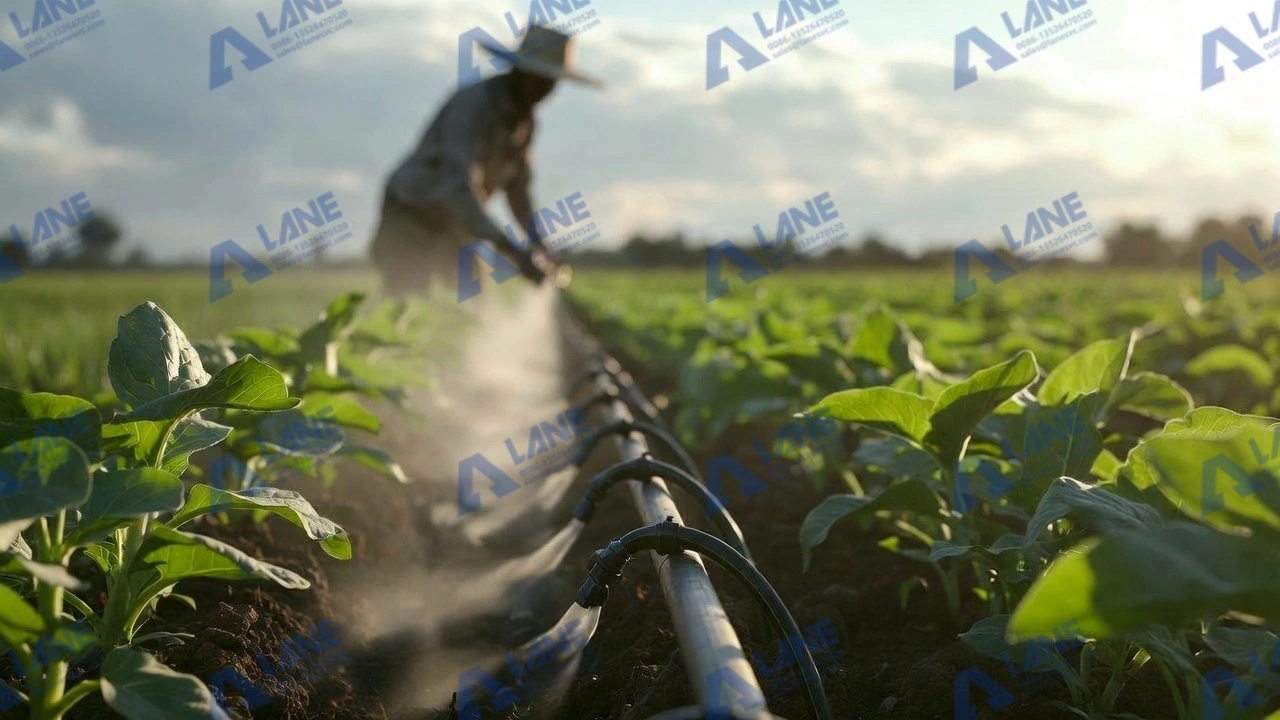
The Economics of Small-Batch vs. Industrial Plant-Based Liquid Fertilizer Production
Table of Content
The global shift toward sustainable agriculture has made plant-based liquid fertilizer production a profitable segment for manufacturers. As farmers and entrepreneurs recognize the benefits of organic nutrients—like improved soil health, reduced environmental impact, and enhanced crop quality—the question of how to start this high-quality plant-based liquid fertilizer production became paramount.
Choosing between small-batch and industrial-scale systems directly impacts capital expenditure, operating costs, product diversity, and profit margins. This article examines the economics of both approaches and introduces how LANE Heavy Industry’s machinery standardizes efficiency and reliability for plant-based liquid fertilizer production at any output volume.
Small-Batch Production
Small-batch plant-based liquid fertilizer production involves manual or semi-automated processes with limited output capacity. These operations serve local markets while using locally sourced organic materials. This type of production line requires minimal initial investment. Equipment includes basic mixing tanks, hand tools, and simple filtration systems.
Industrial Production
Industrial plant-based liquid fertilizer production represents fully automated, high-volume liquid manufacturing systems. This type of production line can produce tons of liquid fertilizer daily. This type of production facility is made to serve regional or national markets. It must utilize advanced processing technologies and require substantial capital investment. It also delivers lower per-unit costs.
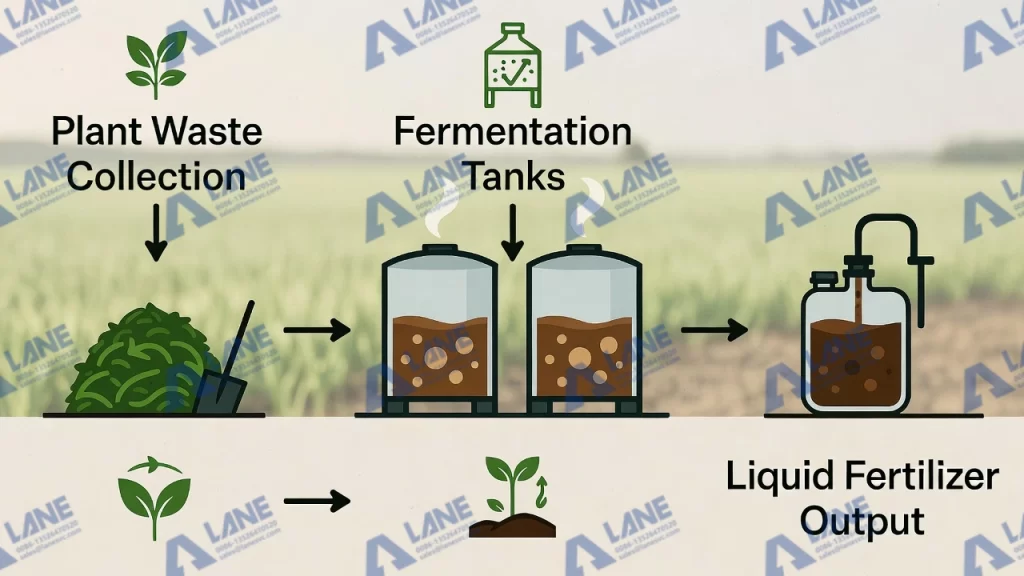
The most obvious economic difference between small-batch and industrial plant-based liquid fertilizer production is its initial capital requirements.
Small-Batch Investment
For entrepreneurs testing the waters or with limited funds, small-batch production offers an entry point. A small-scale liquid production line from LANE Heavy Industry with basic equipment ranges from $35,000 to $50,000. A semi-automated setup can be established for approximately $50,000 with daily production reaching 15 tons. You will need 500 to 600 square meters of area for these operations.
Industrial Investment
Industrial-scale plant-based liquid fertilizer production requires deep investments. A 5-ton-per-hour line costs approximately $150,000, while large-scale projects with 10–20 tons/hour capacity range from $200,000 to $500,000. The facilities requirements also expand accordingly as more than 2,000 to 15,000 square meters are necessary. These large investments position producers to capture larger market shares and achieve economies impossible at smaller scales.
The LANE Advantage
LANE Heavy Industry understands that different producers have different capital constraints—different entrepreneurs have different budgets. Our equipment spans the entire spectrum. We provide compact solutions for emerging producers and comprehensive industrial lines for established manufacturers. As a machine supplier for Africa’s national fertilizer project with an annual output of 100,000 tons, LANE brings proven experience to both small and large-scale plant-based liquid fertilizer production initiatives.
While capital costs favor small-batch production systems, operational economics favor industrial production as volume increases.
Labor Costs
Small-batch plant-based liquid fertilizer production remains labor-intensive. Manual ingredient monitoring and packaging requires multiple workers. Labor costs don’t decrease significantly with modest volume increases. Industrial production systems equipped with PLC control systems reduce labor requirements. A 15-ton-per-hour automated line might need only 2–3 operators per shift.
Raw Material Procurement
Industrial producers enjoy substantial purchasing advantages. Buying ingredients like seaweed extracts, humic acids, and plant byproducts in truckload quantities can reduce material costs by 20–30%. This is one of the strongest economic arguments for industrial-scale plant-based liquid fertilizer production.
Energy Efficiency
Energy consumption per ton of finished product decreases as production scales up. Industrial reactors can maintain temperature more efficiently. Larger motors operate closer to their optimal efficiency curves. For energy-intensive processes like chelation and emulsification, these efficiencies translate to cost savings.
The LANE Difference
LANE’s engineering team optimizes equipment for operational efficiency at every scale. Our emulsified liquid fertilizer production lines incorporate energy-efficient designs, and our stainless-steel construction ensures durability that minimizes maintenance costs over the equipment’s lifetime. This focus on total cost of ownership benefits both small and large producers engaged in plant-based liquid fertilizer production.
LANE Heavy Industry’s Machinery Solutions
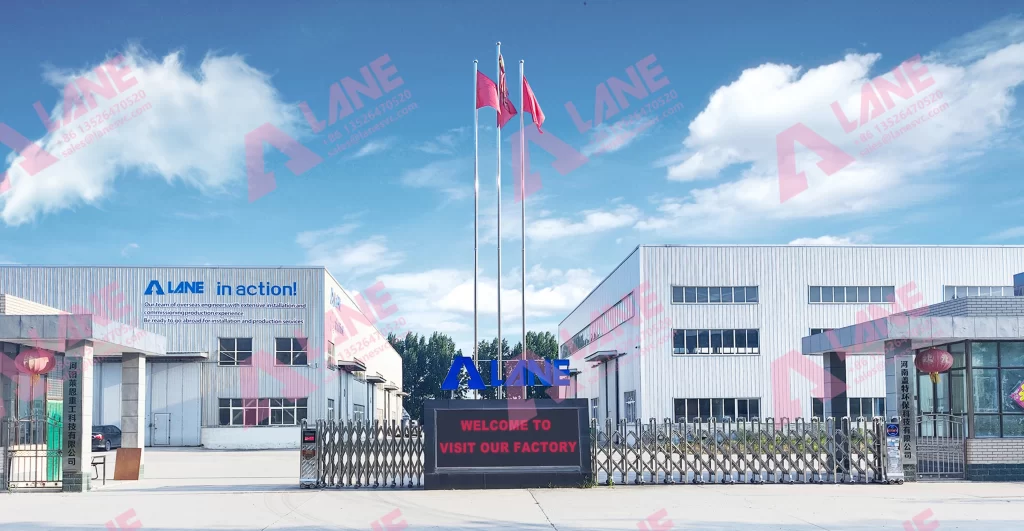
Henan LANE Heavy Industry Machinery Technology Co., Ltd has established itself as a leader in fertilizer equipment manufacturing. Our solutions for plant-based liquid fertilizer production deserve specific attention.
Comprehensive Product Range
LANE’s portfolio includes organic fertilizer production lines, compound fertilizer systems, NPK fertilizer lines, and specialized liquid fertilizer equipment. This breadth ensures that whether you’re starting small or scaling up, LANE offers equipment matched to your needs.
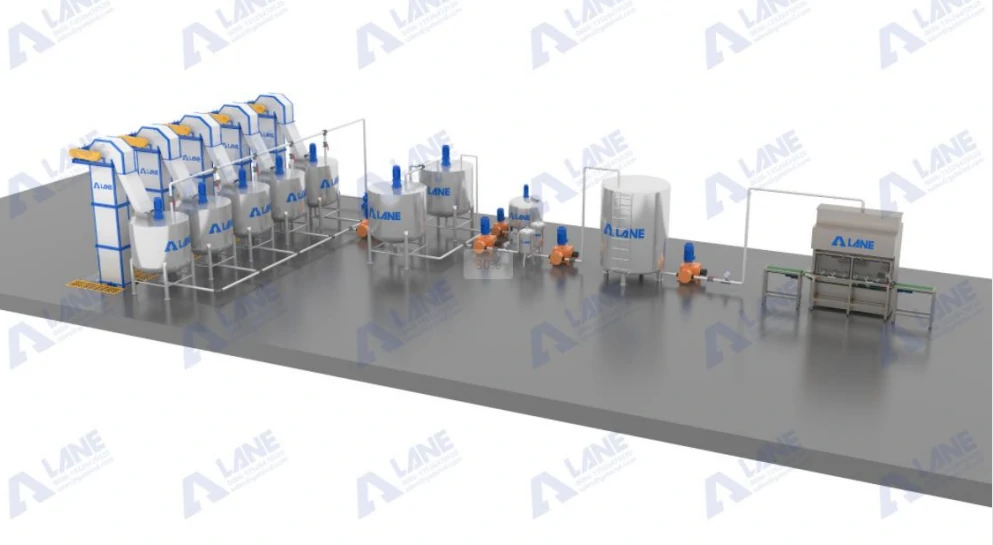
LANE’s innovative emulsified liquid fertilizer production line exemplifies our approach to modern plant-based liquid fertilizer production. The process encompasses:
Quality and Support Commitment
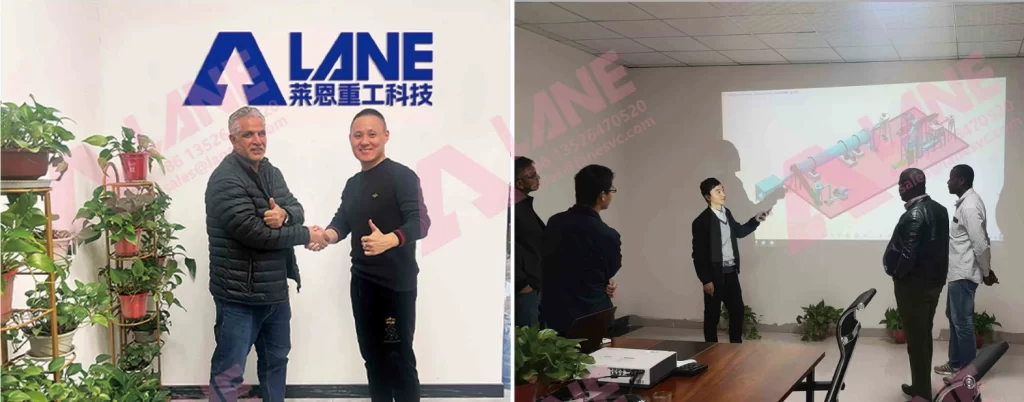
Our equipment carries ISO and CE certifications. We provide 5 years of warranty after shipment. Our one-stop service includes presales consultation, installation guidance, and operator training. We provide crucial support for producers new to plant-based liquid fertilizer production. Our success in projects like the African national fertilizer initiative demonstrates our capability to deliver at any scale.
Choosing the Right Model for Your Business
The decision between small-batch and industrial plant-based liquid fertilizer production depends on multiple factors.
When Small-Batch Makes Sense
Small-batch production is appropriate when:
Industrial plant-based liquid fertilizer production becomes attractive when:
The Phased Approach
Many successful producers adopt a phased approach. They start with small-batch operations—this gives them a chance to test the waters and prove their formulations and market. After that, they scale up with industrial equipment. LANE’s diverse product line supports this journey. We provide equipment that grows with your business.
Q1: What is the minimum investment required for small-scale plant-based liquid fertilizer production?
Basic equipment for small-scale production starts around $13,500, with complete semi-automated lines available for $20,000–50,000. Facility requirements are modest—200–500 square meters typically suffice.
Q2: What capacity can I expect from industrial plant-based liquid fertilizer production equipment?
Industrial lines range from 5 tons per hour ($100,000 investment) to 15–20 tons per hour ($200,000–500,000 investment). A 15-ton line operating eight hours daily produces 120 tons—sufficient for regional distribution.
Q3: How quickly can I expect return on investment?
Payback periods typically range from 6–18 months for well-planned operations. Gross profits of $3,200–12,800 daily are achievable with industrial-scale production, depending on local market conditions.
Q4: What raw materials are used in plant-based liquid fertilizer production?
Common ingredients include seaweed extracts, humic acids, compost teas, plant byproducts, and agricultural waste materials. The specific blend depends on target nutrient profiles and crop requirements.
Q5: Can I use granular NPK fertilizers to produce liquid fertilizers?
Yes, granular NPK can be converted to liquid form using crushers before the batching process. This approach allows producers to utilize existing granular production or purchased granules as raw material sources.
Q6: What quality certifications should I look for in production equipment?
Look for ISO and CE certifications, which indicate compliance with international quality and safety standards. LANE Heavy Industry equipment carries these certifications, with warranty periods extending five years.
Q7: How much space do I need for a liquid fertilizer production facility?
Small-batch operations require 200–500 square meters. Industrial facilities need 2,000–15,000 square meters, depending on capacity and automation level.
Q8: Can I produce different formulations with the same equipment?
Yes, modern plant-based liquid fertilizer production lines accommodate various formulations. Automated batching systems allow precise control for different NPK ratios like 3-1-2, 10-10-10, and 20-20-20.
Q9: What after-sales support does LANE Heavy Industry provide?
LANE offers comprehensive support including remote video guidance, on-site installation instruction, worker training, and field testing of production lines. Their warranty extends five years after shipment.
For more details, please feel free to contact us.
Henan Lane Heavy Industry Machinery Technology Co., Ltd.
Email: sales@lanesvc.com
Contact number: +86 13526470520
Whatsapp: +86 13526470520
Leave a Comment
Latest Posts
LANE has more than 500 successful cases and is committed to providing customers with first-class solutions, high-end machinery and equipment, and one-stop pre-sales, sales and after-sales comprehensive customer service.