
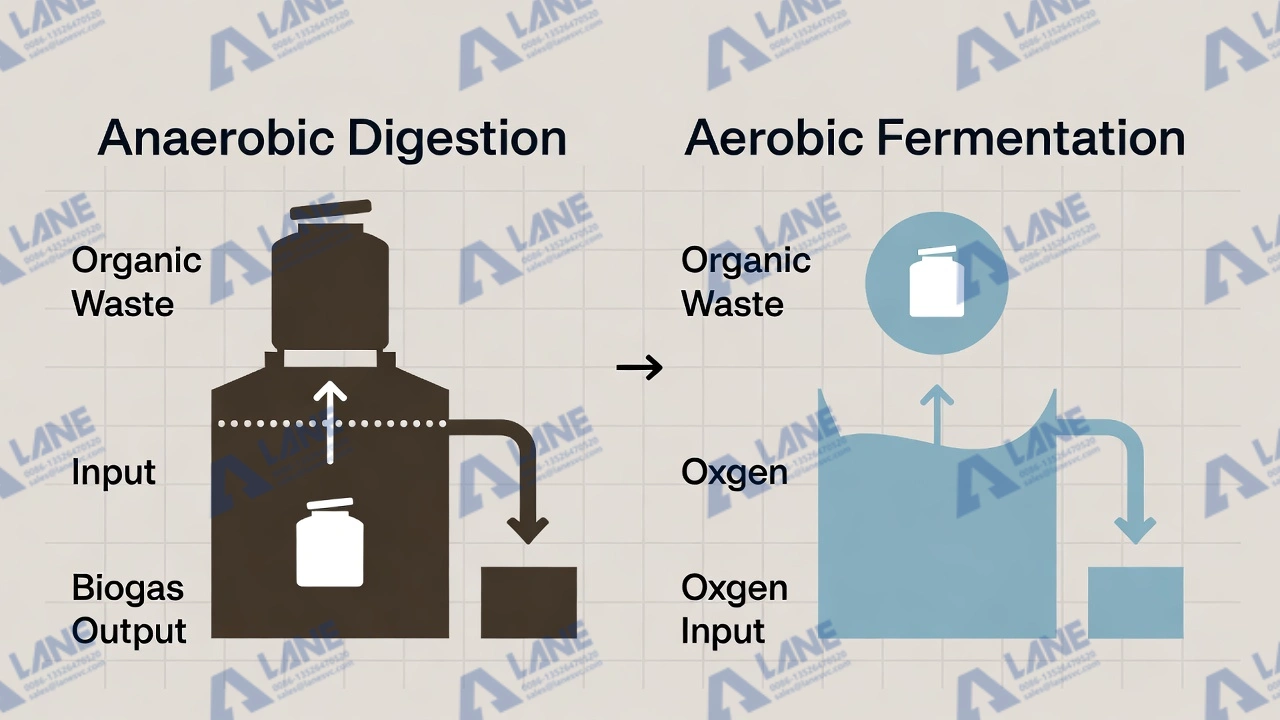
Anaerobic Digestion vs. Aerobic Fermentation: Choosing Your Production Method for Organic Liquid Fertilizers
Table of Contents
Sustainable agriculture, once a trend, has now become the dominating force in the agricultural industry. It has driven the demand for Organic Liquid Fertilizers. They are different from synthetic fertilizers that may harm soil health and contaminate water sources. Organic liquid fertilizers are created from natural organic materials such as animal manure, plant waste, food scraps, and sewage sludge. This makes them safe for the environment, soil, and crops.
Organic Liquid Fertilizers offer numerous benefits, including improved soil structure, enhanced microbial activity, rapid nutrient absorption by plants, and reduced greenhouse gas emissions. Producing high-quality Organic Liquid Fertilizers requires choosing the right fermentation method: anaerobic digestion or aerobic fermentation. This article explores the differences between these two methods, their pros and cons, and how LANE Heavy Industry’s specialized production lines can optimize either process to meet your Organic Liquid Fertilizers manufacturing goals.
The selection between anaerobic digestion or aerobic fermentation dictates the required machinery, production timeline, and the final product’s characteristics.
The following table outlines the critical differences between the two methods to guide your initial assessment:
| Feature | Anaerobic Digestion | Aerobic Fermentation |
| Core Product | Biogas (Renewable Energy) & Liquid Digestate Fertilizer | Organic Liquid Fertilizer & Soil Amendment |
| Process Environment | Sealed, oxygen-free tank (Hermetically sealed). | Open or closed tank with forced aeration. |
| Complexity & Skill | High. Requires careful monitoring of pH, temperature, and feedstock mix to maintain microbial balance. | Moderate. Focus is on managing aeration, temperature, and moisture. |
| Processing Time | Longer retention time (typically 20-40 days). | Generally faster active decomposition (days to weeks). |
| Space Requirement | Compact due to enclosed tanks. | Can require more space, especially for large-scale open systems. |
| Key Advantage | Produces renewable energy; handles high-strength waste efficiently. | Simpler operation; produces fertilizer rich in beneficial aerobic microbes. |
| Primary Challenge | Higher initial capital cost; sensitive to process upsets. | Odor management if not properly controlled; requires energy for aeration. |
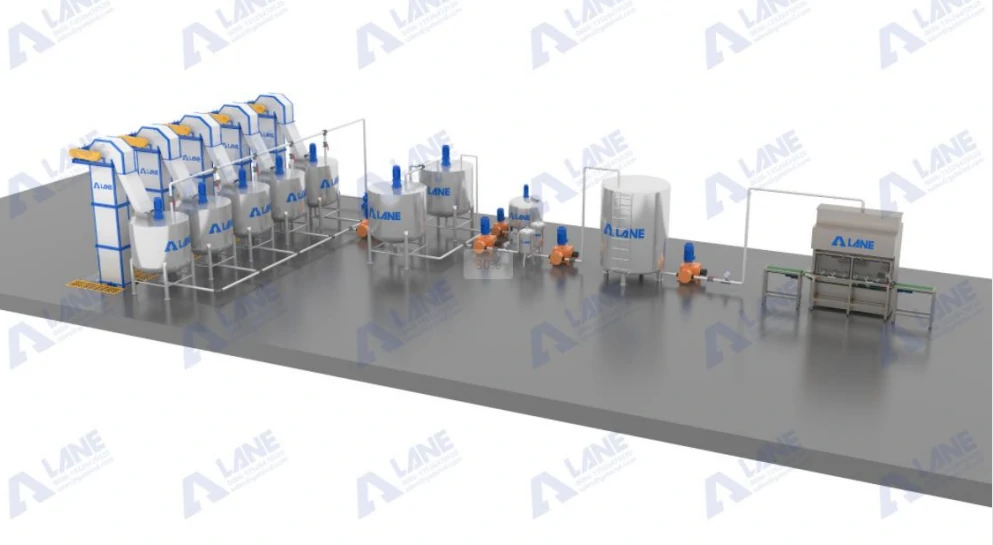
Implementing anaerobic digestion or aerobic fermentation at commercial scale requires reliable machinery. LANE Heavy Industry Machinery Technology Co., Ltd. specializes in providing customized production lines for organic liquid fertilizers. Our machines can support both anaerobic and aerobic pathways.
LANE production line is a system, custom engineered to fit your specific raw materials, desired capacity, and chosen process. Key stages and corresponding equipment include:
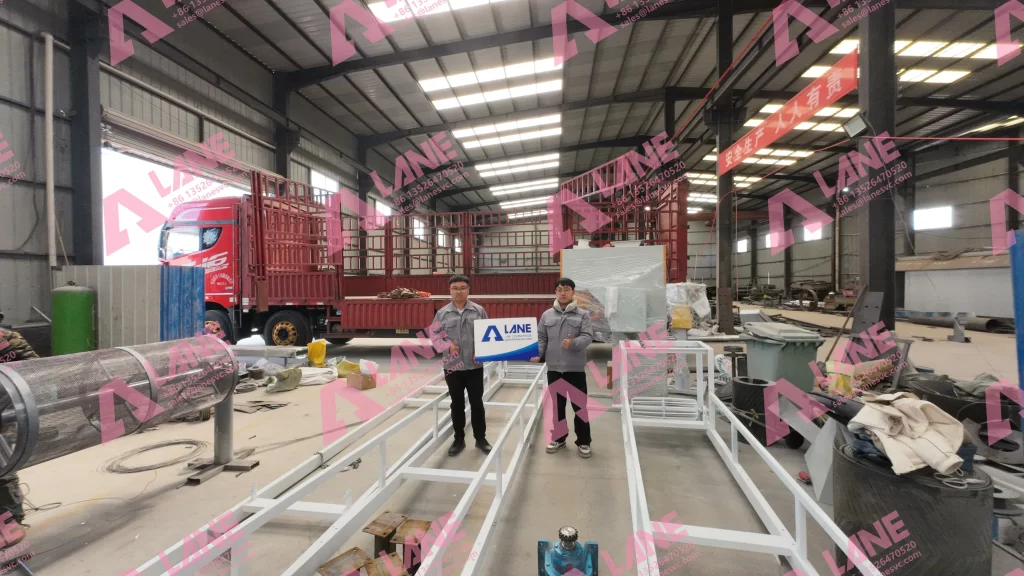
LANE’s strength lies in its end-to-end service. From feasibility testing with your feedstock to designing the layout, manufacturing the equipment, and providing overseas installation support and operator training, we ensure a smooth transition from concept to production.
Your production method should depend on your business model, resources, and goals. Ask these questions:
Producers who are looking to create premium, nutrient-specific products can integrate targeted chelation and gradient membrane separation post-fermentation. These technologies allow for the separation of liquid digestate or ferment into distinct nitrogen-, phosphorus-, and potassium-rich organic liquid fertilizers.
Choosing between anaerobic digestion and aerobic fermentation for Organic Liquid Fertilizers production depends on your production scale, nutrient requirements, and operational goals. There is no universal “best” method for producing organic liquid fertilizers. Anaerobic digestion offers the dual value of energy and fertilizer, suited for resource-intensive operations. Aerobic fermentation provides a direct and often simpler route to creating potent soil amendments. With customizable equipment, comprehensive support, and a focus on sustainability, LANE helps manufacturers and farmers meet the growing demand for Organic Liquid Fertilizers while contributing to a greener, more sustainable agriculture industry.
Which method produces fertilizer faster?
Aerobic fermentation typically has a faster active processing time, often completing the core decomposition in a matter of weeks. Anaerobic digestion requires a longer retention time (often 20-40 days) for microbes to fully break down material and produce biogas.
Can I produce both biogas and high-quality fertilizer?
Yes, but it requires an anaerobic digestion system. This is its key advantage. The process yields biogas as a renewable energy source and a liquid digestate that, with proper post-treatment (like separation, nutrient balancing, and stabilization), becomes a valuable organic liquid fertilizer.
Is LANE’s equipment suitable for small-scale or farm-level production?
LANE provides customized solutions that can be scaled. While they supply large commercial lines, their expertise in modular design means systems can be configured for smaller capacities, such as processing farm waste into organic liquid fertilizers for on-farm use or local sale. It’s best to discuss your specific output goals with them directly.
How do I control odors, especially with aerobic fermentation?
Properly designed aerobic systems manage odors through controlled aeration and biofiltration. The key is maintaining optimal oxygen levels to ensure efficient decomposition by aerobic microbes, which minimizes the production of foul-smelling compounds. LANE’s engineering team can design systems with integrated odor control solutions.
For more details, please feel free to contact us.
Henan Lane Heavy Industry Machinery Technology Co., Ltd.
Email: sales@lanesvc.com
Contact number: +86 13526470520
Whatsapp: +86 13526470520
Leave a Comment
Latest Posts
LANE has more than 500 successful cases and is committed to providing customers with first-class solutions, high-end machinery and equipment, and one-stop pre-sales, sales and after-sales comprehensive customer service.