
Engineering a Complete NPK Suspension Fertilizer Production Line: From Raw Materials to Final Product
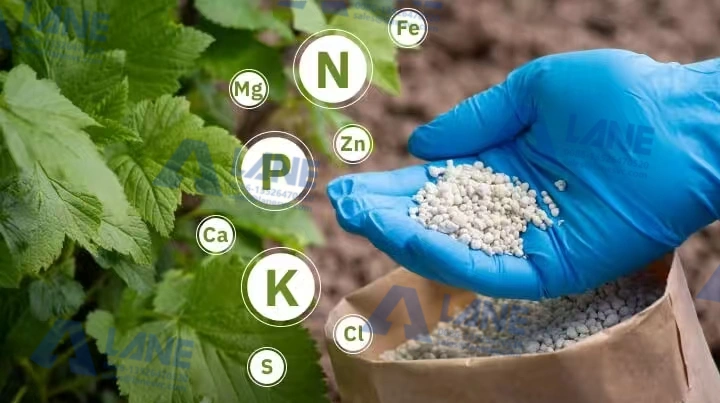
NPK suspension fertilizer is a liquid fertilizer combining nitrogen (N), phosphorus (P), and potassium (K) with trace elements. It has gained popularity in modern agriculture due to its excellent solubility, nutrient absorption, and adaptability. Suspensions are fluid fertilizers where solid micronutrients and fertilizer compounds are uniformly dispersed and suspended in a saturated solution. This type of fertilizer is stabilized by using a clay-based agent.
This unique formulation allows for higher nutrient concentrations and superior compatibility with pesticides and micronutrients. However, achieving this stable product is impossible without a modern, engineered production process. An NPK suspension fertilizer production line is not just about connecting tanks and pipes; it’s a systematic project that involves raw material selection, process optimization, equipment matching, and quality control.
Lane Machinery, a professional manufacturer of agricultural fertilizer production equipment, has rich experience in the design and customization of NPK suspension fertilizer production lines.
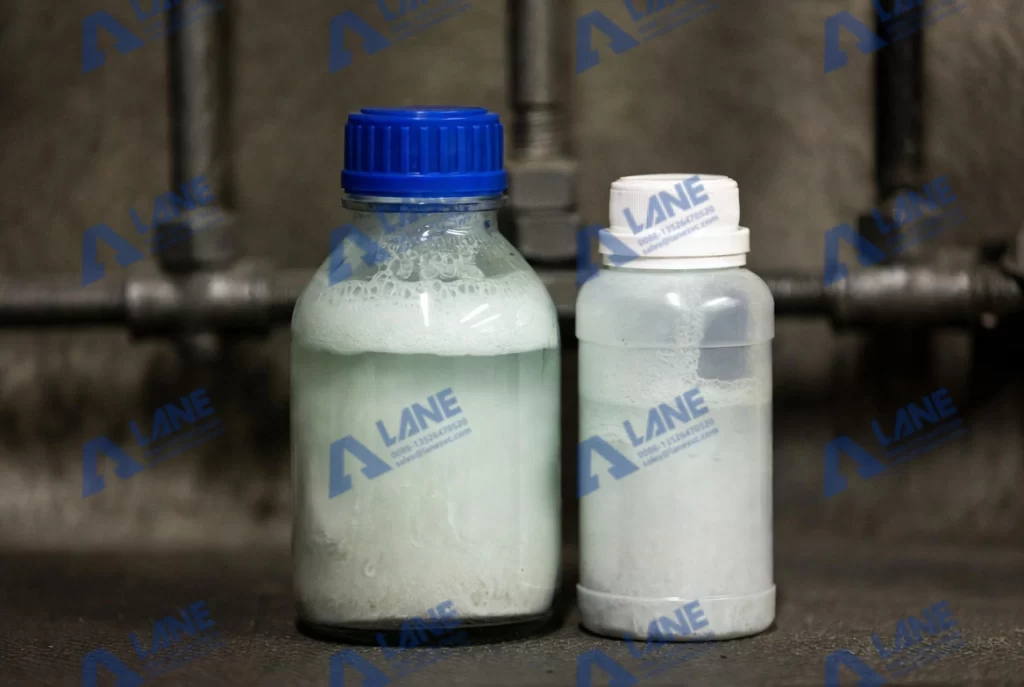
The first step of production is the selection of primary raw materials. The selected NPK raw materials are typically highly soluble.
Secondary nutrients like calcium, magnesium, and sulfur, and micronutrients like zinc, iron, manganese, and boron are used in sulfate or chelated forms. The most important component for creating the “suspension” is the gelling clay (attapulgite or bentonite). This clay, when properly hydrated and sheared, creates a three-dimensional lattice that suspends solid particles and prevents hard settling.
A well-designed line follows a logical, sequential flow:
The LANE NPK suspension fertilizer production line design is defined by its specialized machinery.
A successful NPK suspension fertilizer production line design extends beyond equipment selection:
The design of an NPK suspension fertilizer production line is a systematic project that involves multiple links such as raw material pretreatment, mixing and dissolving, emulsification and homogenization, filtration and impurity removal, filling and packaging, and quality inspection. It demands a deep understanding of fertilizer chemistry, fluid dynamics, and mechanical engineering. A well-executed design ensures product quality, operational efficiency, and a strong return on investment.
Q1: What is the main advantage of a suspension fertilizer over a clear liquid fertilizer?
A1: The primary advantage is the ability to keep higher concentrations of nutrients, especially phosphorus, potassium, and micronutrients, in a stable liquid form. Suspensions allow for uniform application of all nutrients. In clear liquids, certain elements may precipitate out and clog systems.
Q2: Can I use the same production line for different NPK formulations?
A2: Yes, production lines designed by LANE are highly flexible. This is a major benefit of an NPK suspension fertilizer production line design. You can adjust the raw materials in the batching process.
Q3: How important is automation in this type of production line?
A3: Automation is highly recommended. A Programmable Logic Controller (PLC) ensures precise control over batch sequencing, ingredient weights, reaction times, and temperatures. This eliminates human error and guarantees batch-to-batch consistency.
Q4: What is the production capacity range of the NPK suspension fertilizer production line provided by Lane Machinery?
A4: Lane Machinery can provide production lines with a production capacity from 500kg/h to 50t/h. For customers with special production scale requirements, we can also customize the production line based on the customer’s needs.
For more details, please feel free to contact us.
Henan Lane Heavy Industry Machinery Technology Co., Ltd.
Email: sales@lanesvc.com
Contact number: +86 13526470520
Whatsapp: +86 13526470520
Leave a Comment
LANE has more than 500 successful cases and is committed to providing customers with first-class solutions, high-end machinery and equipment, and one-stop pre-sales, sales and after-sales comprehensive customer service.