
NPK Liquid Fertilizer Production Process
NPK liquid fertilizer is in high demand for its fast absorption and flexible application in modern agriculture. It’s a nutrient-rich solution that delivers Nitrogen (N), Phosphorus (P), and Potassium (K) to crops. For a beginner entrepreneur trying to enter the field, mastering the NPK liquid fertilizer production process and choosing reliable equipment are essential.
This article provides you with guidance on how the NPK liquid fertilizer production process works and how LANE’s machinery can simplify your journey.
The production of NPK liquid fertilizer is a harmony of precise chemical and physical processes.
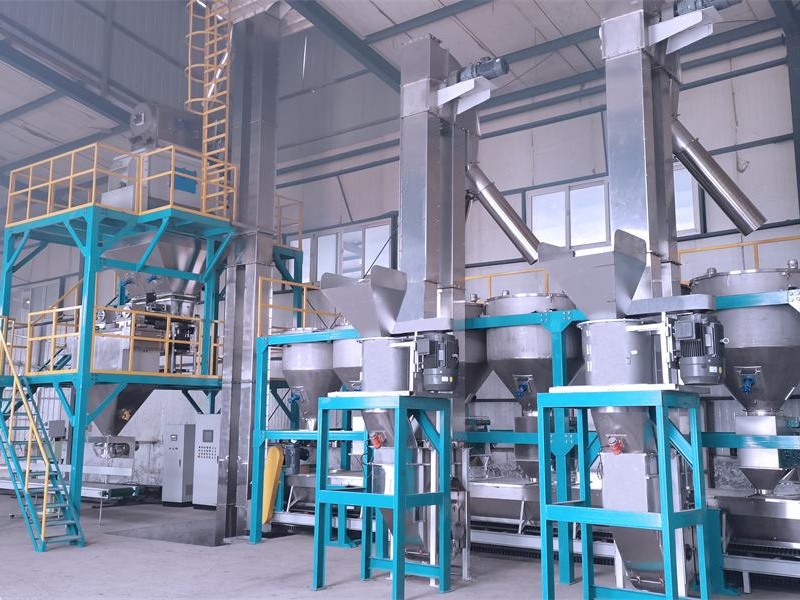
The raw materials can often be found in solid or concentrated liquid form. LANE’s intelligent batching system is essential for the first stage. It automatically weighs and conveys raw materials with less than 0.2% margin of error, which eliminates the manual mistakes common among beginners.
After the raw materials are sent into the NPK liquid fertilizer production process, they are conveyed to the raw material mixing tank. Where raw materials are dissolved with water, typically heated to between 50-70°C. In this process solid raw materials are turned into a uniform liquid. LANE’s high-speed shear mixing tank is designed for this critical stage. This machine can dissolve raw material completely without forming lumps or settling at the bottom of the tank.
Then those raw materials are transferred to the main mixing tank where the raw materials from different batches are mixed according to your formula. In this process raw materials are mixed in a controlled environment.
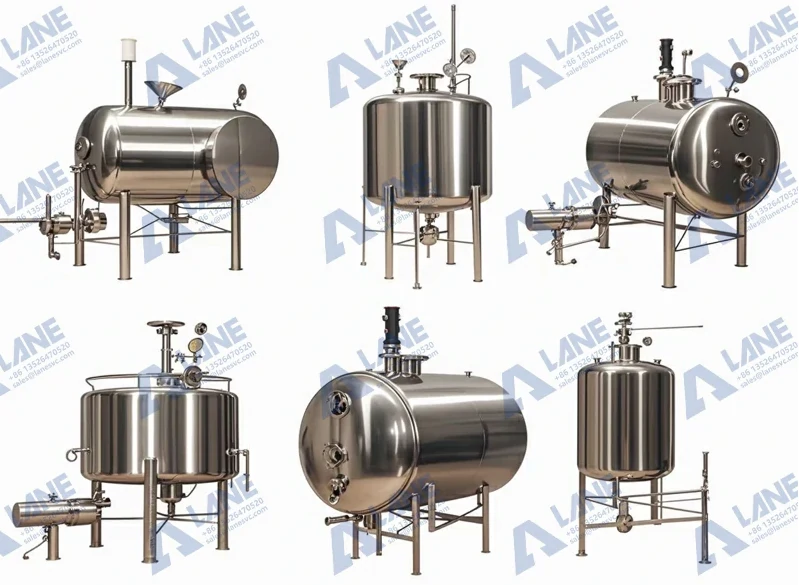
After the main mixing tank, raw materials are sent to the additive mixing tank for chelation. It is unique to organic or NPK liquid fertilizer production process. Trace elements like iron and copper need to be chelated to avoid reacting with NPK components.
This mixing setup is what separates a basic mixture from a premium, effective fertilizer. Micronutrients like Iron, Zinc, and Manganese are essential for plant health. But they are prone to “precipitating” or falling out of solution, becoming unavailable to plants. To prevent this, chelating agents like EDTA are added.
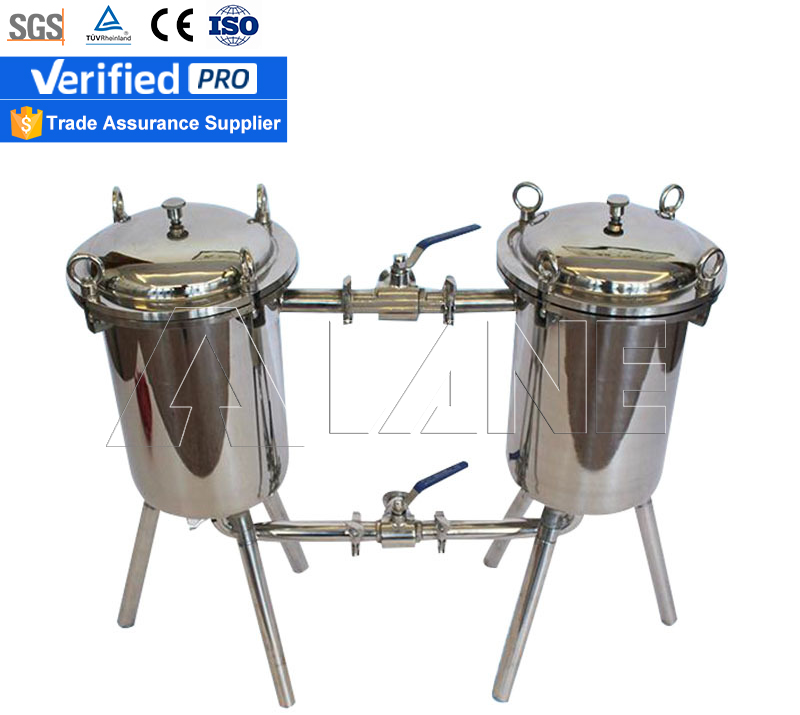
The next step of the NPK Liquid Fertilizer Production Process is filtration. In this process any undissolved particles and impurities are removed via a filtration system. Without filtration the liquid fertilizer will look cloudy and will clog the application equipment.
LANE Heavy Industry provides a Duplex filtration system. In this filtration system when one chamber is working, the second chamber will clean itself. Also, when one is clogged, the liquid will automatically move to the other chamber. This results in a clear, impurity-free fertilizer solution.
The final liquid solution is sent to storage for stabilization. The storage tank contains a stirring system that can be controlled by the PLC. This step is essential. Right after the filtration the liquid solutions are too active. If you pack the solution at this stage then it might harm the plant or lose effectiveness.
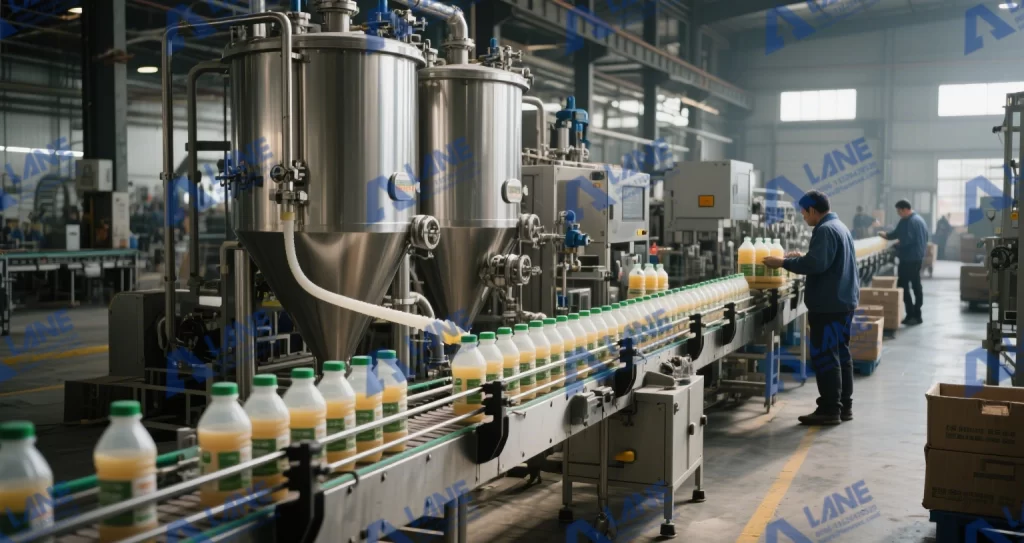
After that the purified stable liquid is transferred to the automatic filling and packaging machine. This machine can accurately fill bottles, jerricans, or IBC totes, sealing them for shipment and sale.
The whole system can be controlled automatically from a central system. The PLC can watch pH sensors and temperature from the screen. LANE’s on-line detection equipment continuously monitors nutrient content and pH value, sending real-time data to the control system. This system can be made fully automated.
For a beginner, managing the NPK Liquid Fertilizer Production Process with separate, uncoordinated equipment will lead to complex situations full of errors and lost batches.
An integrated LANE NPK liquid fertilizer production line offers significant advantages:
With LANE Machinery’s integrated solutions, the complex NPK liquid fertilizer production process can easily be mastered by a beginner. By partnering with us you lay the foundation for a successful venture. By following this step-by-step guide and leveraging LANE’s expertise, you can build an efficient, profitable NPK liquid fertilizer production line.
For more details, please feel free to contact us.
Henan Lane Heavy Industry Machinery Technology Co., Ltd.
Email: sales@lanesvc.com
Contact number: +86 13526470520
Whatsapp: +86 13526470520
Leave a Comment
LANE has more than 500 successful cases and is committed to providing customers with first-class solutions, high-end machinery and equipment, and one-stop pre-sales, sales and after-sales comprehensive customer service.