A Step-by-Step Guide to Setting Up a Liquid Fertilizer with High Nitrogen Production Line
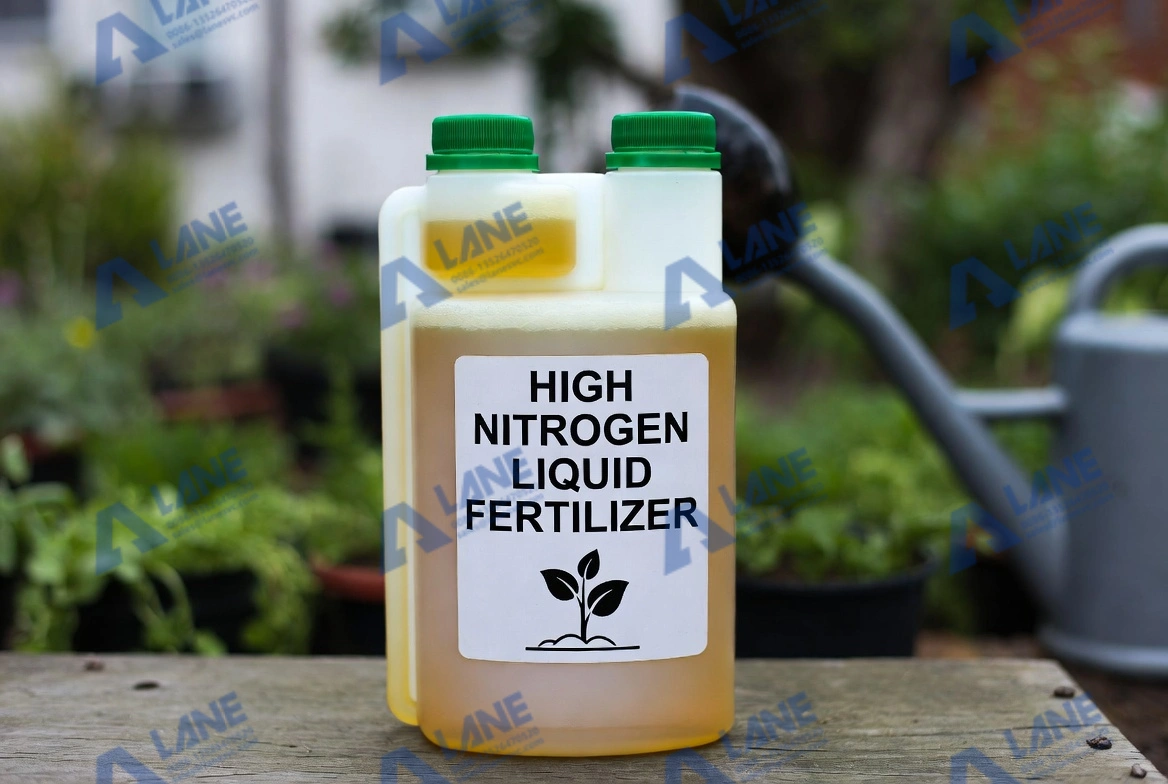
For agri-business and fertilizer producers looking to capitalize on the growing demand for precision nutrients, Liquid fertilizer with high nitrogen is a profitable and strategic investment. Liquid fertilizer with high nitrogen is a high-efficiency fertilizer represented by urea-ammonium nitrate solution (UAN) with a nitrogen content of 28%-32%. Liquid fertilizer has the advantages of rapid absorption, convenient application which is suitable for drip irrigation, sprinkler irrigation, etc. and flexible formula adjustments. This makes it valuable for modern precision agriculture.
LANE Heavy Industry, a professional manufacturer of fertilizer machinery, provides integrated solutions for high-nitrogen liquid fertilizer production lines. Our production line features intelligent control and energy conservation. This guild will explain the critical steps from initial planning to full-scale production.
Table of Contents
Phase 1: Planning and Formulation
Phase 2: Core Equipment from LANE Heavy Industry
Phase 3: Plant Layout and Installation
Phase 4: System Calibration and Trial Runs
Phase 5: Standard Operating Procedures (SOPs) and Scaling Up
Frequently Asked Questions (FAQ)
Phase 1: Planning and Formulation
A solid foundation is necessary before any equipment is ordered.
Market & Product Definition: You must determine your market (row-crop farmers, horticulture, large tobacco plantation) and the specifications of your liquid fertilizer with high nitrogen. Will you produce UAN (Urea Ammonium Nitrate) solution, an ammonium nitrate-based formula, or a compound blend with secondary nutrients?
Raw Material Sourcing: You must secure a consistent supply of high-quality raw materials. Typical raw materials for nitrogen fertilizers are urea, ammonium nitrate, or aqueous ammonia as well as water, stabilizers, and chelating agents.
Capacity Planning: Calculate your desired daily output. This decision will determine the size and capacity of the production line that you will order from LANE. You also must consider room for future expansion.
Site Preparation: You also must acquire a facility with proper flat space, utilities (water, electricity, compressed air). The land must also have proper drainage and ventilation. You must prepare safety protocols for handling nitrogen-rich materials.
Phase 2: Core Equipment from LANE Heavy Industry
A liquid fertilizer with high nitrogen production line from LANE Heavy Industry consists of integrated, heavy-duty components designed for durability and precision.
Raw Material Storage Tanks: LANE provides corrosion-resistant 316 stainless steel tanks for storing aqueous ammonia, UAN solution, or other nitrogen precursors.
Reaction & Mixing Vessels: This is where the liquid fertilizer with high nitrogen is created from the raw materials. LANE’s automated batching systems convey the raw materials to high-shear mixers to ensure complete dissolution and homogeneous blending. This is critical for product consistency and prevents salt crystallization.
Heating/Cooling Systems: Depending on the formulation, the reaction requires controlled heating to accelerate dissolution or cooling to stabilize the final product. LANE integrates temperature control units into the production line.
Filtration and Purification System: To ensure a clear, particle-free premium product, LANE uses dual filter systems to remove any undissolved impurities.
Automated Control Panel: This is the nerve of the operation. LANE’s PLC-based control systems allow for precise recipe management and monitoring of pH, density, and temperature.
Finished Product Storage & Loading: From the production vessel, the finished liquid fertilizer with high nitrogen is transferred to large storage tanks. After that, the liquid is routed to automated filling stations for drums, IBCs, or bottles.
Phase 3: Plant Layout and Installation
Efficient workflow and safety measures dictate the layout of the factory.
Flow Design: LANE designs the plant layout on a logical linear flow: Raw Material Receiving → Storage → Batching/Mixing → Filtration → Finished Product Storage → Loading. This minimizes pipe distance and eliminates any potential for contamination.
Professional Installation: LANE provides detailed layout drawings and technical support to our customers. We provide supervision so that the installation process goes smoothly. Proper foundation work, piping (using compatible materials for corrosive substances), and electrical hookups are critical.
Safety Systems Integration: Our design incorporates secondary containment, emergency showers, eye-wash stations, and gas detection systems (for ammonia if used) as part of the installation. All LANE equipment is properly integrated with safety shutoffs.
Phase 4: System Calibration and Trial Runs
With installation complete, we provide training and fine-tune the production line before handing over the factory.
Equipment Calibration: We calibrate all sensors (flow meters, load cells, pH probes, density meters) and control valves. Accuracy is important for product quality.
Water Test: We do test runs with the entire production line with water to check for leaks, verify mechanical functionality, and test the control sequence without using raw materials.
First Production Batch: We execute a small first batch with raw materials to monitor the entire process closely. We also check reaction times, temperature stability, and final product clarity and density.
Lab Analysis: Send samples from your first batches to your lab for complete nutrient analysis. Compare results against your target formula to identify any adjustments needed in the batching recipe or process parameters.
Phase 5: Standard Operating Procedures (SOPs) and Scaling Up
The final step is institutionalizing knowledge and ramping up production.
Develop SOPs: Our PLC monitoring system documents every step of operation, maintenance, cleaning, and safety emergency response. We train all your technicians so that they can run the production line smoothly.
Quality Control Protocol: You must establish a routine QC checklist: test raw materials when they arrive, perform in-process checks, and verify the final product before release.
Preventive Maintenance: Implement a schedule-based maintenance system based on LANE’s manuals. It will help maintain peak equipment performance and the longevity of your equipment.
By following these steps and leveraging the engineering efficiency of LANE Heavy Industry machinery, you can transform your project from concept into a profitable, smoothly operating factory which delivers high-quality liquid fertilizer with high nitrogen to the market.
Frequently Asked Questions (FAQ)
Q1: What is the minimum space required for a LANE liquid fertilizer production line?
A1: Space requirements vary significantly with capacity. A compact, semi-automatic line for small-scale production might fit in 500-800 sq. meters, including storage. A full-scale, automated line requires a dedicated plant building. LANE engineers provide layout plans based on your output goals and site specifics.
Q2: Can the production line be customized for different formulations of liquid fertilizer with high nitrogen?
A2: Absolutely. A key strength of LANE Heavy Industry’s design is flexibility. The reaction vessels, mixing systems, and control software can be configured to handle various nitrogen sources and recipes, allowing you to produce different grades (e.g., 28%, 30%, 32% N) or add supplements like herbicides or micronutrients.
Q3: What is the lead time from ordering to commissioning the production line?
A3: The total timeline typically ranges from 4 to 8 months. This includes detailed engineering, manufacturing of custom components, factory testing, shipping, and on-site installation/commissioning. LANE provides a clear project schedule upon finalizing the equipment design.
Q4: How is the consistency and accuracy of the high-nitrogen concentration ensured?
A4: Consistency is achieved through LANE’s automated batching system. Precision load cells measure raw materials by weight, and in-line density and conductivity meters provide real-time feedback to the PLC, which can make micro-adjustments during production to guarantee every batch meets the exact specification.
Q5: What kind of after-sales support does LANE provide?
A5: LANE offers comprehensive support, including detailed operation/maintenance manuals, on-site installation guidance, operator training programs, and ongoing remote technical support. They also supply genuine spare parts to ensure the long-term reliability of your production line.
LANE has more than 500 successful cases and is committed to providing customers with first-class solutions, high-end machinery and equipment, and one-stop pre-sales, sales and after-sales comprehensive customer service.