
Optimizing Liquid Fertilizer Batch Mixing for Consistent Nutrient Analysis
Liquid fertilizer is popular for its high absorption rate, quick effect, and easy application. It has now become a critical part of modern agricultural production. For fertilizer production, the NPK ratio must be printed along with the key micronutrients on the label. The liquid fertilizer batch mixing stage is the most critical stage for maintaining that.
The consistency of nutrient content directly determines the fertilizer’s effectiveness and safety. Consistent nutrient analysis isn’t just a regulatory requirement; it’s also what helps maintain crop efficacy for farmers and brand integrity for your company. The liquid fertilizer batch mixing stage determines if the consistency of your production is broken or maintained.
Optimizing the liquid fertilizer batch mixing is a controlled, repeatable operation that ensures every drop of your fertilizer contains the same amount of nutrients. Inconsistent mixing can lead to uneven nutrient content in finished products.
Without an optimized liquid fertilizer production line, producers face some challenges.
Incomplete Dissolution & “Hot Spots”: The raw NPK materials are usually dry when they enter production. They can cause clumps, which lead to uneven nutrient distribution within the batch.
Settling and Stratification: Dense components of the solution can settle even before storage; this causes the top and bottom of the tank to have different nutrient ratios.
Sequencing Errors: Adding chemicals in the wrong order can cause micronutrients to lock out, rendering them unavailable to plants.
Inaccurate Metering: Reliance on old, inconsistent valves or imprecise pumps leads to volumetric errors. This changes the entire formulation of the production.
Inefficient Mixing Energy: Inefficient mixing can cause the production of a wasted batch. Undermixing creates inconsistency, while overmixing can introduce unwanted air that degrades certain components.
An optimized liquid fertilizer batch mixing station is built on three pillars:
Precision Ingredient Handling: One of the most important parts of liquid fertilizer batch mixing is its precise ingredient handling system. This involves load cells, pumping, and dosing. This moves the process from volume-based (imprecise) to mass-based (highly accurate) measurement.
High-Efficiency Agitation: The mixer must be properly equipped to handle the tank’s volume and the solution’s viscosity. It should create enough flow patterns to eliminate dead zones where material can settle.
Process Control & Automation: A programmable logic controller (PLC) manages the entire production. It adds ingredients in the correct order, controls mix times, tracks batch recipes, and records all data for traceability.
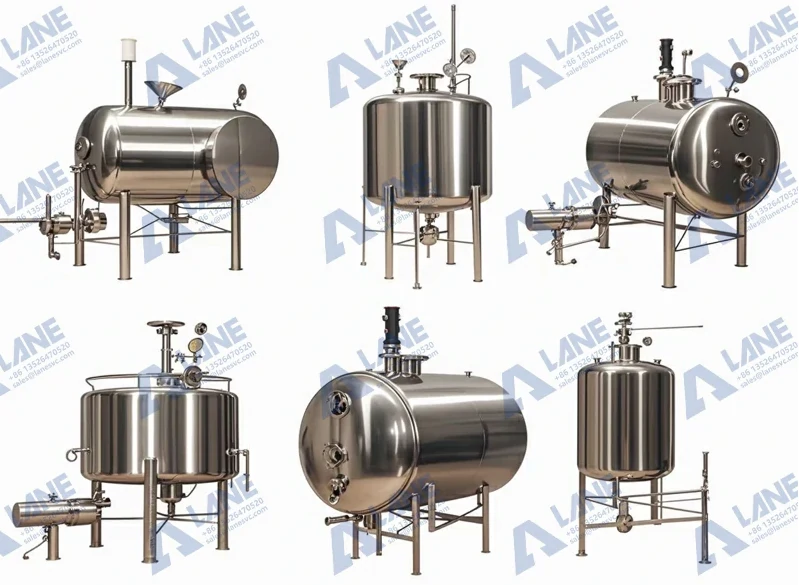
LANE Heavy Industry designs machinery that solves the challenges of liquid fertilizer batch mixing.
LANE High-Shear Side-Entry Mixers: LANE’s mixers are engineered for rapid dissolution and mixing. Our mixer can mix dry powders into liquids by incorporating a powerful motor. Our design creates powerful suction that draws materials from the surface down into the high-shear zone; this eliminates dust and clumps to ensure homogeneous dispersion.
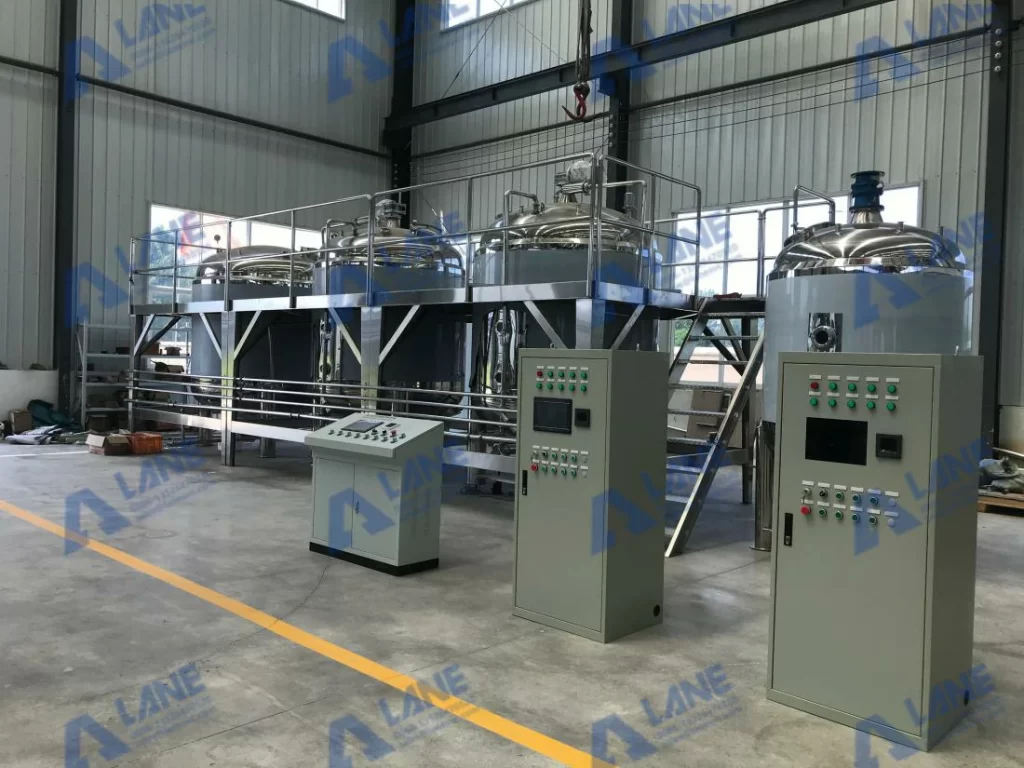
LANE Batch Process Control System: Our turnkey automation package integrates load cells, pneumatic valves, and pumping stations. Operators simply add and select a recipe. The system automatically sequences ingredients, controls mix times, and logs every batch’s data. This eliminates human error and ensures perfect repeatability.
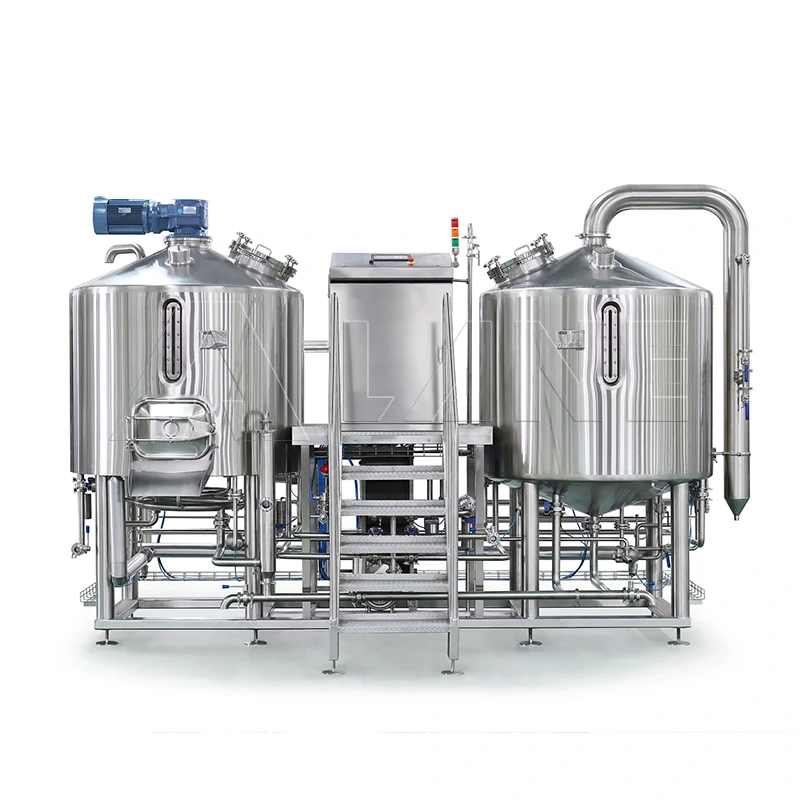
Durably Constructed Mixing Tanks & Vessels: LANE Heavy Industry uses corrosion-resistant 304SS and 316SS to create the mixing vessels. LANE tanks are designed with strategically placed baffles and mixer mounting points to optimize flow patterns for consistent liquid fertilizer batch mixing.
Even with the best equipment, protocol is key:
Master the Sequence: Always follow a defined order of adding materials.
Leverage Your Control System: Use the automation system to enforce minimum and maximum mixing times between additions.
Validate and Sample: Establish a standard post-mix sampling procedure. Use lab analysis to regularly validate that your process is hitting the target.
Prioritize Maintenance: Maintenance is key to the longevity of a production line. Arranging regular inspection and maintenance will help you prevent leaks and ensure metering accuracy.
Investing in an optimized liquid fertilizer batch mixing line delivers a premium product which yields returns:
Reduced Waste & Rework: Eliminating off-spec batches means no costly reprocessing or downgrading of product.
Lower Raw Material Costs: Precision metering ensures you are not overusing your raw materials.
Enhanced Brand Trust: Delivering a consistent product will create a loyal customer base. It will help you retain your existing customers while allowing you to expand.
Regulatory Compliance & Traceability: Automated batch records provide documentation which you can use for audits and label claims.
Q: What is the main advantage of weigh-scale batching over volumetric batching?
A: Weigh-scale batching (using load cells) measures ingredients by mass, which is unaffected by temperature or air bubbles. Volumetric measurements (by pump strokes or tank levels) can vary with these conditions, leading to less accurate and consistent batches.
Q: How do I determine the right size and type of mixer for my batch tank?
A: This depends on tank volume, the specific gravity and viscosity of your final products, and the types of raw materials (especially dry powders). LANE Heavy Industry’s engineering team typically calculates required horsepower and recommends mixer type (e.g., top-entry vs. side-entry, high-shear) based on these application-specific factors.
Q: Can automation be added to an existing manual batch mixing line?
A: Yes. Retrofitting is common. A system like a PLC can be integrated with existing tanks by adding load cells, automated valves, and new pumps. This is a highly effective way to upgrade consistency without a complete facility rebuild.
Q: Why is mixing sequence so important?
A: Chemical compatibility is critical. Adding certain phosphates to a high-pH solution, or mixing sulfates with calcium in the wrong environment, can cause permanent precipitation. A defined, automated sequence locks in the correct chemistry for a stable, clear solution.
Consistent nutrient analysis is achieved by a meticulously engineered and controlled liquid fertilizer batch mixing process. LANE Heavy Industry’s liquid fertilizer batch mixing equipment, with its high-precision stirring system, intelligent control system, and raw material pretreatment function, provides an effective solution for solving the challenges in the traditional mixing process.
For more details, please feel free to contact us.
Henan Lane Heavy Industry Machinery Technology Co., Ltd.
Email: sales@lanesvc.com
Contact number: +86 13526470520
Whatsapp: +86 13526470520
Leave a Comment
Latest Posts
LANE has more than 500 successful cases and is committed to providing customers with first-class solutions, high-end machinery and equipment, and one-stop pre-sales, sales and after-sales comprehensive customer service.