
How to Make Your Own Organic Liquid Fertilizer
Organic liquid fertilizer is one of the most popular fertilizer in modern agriculture industry. Its improves soil health and supplies instantly available nutrients and boosts plant root health and immunity. It does all of those without harming the ecosystem.
The demand of sustainable agriculture is growing day by day. As the demand grows so does the scale of farming. Farmers and entrepreneurs are increasingly interested in learning how to make their own fertilizer.
Producing your own liquid fertilizer is surprisingly simple with the help of LANE heavy machinery. Its more economical then buying from the market. It can also be grown into a profitable product line. With the support of professional equipment manufacture like LANE Heavy Industry’s small scale liquid fertilizer production line, you can ensure safety, consistency, and larger-scale production to meet market needs
By the end, you will have the fully understand industrial methods for producing high quality organic liquid fertilizer.
Organic liquid fertilizer is nutrient rich liquid which was created from biological materials such as compost, animal manure, plant residues, seaweed, food waste, fish protein, or biogas slurry. Liquid fertilizers can supply nutrients through foliar spraying, irrigation systems such as drip or sprinkler lines.
The primary benefits of organic liquid fertilizers includes fast absorption, has improved soil microbiology, can be easily applied and has the ability to mix additives such as amino acids or trace minerals.
It is also suitable for hydroponics and greenhouse farming.
Because of all of these advantages, organic fertilizer has become one of the fastest growing agricultural products.
Producing your own liquid fertilizers at home or in a commercial setting can offer multiple advantages.
Cost Savings: Commercially sold liquid fertilizers are expensive. In house solutions reduces the cost and dependency on the the purchased fertilizer.
Environmental Benefits : Using waste materials like crop residues, animal waste, or kitchen scraps helps clean up the environment and reduces pollution.
Customization Formulas: You can adjust the nitrogen levels, microbial content, trace minerals and organic acids of your own produced fertilizers. This allows farmers to create blends for targeted crops.
Business Opportunity : You can sell bottled liquid fertilizer for profit to the agricultural supply stores, organic farms, home gardening markets.
With proper equipment such as a LANE Heavy Industry liquid fertilizer production line, you can manufacture professionally and profitably.
The quality of any fertilizer depends on the raw materials. Below are the most commonly recommended sources.
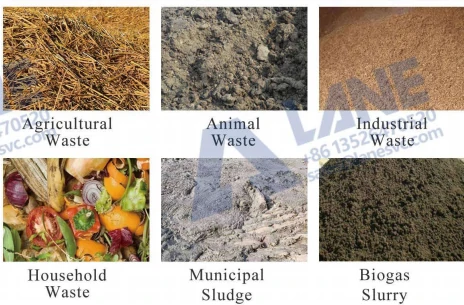
Animal-Based Materials: The animal based materials can be cow manure, poultry manure. goat manure, fish waste or fish emulsion, rabbit manure, biogas liquid slurry, livestock and poultry wastewater. Those materials can supply abundant nitrogen and beneficial microbes.
Plant Based Materials: Organic raw materials from plants have high nitrogen. Some of those materials are grass clippings, crop residues, molasses, seaweed, leaves. Those raw materials are ideal for environmentally friendly farming.
Food & Organic Waste: Those raw materials supplies trace minerals and organic acids to the crops. Some of those raw materials are fruit and vegetable scraps, sugarcane waste, brewery waste, coffee grounds.
Additives: To enhance nutrient availability and shelf stability, organic liquid fertilizers are sometimes mixed with amino acids, humic acid, fulvic acid, seaweed extract and micro mineral solutions.
If you want to produce liquid fertilizer for a medium and large size farm its batter to use machinery. If you use machinery, you can scale the production line for the commercial use. This is where a liquid fertilizer production line is essential.
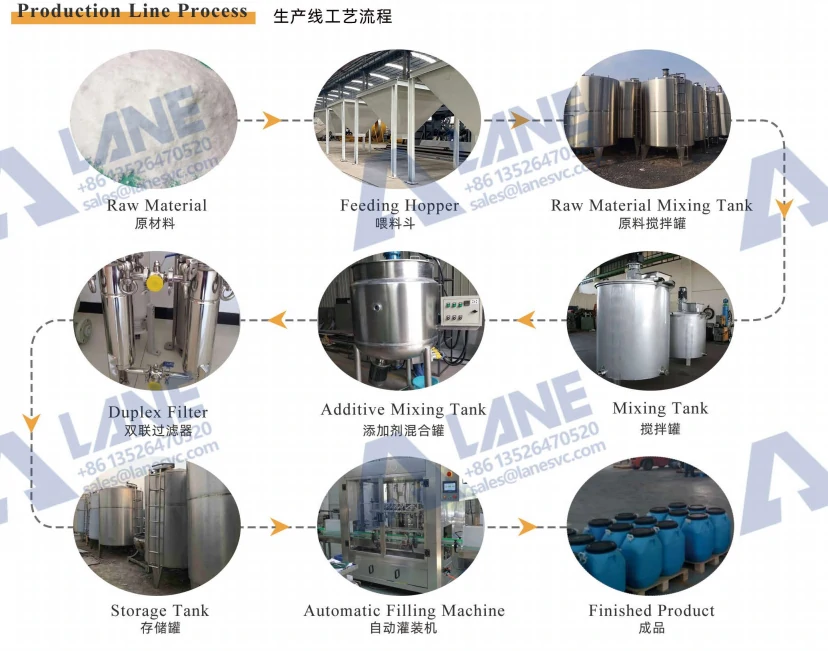
Below is the standard industrial flow used by LANE Heavy Industry:
Raw material → Feeder → Raw material mixing tank → Mixing tank → Additive mixing tank → Duplex filter → Storage → Automated filling machine → Finished product
Let’s explain the stages:
Raw Material Feeding
The first step is delivering the raw materials to the feeding. Raw materials such as manure extract, plant liquids, fish protein, or biogas slurry are delivered to the feeder.
This ensures stable and continuous feeding to prevent manual waste and contamination.
Raw Material Mixing Tank: from feeder the raw materials are transfer to the stainless steel mixing tank where raw materials undergo preliminary mixing. This balances moisture content and homogenizes the base liquid.
Main Mixing Tank: The main mixing tank mixes different batch of raw materials. It can do deep homogenization,controlled heating, it breakes down particles, activates beneficial microbes. LANE’s mixing tanks include stainless-steel construction and automatic temperature control.
Additive Mixing Tank: after main mixing tank liquid solution are moved into the additive mixing tank where optional ingredientslike EM bacteria, amino acids, humic acid, chelated minerals, fulvic acidare added. Those material allows precise formulation adjustments for different fertilizer types.
Duplex Filter: duplex filter removes particles or impuritiesfrom the liquid solutions. It can run continiously. When one side is running other side cleans itself. When one side getas stuck all the materials automatically moves to the other side. It achieves a clean, smooth product suitable for drip irrigation, spraying, and commercial packaging.
Storage Tanks: The filter liquid the moved and collected in sealed stainless-steel tanks. Here the organic liquid fertilizer gets stabilize before packing. It also allows buffer time before bottling.
Automated Filling Machine: The organic liquid fertilizer then moved into the automated filling machine. It fills the liquid fertilizers in bottles, jars, containers, industrial drums. It ensures filling, sealing, labeling, and hygienic packaging
If you want to produce organic liquid fertilizer safely, cleanly and faster then traditional DIY method . LANE heavy industry offers a turnkey solution. Small scale organic liquid fertilizer production line. This small scale liquid fertilizer production line designed for farms, cooperatives, small factories and start ups.
The Key Advantages Of This Production Line Are:
Compact and Space-Saving: This organic liquid production line is designed to fit into small workshops, farm buildings, or warehouses without requiring large industrial space.
Fully Stainless-Steel Construction: The materials are made of food grade stainless steel. It prevents corrosion, ensures hygiene, and increases equipment lifespan.
Highly Efficient Mixing and Fermentation: The organic liquid fertilizer production line can blend the nutrient uniformly, do proper microbial activation, can controll temperature and has fast production cycles. Which makes the organic liquid fertilizer into a higher quality liquid fertilizer then traditional and modern fertilizers.
Automated Filtration and Packaging: This production line can do automated filling and filtering and don’t require any human intervention. The liquid filtration is consistent. LANE’s automated filling machine gives your product a professional, market-ready appearance.
Safe, Clean, and Environmentally Friendly: The whole production line is safe, clean and closed. Which prevents odors and leakage and insect contamination. This is especially important for farms located near residential areas.
Suitable for Many Raw Materials: LANE’s system works with biogas slurry, fish waste, livestock wastewater, plant extract liquids, compost extract, amino acid liquids, seaweed concentrates. This allows producers to respond to market demand easily.
Perfect for Start-Ups and Small Producers: Anyone can begin with a small investment and expand later. LANE also provides:
Plant layout design
Installation guidance
Formula consulting
After-sales support
This small scale production line makes producing easy even for beginners who have never produced fertilizer before.
To be successful in Organic liquid fertilizer production, the producer must maintain some steps.
Maintain Cleanliness: Cleanliness is essential step of the liquid organic fertilizer production line. Clean products don’t attract less harmful bacteria. Always keep tanks, containers, and tools clean to avoid harmful bacteria.
Control Temperature: Use temparature as your advantage. Warm conditions increase microbial activity, while cold conditions slow fermentation.
Avoid Excess Salts or Oils: These can reduce effectiveness in foliar spraying.
Monitor pH Levels: Ideal pH range is 5.5–7.5. exceeding this is harmful for the plant.
Store Properly: Use sealed containers and avoid direct sunlight.
Test Before Commercial Sale: Check NPK levels, microbial counts, shelf stability before commercial sale.
LANE heavy industry provides technical support and training to the sellers.
Making organic liquid fertilizer is both practical and easy. It is also practical and rewarding. Small scale gardeners can easily follow DIY fermentation methods using raw materials such as manure, plant leaves and kitchen waste. For medium and large scale a safer, cleaner and with more consistent results will bring more profit. Also Using waste materials like crop residues, animal waste, or kitchen scraps supports recycling and reduces pollution.
The LANE Heavy Industry small-scale liquid fertilizer production line provides the perfect solution for producing high-quality, market-ready organic fertilizers. It supports efficient raw material processing, precise mixing, additive control, high-quality filtration, and automated packaging. all within a compact and affordable system.
For more details, please feel free to contact us.
Henan Lane Heavy Industry Machinery Technology Co., Ltd.
Email: sales@lanesvc.com
Contact number: +86 13526470520
Whatsapp: +86 13526470520
Leave a Comment
Latest Posts
LANE has more than 500 successful cases and is committed to providing customers with first-class solutions, high-end machinery and equipment, and one-stop pre-sales, sales and after-sales comprehensive customer service.