

Market Access 101: Meeting EU Regulations for Liquid Fertilizer Manufacturing
The European market offers many opportunities, but it also demands strict adherence to its rules. Products that fail to meet the requirements are barred from sale, and manufacturers face reputational and financial risks. Therefore, designing your manufacturing process around EU regulations for liquid fertilizer manufacturing from the beginning is the most efficient path to secure and sustain market access.
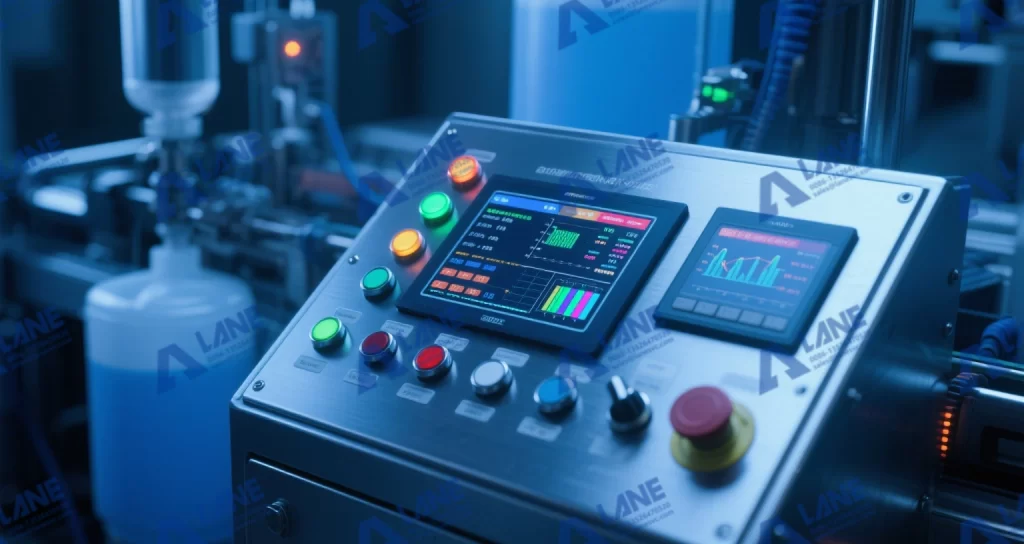
Compliance is built on three interconnected regulatory foundations.
This is the cornerstone regulation. It establishes rules for placing fertilizing products on the EU market. It created the “CE marking” for fertilizers.
Your machinery manufacturer is your compliance partner. A line built without regulatory foresight can bring you trouble with EU regulatory boards. Key machinery requirements include:
A well-engineered production line inherently addresses regulatory demands. Let’s examine a typical LANE Heavy Industry liquid fertilizer production line configured for the EU market:
| Production Stage | LANE Heavy Industry Machinery | Key Compliance Features & Benefits |
| Raw Material Intake & Storage | Chemical-resistant, storage tanks with precision load cells. | Prevents contamination; ensures accurate inventory tracking for traceability (FPR/REACH). |
| Dosing & Weighing | Automated, programmable dosing stations with corrosion-resistant pumps and valves. | Guarantees precise formula adherence, crucial for declared nutrient content and contaminant control (FPR). |
| Mixing & Reaction | High-shear mixers & reactor vessels in 316L stainless steel or lined carbon steel. | Superior corrosion resistance prevents heavy metal leaching; ensures homogeneous blending (FPR, product safety). |
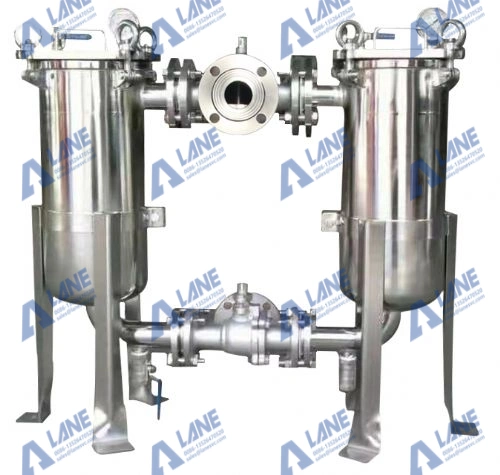
| Filtration & Quality Control | In-line filtration systems and automated sampling points. | Removes impurities; allows for real-time QA/QC checks against FPR standards. |
| Final Storage & Packaging | Sealed holding tanks with inert gas blanketing; automated filling lines. | Maintains product stability and purity; ensures accurate, safe packaging (CLP). |
| Process Control & Data Logging | Centralized SCADA system with recipe management and batch reporting. | Creates an immutable audit trail for every batch, fulfilling documentation requirements under the FPR. |
This integrated approach demonstrates how machinery selection is the first and most critical step in building a compliant manufacturing process.
EU regulations for liquid fertilizer manufacturing is a blueprint that gives access to the European fertilizer market. This process requires strict adherence to product standards, process control, and comprehensive documentation. LANE Heavy Industry’s production lines provide a solid technical foundation for compliance with EU regulations for liquid fertilizer manufacturing, leveraging precision equipment to meet stringent EU requirements. By integrating regulatory understanding with advanced manufacturing technology, we help unlock the full potential of the EU market.
Q1: What is the single most important regulation for liquid fertilizers in the EU?
A: The Fertilizing Products Regulation (EU) 2019/1009 (FPR). It is the primary law governing the composition, labelling, and CE marking of fertilizers, making compliance with it mandatory for market access.
Q2: Does my machinery itself need to be CE marked?
A: Yes. The Machinery Directive (2006/42/EC) requires all machinery sold in the EU to be CE marked, indicating it meets essential health and safety requirements. Reputable manufacturers like LANE Heavy Industry provide this.
Q3: How do REACH and CLP affect my production process?
A: REACH requires that the chemical substances you use as raw materials are registered for your intended use. CLP dictates how you must label your final product if it is classified as hazardous. Your production line must safely handle these substances.
Q4: Can I adapt my existing non-EU production line to meet these regulations?
A: It is possible but often challenging and costly. Retrofitting for full compliance (e.g., changing all wetted parts to compliant materials, adding advanced controls and emission systems) can be as expensive as investing in a new, purpose-built line designed for EU regulations for liquid fertilizer manufacturing.
Q5: Why is material selection for tanks and piping so critical?
A: To prevent contamination. Standard steel can leach prohibited heavy metals into the product. Using compliant materials like 316L stainless steel or specially lined carbon steel is essential to stay within the strict contaminant limits of the FPR.
For more details, please feel free to contact us.
Henan Lane Heavy Industry Machinery Technology Co., Ltd.
Email: sales@lanesvc.com
Contact number: +86 13526470520
Leave a Comment
Latest Posts
LANE has more than 500 successful cases and is committed to providing customers with first-class solutions, high-end machinery and equipment, and one-stop pre-sales, sales and after-sales comprehensive customer service.