
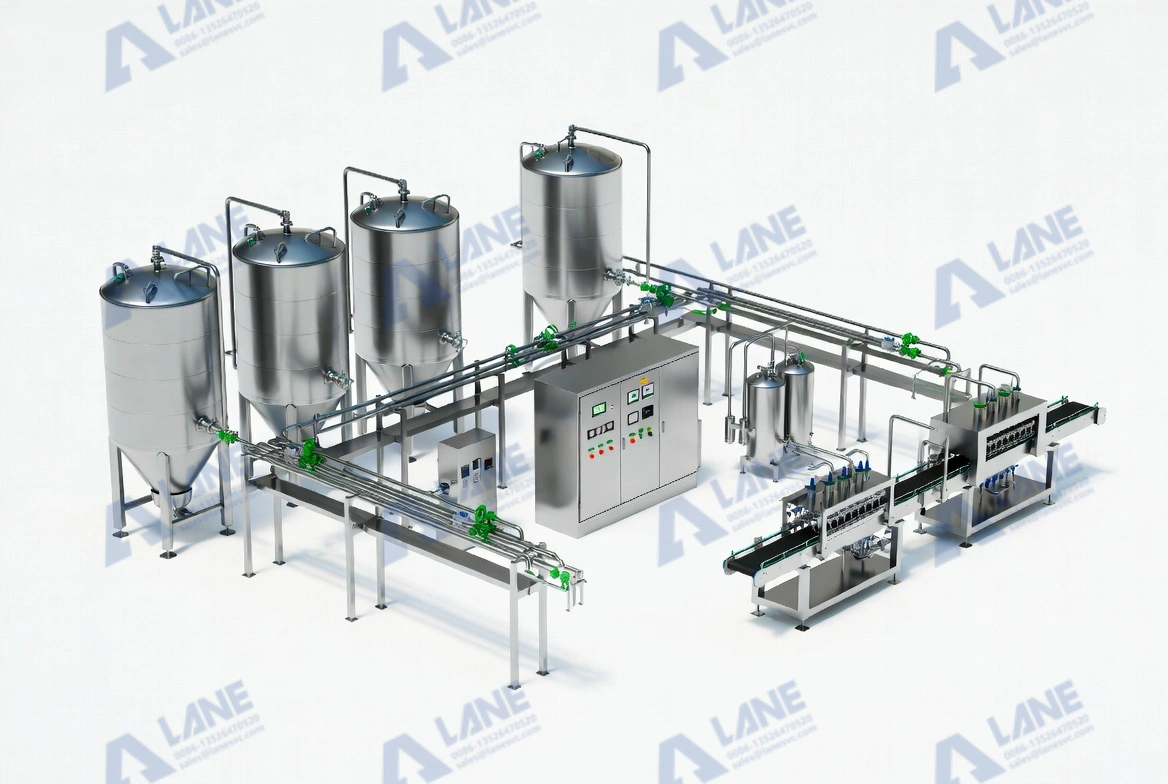
Achieving 200,000 Metric Tons Annually: The Blueprint for a Maximum-Output Commercial Liquid Organic Fertilizer Production Line
The agricultural sector is experiencing a transformation as farmers and agribusinesses are shifting from synthetic chemicals to sustainable, high-efficiency nutrients. Among the most effective solutions, liquid organic fertilizer stands out due to its ease of application, rapid nutrient absorption, and environmentally friendly composition. For agricultural enterprises and equipment manufacturers, building a commercial liquid organic fertilizer production line can not only help sustainable farming practices but also create a revenue stream.
LANE Heavy Industry, as a leading provider of fertilizer production equipment, has accumulated rich experience in designing and manufacturing large-scale commercial liquid organic fertilizer production line systems. This article explores how LANE Heavy Industry’s machinery can enable a commercial liquid organic fertilizer production line to achieve an impressive 200,000 metric tons annually.
A commercial liquid organic fertilizer production line offers many advantages over solid fertilizers:
With these benefits in mind, setting up a commercial liquid organic fertilizer production line is a profitable venture and it can be a strategic investment for both large-scale manufacturers and agricultural cooperatives.
LANE Heavy Industry has over 20 years of experience in fertilizer production line machinery and we have built a reputation for delivering top-tier machinery capable of handling high-output fertilizer production. Our commercial liquid organic fertilizer production line integrates cutting-edge technology with efficiency, safety, and durability.
Key features of LANE Heavy Industry’s production line include:
These features collectively enable manufacturers to control and achieve an annual production volume of up to 200,000 metric tons. With proper protocols, the manufacturer can meet both domestic and international demands.
Achieving a 200,000 metric ton annual output requires careful planning and execution. Here’s how LANE Heavy Industry’s commercial liquid organic fertilizer production line accomplishes this:
The raw material determines the final product quality of the liquid fertilizer. Common raw materials include:
LANE provides high-capacity crushers, shredders, and mixers that ensure proper processing of these raw materials. The uniform powder or slurry enhances nutrient extraction and fermentation efficiency.
The core of any organic nutrient production is the fermentation process. LANE’s fermenters for liquid production lines are designed to:
The result is a nutrient-rich, biologically active liquid fertilizer ready for further processing.
After fermentation, the liquid is filtered to remove solids and impurities. LANE’s automated filtration units ensure the product is:
This step is critical to producing a commercial grade liquid fertilizer that meets market standards.
To maximize the effectiveness of the fertilizer, LANE’s production line allows for precise nutrient adjustment. Automated dosing systems can enrich the liquid with nitrogen, phosphorus, potassium, or other micronutrients. You can create your own custom formulation and add raw materials to create new recipes with our production line.
The final stage involves storing and packaging the liquid fertilizer. LANE’s machinery supports:
Proper packaging and storage prevent nutrient loss and ensure product longevity. Proper packaging is a crucial factor for large-scale commercial distribution.

To produce 200,000 metric tons of liquid organic fertilizer per year, the manufacturer must address several considerations:
With these strategies, manufacturers can maximize output without compromising product quality, sustainability, or cost-effectiveness.
Investing in LANE Heavy Industry’s commercial liquid organic fertilizer production line offers distinct advantages:
By integrating these solutions, manufacturers can achieve a production target of 200,000 metric tons annually and establish a strong market presence.
Future Outlook for Liquid Organic Fertilizer
The global shift toward sustainable agriculture is expected to accelerate demand for organic fertilizers, particularly liquid formulations. LANE Heavy Industry’s commercial liquid organic fertilizer production line positions manufacturers at the forefront of this trend, enabling:
As more farmers embrace environmentally friendly practices, the need for efficient liquid organic fertilizer production lines will continue to grow.
Q1: What is a commercial liquid organic fertilizer production line?
A commercial liquid organic fertilizer production line is an integrated system of machinery designed to produce liquid fertilizers from organic raw materials at a large scale, ensuring uniform quality and high output.
Q2: How much fertilizer can a high-capacity production line produce annually?
With modern equipment like LANE Heavy Industry’s machinery, a commercial liquid organic fertilizer production line can achieve up to 200,000 metric tons annually.
Q3: What are the main components of this production line?
Key components include raw material grinders, fermenters, mixers, filtration units, nutrient dosing systems, and packaging machines.
Q4: Why choose liquid over solid organic fertilizers?
Liquid fertilizers offer faster nutrient absorption, reduced soil compaction, versatility in application, and environmental benefits.
For more details, please feel free to contact us.
Henan Lane Heavy Industry Machinery Technology Co., Ltd.
Email: sales@lanesvc.com
Contact number: +86 13526470520
Whatsapp: +86 13526470520
Leave a Comment
Latest Posts
LANE has more than 500 successful cases and is committed to providing customers with first-class solutions, high-end machinery and equipment, and one-stop pre-sales, sales and after-sales comprehensive customer service.