
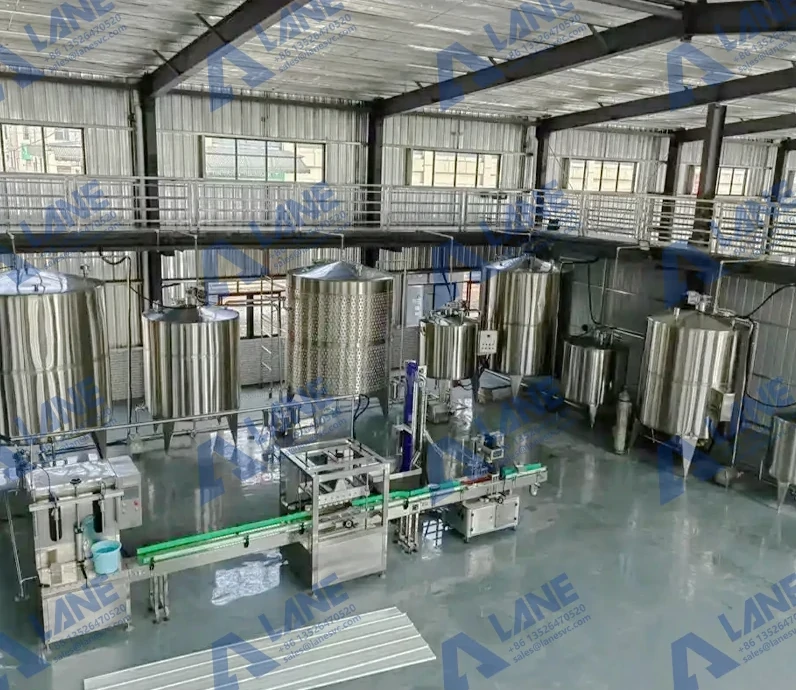
A Complete Guide to Automated Production Line for Chelated Liquid Foliar Fertilizers: Selection, Installation, and Maintenance
Table of Contents
The agricultural sector is evolving rapidly. As part of the agricultural sector, the fertilizer industry has also improved its production efficiency and formulation. Among the fertilizers, chelated liquid foliar fertilizers have become essential for modern agriculture because they correct micronutrient deficiencies while offering enhanced nutrient absorption and increased crop yield. However, producing these efficient, consistent, and high-quality liquid fertilizers requires an Automated Production Line for Chelated Liquid Foliar Fertilizers.
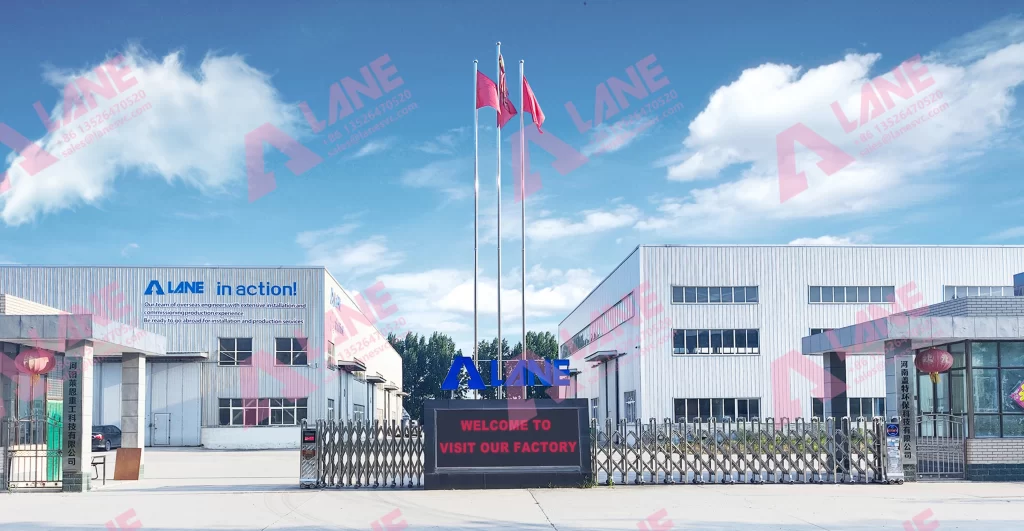
Henan LANE Heavy Industry Technology Co., Ltd., a leading enterprise integrating R&D, production, sales, and after-sales service in heavy industry machinery, provides customized professional Automated Production Line for Chelated Liquid Foliar Fertilizers that can handle diverse materials and manufacturing needs. This guide walks you through everything you need to know, from the selection of the right equipment to installation practices.
Liquid foliar fertilizers are solutions containing essential micronutrients bound to chelating agents. The creation of this solution is time and temperature-sensitive. An automatic system ensures:
Without a proper automated production line for chelated liquid foliar fertilizers, manufacturers risk inconsistent chelation efficiency, resulting in products that fail to perform in the field.
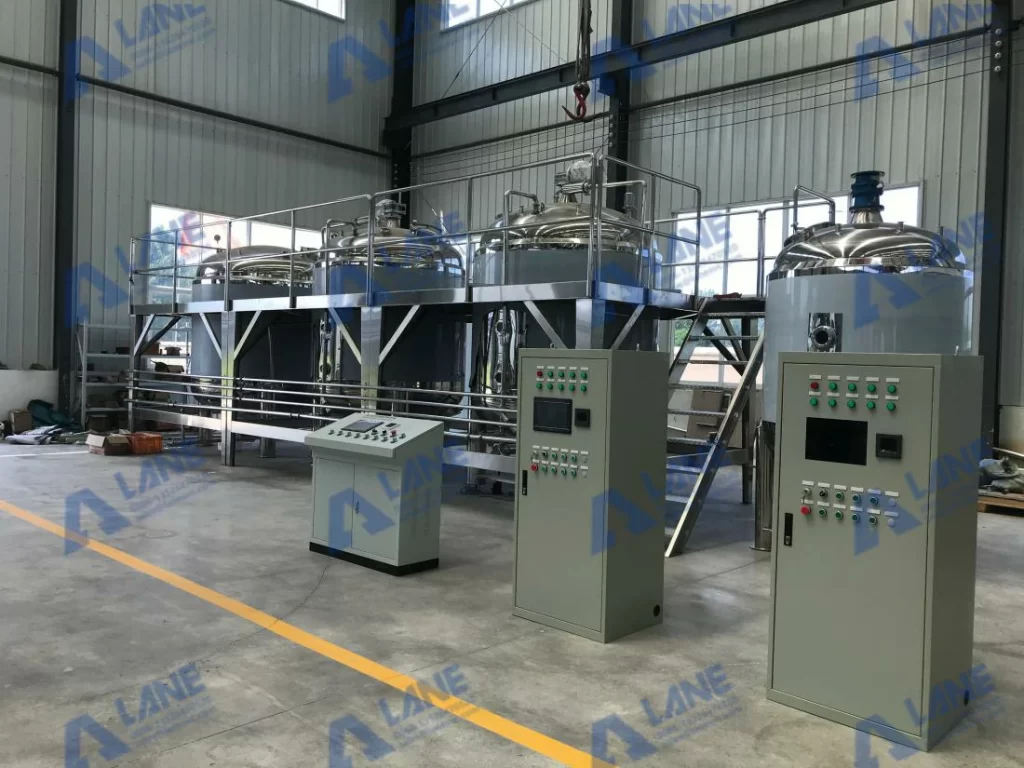
An industrial-class production line requires durable machinery. Choosing the correct equipment is the foundation of a successful fertilizer plant. When evaluating an automated production line for chelated liquid foliar fertilizers, you must consider the following factors:
Key Components to Evaluate
A complete automated production line for chelated liquid foliar fertilizers should include:
Capacity and Scalability
LANE Heavy Industry offers modular designs. Whether you need a small pilot line (500–2500 liters per batch) or an industrial-scale production plant (10,000+ liters per batch), selecting a scalable automated production line for chelated liquid foliar fertilizers ensures you can expand as your market grows.
Material Compatibility
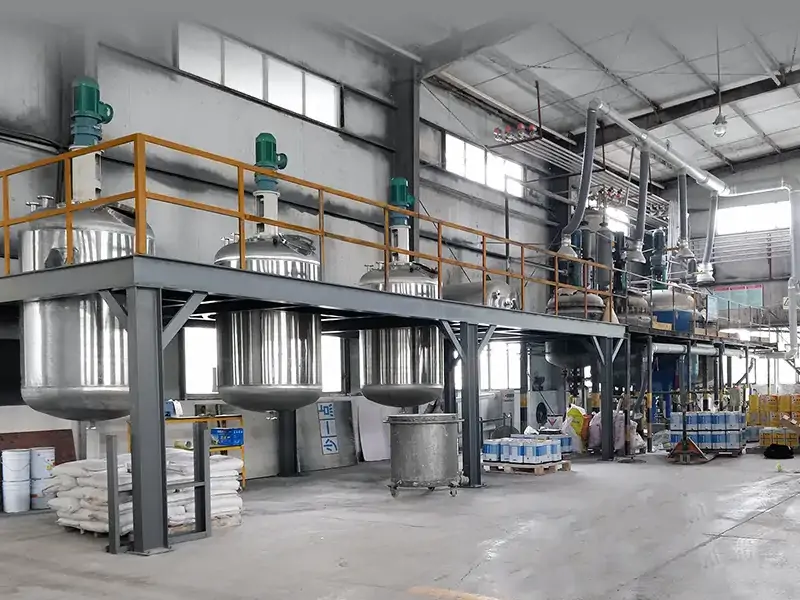
Because chelated fertilizers can be corrosive (low pH or high salinity), equipment must be constructed from high-grade stainless steel (316L) with specialized seals. LANE Heavy Industry uses advanced production techniques with corrosion-resistant materials that can handle the corrosiveness of the raw materials.
Proper installation is critical to achieving the promised efficiency. LANE Heavy Industry provides turnkey support. It means we provide design, manufacturing, installation, and commissioning of your production plant. But you must understand the production process to effectively run the plant.
Site Preparation and Utilities
Equipment Placement and Assembly
The automated production line for chelated liquid foliar fertilizers is arranged in a linear layout. Raw material dosing starts at slightly higher levels on one side, then reaction tanks in the middle, then filtration unit and packing line follow. LANE Heavy Industry provides detailed 3D layout drawings to streamline installation.
Commissioning and Calibration
After installation, the system undergoes:
During commissioning, our engineers will train your operators and engineers to handle the automated production line for chelated liquid foliar fertilizers with confidence.
Even the most advanced machinery requires routine care. Proactive maintenance minimizes downtime and extends equipment life.
Daily, Weekly, and Monthly Checks
Cleaning Protocols for Chelation Vessels
Chelated liquid formulations leave residues that can harden. These hardened residues are hard to clean and sometimes lead to clogged equipment. After each production run, the automated production line for chelated liquid foliar fertilizers should be flushed with water and mild cleaning agents. LANE Heavy Industry’s production design features a CIP (Clean-In-Place) system to automate this process.
Troubleshooting Common Issues
LANE provides a detailed maintenance guide, spare parts list, and remote diagnostic support. This ensures your automated production line for chelated liquid foliar fertilizers remains operational.
LANE Heavy Industry has over two decades of experience in designing customized fertilizer production solutions. Our automated production line for chelated liquid foliar fertilizers is built with:
Choosing LANE means you are not just buying machinery; you are partnering with a team that understands the fertilizer making process and has been in the industry for decades
Q1: What is the typical batch time for an automated production line for chelated liquid foliar fertilizers?
A1: Batch times vary by formulation, but a standard 5,000-liter batch usually takes 2–4 hours, including mixing, chelation reaction, and cooling.
Q2: Can LANE Heavy Industry customize the line for organic chelating agents (e.g., amino acids)?
A2: Yes. LANE’s systems are flexible and can handle both synthetic chelators (EDTA) and organic acids with minimal modifications.
Q3: How much floor space is required?
A3: A compact line may require 150–200 m², while full-scale industrial lines can occupy 500 m² or more. LANE provides free layout optimization based on your facility.
Q4: What kind of training is provided?
A4: LANE offers on-site training for operators and maintenance staff, covering PLC operation, cleaning procedures, and troubleshooting. Remote video support is also available.
Q5: How do I ensure consistent viscosity and stability?
A5: The automated production line for chelated liquid foliar fertilizers from LANE includes precise temperature control and high-shear mixing options, which are critical for stable emulsions and uniform chelate formation.
Q6: Is the line suitable for producing other liquid fertilizers?
A6: Absolutely. With recipe management, the same automated production line for chelated liquid foliar fertilizers can also produce NPK liquid blends, biostimulants, and suspension fertilizers by changing parameters.
For more details, please feel free to contact us.
Henan Lane Heavy Industry Machinery Technology Co., Ltd.
Email: sales@lanesvc.com
Contact number: +86 13526470520
Whatsapp: +86 13526470520
Leave a Comment
Latest Posts
LANE has more than 500 successful cases and is committed to providing customers with first-class solutions, high-end machinery and equipment, and one-stop pre-sales, sales and after-sales comprehensive customer service.