
Applying liquid fertilizer: What You Need to Know
In the modern agriculture liquid fertilizer is an essential part of the farming and gardening industry. It is a fundamental act of nurturing. It can be applied instantly, can be used for precision farming and has high efficiency. granular fertilizers take time to break down and provide moister while liquid fertilizers deliver the readily available nutrient cocktail directly to the plant’s root. Applying liquid fertilizer is easy and scientific. It can be measured and use evenly among the plants.
To understand how to apply the liquid fertilizer it’s essential to know why use liquid fertilizer first. Why it is suitable over other fertilizers.
Raid Results: The most significant advantage of liquid fertilizer is its rapid results. It can be applied instantly. Plants with yellow leaves can show improvement within days after applying liquid fertilizers. The nutrient is immediately available for uptake, providing a quick fix when plants need it most.
Precision Application: Liquid fertilizer can be easily applied with targeted equipment. You have direct control over the liquid and it can be applied through sprayer or watering can. This minimizes the waste and prevents the nutrient feeding of weeds.
Uniform Distribution: Applying liquid fertilizer can distributes the nutrient consistently. The nutrient content in the liquid fertilizer is even. Every drop contains the same amount of nutrient. Traditional granular doesn’t have even distribution of nutrient. Every granular is different in size and nutrient content.
Foliar Feeding Capability: Plants can directly absorb nutrient through their leaves. Applying liquid fertilize directly to the foliage is effective way to address micronutrient deficiencies.
A successful fertilizer usage begins long before the mixing of solution. Those steps are crucial and skipping those can lead to wasted product, damaged plants or environmental harm.
Soil Test: This is the most important first steps. Before applying the fertilizers, it is essential to check the soil for PH levels, applying liquid fertilizer without this knowledge is like prescribing medicine without a diagnosis. You might be adding nutrients that are already abundant or missing the ones that are critically lacking. This test result can show you the Precise NPK ratio for your plant.
Choose the Right Time: Timing is critical for plant health and growth. The best time for applying liquid fertilizer is in plants growing period. Also, time of the day is crucial. Applying when sun heat is lot can make the liquid fertilizer evaporate quickly even worst it sometime can burn the leaves. If the soil is dry, watering before applying is advised.
After testing the soil PH level and choosing the right liquid fertilizer, it is time for apply. The method you choose will depend on your target plants and the scale of your garden or farm.
1.Soil Drench: This is the most common way to apply liquid fertilizer. This method delivers nutrient directly to the root zone.
For garden beds and landscapes, you can apply the fertilizer using a watering can. Apply the solution slowly at the base of the plants, aiming for the root zone and avoiding the leaves. The goal is to moisten the soil.
This method also used for potted plants. Apply the liquid fertilizer until you see a small amount of liquid draining from the bottom of the pot. Be careful not to overflow the containers as salts can also built up quickly in confined space.
2.Foliar Feeding: Foliar feeding is a supplement, not a replacement, for soil fertilization. Its excellent for addressing solutions for problems that requires immediate attention.
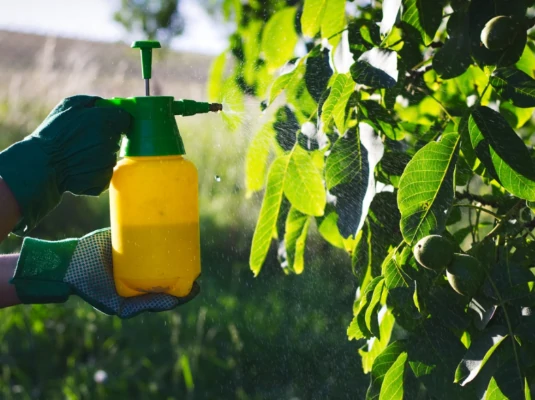
In this method farmers or gardeners use spray system or normal spray to apply the liquid fertilizer directly to the leaves. The ideal time for application is early morning or late evening.
3.Fertigation: “Fertigation” is the injection of liquid fertilizer into an irrigation system. This is a highly efficient method for large lawns, farms, or commercial greenhouses, as it automates the process and ensures even distribution. This typically requires specialized equipment and is less common for the average home gardener.
The usage of liquid fertilizer comes with responsibility. Slight mistakes can harm plants and the environment.
Excess fertilizer use can burn the roots of plants and causing them to dry. Leading to yellowed, withered leaves.
Nitrogen and phosphorus in the liquid fertilizer can cause water pollution. When over applied those nutrients can leach through soil into the groundwater or streams, rivers or lake. This might cause serious environmental pollution. To avoid this, it is advised to avoid application before heavy rain.
Storage and Handling: Store liquid fertilizer in its original container and sealed it in a cool, dry place which also should be out of reach for children’s. Wear gloves and eye protection when mixing and handling concentrates
Applying liquid fertilizers needs calm mind and control. By beginning with a soil test, respecting the product label, timing your applications wisely, and choosing the correct method, you elevate this task from a simple routine to a strategic act of care.
For more details, please feel free to contact us.
Henan Lane Heavy Industry Machinery Technology Co., Ltd.
Email: sales@lanesvc.com
Contact number: +86 13526470520
Whatsapp: +86 13526470520
Leave a Comment
Latest Posts
LANE has more than 500 successful cases and is committed to providing customers with first-class solutions, high-end machinery and equipment, and one-stop pre-sales, sales and after-sales comprehensive customer service.